
 dudeoi
The White Lotus Season 3, written and directed by Mike White, takes place this time in Thailand, Southeast Asia the perfect setting to explore themes such as spirituality, ego, desire, and existential suffering.
Through its diverse cast of emotionally fragmented characters, the season examines how people search for meaning, validation, and transformation while remaining trapped within their own insecurities and illusions.
In this article, we will analyze the different characters and relationships to better understand the deeper psychological and philosophical dynamics at the heart of the series.


OUR SPONSOR OF THE DAY : NEONNIGHT.FR
The quick plot

The White Lotus follows a new group of wealthy guests at a luxury resort in Thailand, where a relaxing holiday gradually exposes their emotional tensions, hidden conflicts, and deeper struggles with identity and meaning.
The characters
Timothy Ratliff: patriarchal collapse

Timothy represents: masculine authority built on control and performance.
He is the classic successful Western patriarch:
- provider
- composed
- rational
- socially dominant
But underneath:
- he is spiritually empty
- terrified of loss
- dependent on status for identity
The season slowly reveals: his selfhood is externalized.
He does not exist securely without:
- money
- hierarchy
- family role
- admiration
So when pressure arrives, he begins psychologically disintegrating.
Deeper theme
Timothy embodies: the fear that there is no self underneath achievement or his role of provider.
He is not evil. He is structurally fragile. 100% committed to the meaning brought by society.
Victoria Ratliff: denial as survival

Victoria is fascinating because she survives through:
- aesthetic control
- emotional avoidance (lorazepam)
- social performance
She represents: upper-class femininity as emotional insulation.
Her elegance and composure function almost like sedation.
She avoids:
- conflict
- reality
- depth
- collapse
because acknowledgment would threaten the entire architecture of her life.
Core mechanism
Her psychology is: “If I maintain the atmosphere, the truth cannot fully enter.”
She performs wellness rather than inhabiting it.
Saxon Ratliff: hollow masculinity

Saxon may be the season’s clearest critique of modern male identity.
He is:
- hyper-sexualized
- performative
- arrogant
- emotionally shallow
- validation-addicted
But underneath: profoundly insecure.
He has no internal grounding.
Everything is external:
- success through his father wealth
- sexual success
- dominance
- image
- body
- reaction from others
He performs masculinity like branding.
The deeper tragedy
Saxon is not simply “toxic.”
He is: spiritually underdeveloped.
He mistakes:
- stimulation for meaning
- confidence for identity
- conquest for intimacy
The season repeatedly suggests: modern masculinity without inner life becomes compulsive performance.
Piper Ratliff: spiritual longing

Piper represents: genuine spiritual yearning trapped inside privilege.
Unlike many characters, she actually seems to want:
- meaning
- transcendence
- authenticity
But the season questions: can someone raised inside luxury ever fully renounce it?
Piper is torn between:
- liberation
and
- identity comfort.
Important nuance
She is not fake.
But she may underestimate:
- how deeply conditioning shapes her
- how difficult surrender actually is
She wants awakening but may still want: an aesthetically pleasing and comfortable version of awakening.
Lochlan Ratliff: innocence before identity

Lochlan feels almost spiritually unfinished.
He represents: identity before stabilization.
He observes more than performs.
Unlike Saxon, he has not fully entered:
- masculine competition
- ego rigidity
- social scripting
That gives him:
- ambiguity
- openness
- vulnerability
He may be the least crystallized ego in the family. Which makes him strangely important symbolically.
Jaclyn Lemon: charisma as domination

Jaclyn is a famous movie actress in her forties, she weaponizes:
- charm
- beauty
- emotional fluency
She performs warmth while subtly controlling social space.
She needs:
- attention
- affirmation
- centrality
Deeper truth
She fears: aging and social irrelevance.
Her charisma is defensive.
She maintains emotional influence to preserve identity.
Kate Bohr: moral identity performance

Kate represents: the performance of ethical selfhood.
She wants to be perceived as:
- emotionally intelligent
- balanced
- evolved
- “good”
But her goodness often functions socially rather than spiritually.
She is highly aware of:
- image
- relational positioning
- emotional optics
Core contradiction
She values morality but also uses morality as identity reinforcement.
Laurie Duffy: resentment and invisibility

Laurie may be the saddest of the trio.
She embodies: the pain of feeling left behind.
Her suffering comes from:
- comparison
- invisibility
- perceived inadequacy (divorce, stalled career)
- emotional exclusion
She constantly measures herself relationally.
Deep theme
Laurie reveals: friendship often contains hidden hierarchies.
The trio’s intimacy is partly real but also structured around:
- envy
- role assignment
- validation economy
Rick Hatchett: existential emptiness
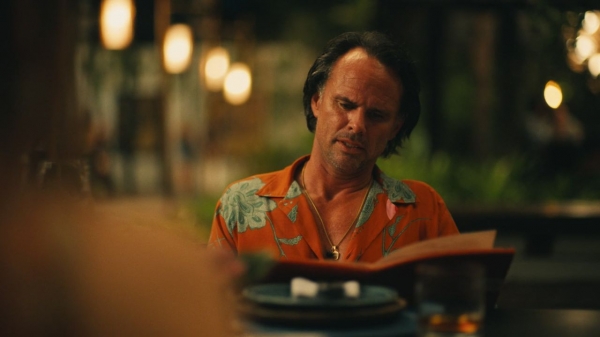
Rick may be the season’s spiritual center.
He represents: the man who has seen through illusion but found nothing beyond it. All of it because of an identity based on trauma.
He is:
- detached
- cynical
- emotionally exhausted
Unlike Saxon, he no longer believes in:
- status
- pleasure
- performance
But he has not found transcendence either.
So he exists in: nihilistic drift.
The tragedy
Rick sees falseness clearly but clarity alone does not heal suffering.
He lacks:
- faith
- surrender
- connection
So insight becomes paralysis.
Chelsea: openness and projection

Chelsea initially appears naive, but symbolically she represents: emotional openness without cynicism.
She still believes:
- people can connect
- intimacy can heal
- love can redeem brokenness
But she also projects heavily onto Rick.
She wants to rescue him emotionally.
Deeper dynamic
Their relationship asks:
Can love save someone who no longer believes in meaning?
The season’s answer is ambiguous.
Belinda Lindsey: class consciousness and emotional labor

Belinda remains one of the show’s most morally grounded characters.
She sees through:
- wealthy emotional chaos
- performative healing
- luxury spirituality
because she lives in material reality.
She understands: rich people often use others for emotional processing while remaining insulated from consequence.
Important symbolic role
Belinda represents:
- labor
- groundedness
- emotional realism
She is less fragmented because: survival leaves less room for narcissistic abstraction.
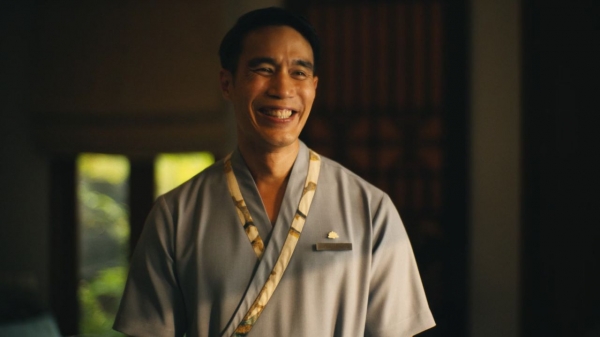
In this season, she ultimately chooses to set aside her moral principles in order to gain social advancement alongside her son. In doing so, she ironically becomes what she once criticized, leaving Pornchai in a situation that echoes the same fate Tanya McQuoid once imposed on her.
Greg/Gary: corruption without conscience
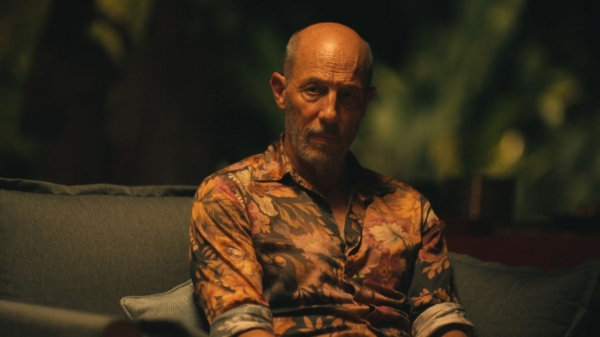
Predatory opportunism hidden beneath normalcy.
He is frightening because:
- he lacks visible inner conflict
- he adapts socially with ease
- morality barely constrains him
Unlike the spiritually conflicted characters: Greg simply instrumentalizes reality.
He is ego without reflection. Yet this comes at a cost: despite extreme wealth and a wide social circle, he struggles to truly enjoy his success because it was never genuinely earned or integrated.
Frank: post-indulgence clarity and existential drift

Frank functions as Rick’s philosophical mirror.
He represents a possible version of Rick or what Rick becomes if he externalizes what he cannot process internally.
Frank is:
- expressive
- unfiltered
- self-aware about excess
- calm in his contradictions
Rick is:
- withdrawn
- blocked
- emotionally compressed
- searching without access
Post-indulgence awareness
Frank embodies “post-debauchery clarity”: He has fully lived through desire and excess, and no longer romanticizes it.
But instead of liberation, he reaches: detachment without transcendence.
He sees through pleasure, but finds no replacement meaning.
Key function
Frank’s confession reveals that:
- desire can become mechanical
- pleasure loses meaning even at its peak
- experience does not guarantee fulfillment
Importantly:
- he is not moralizing
- not asking for redemption
- only describing reality
Gaitok: the moral self under pressure
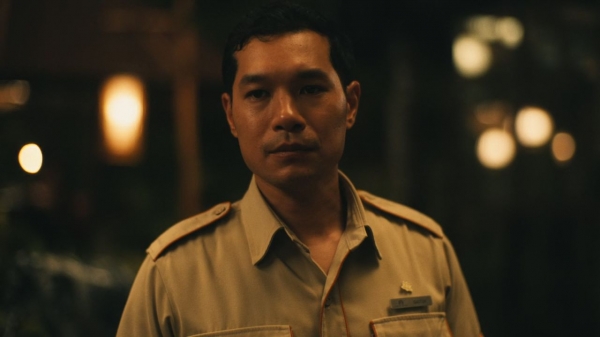
Gaitok is probably the season’s clearest representation of: goodness confronting reality.
At first, he appears:
- gentle
- sincere
- spiritually aligned
- non-aggressive
- almost innocent
He believes in:
- rules
- decency
- patience
- moral order
In a season full of ego performance, he feels almost pure.
But that purity becomes a problem.
His central conflict
Gaitok’s struggle is: Can a fundamentally peaceful person survive in a world structured by power, deception, and desire?
He wants:
- moral clarity
- authentic love
- honorable behavior
But reality pressures him toward:
- compromise
- action
- assertion
- violence
- social performance
The season slowly pushes him into situations where: passivity becomes morally insufficient.
Buddhism and nonviolence
Gaitok embodies a specifically Buddhist tension:
- compassion
vs - worldly necessity
He wants harmony.
But the world repeatedly demands:
- judgment
- force
- decisiveness
This creates a profound spiritual dilemma: Is goodness still goodness if it cannot protect anything?
Masculinity theme
Unlike Saxon’s performative masculinity, Gaitok represents: soft masculinity.
He is:
- emotionally open
- respectful
- non-dominating
- careful
But the season questions whether society rewards that kind of man.
He fears:
- inadequacy
- passivity
- losing respect
- losing Mook
So part of his arc is: whether he must become harder to become “real.”
Mook: beauty, realism, and adaptive femininity

Mook initially appears almost symbolic:
- beautiful
- graceful
- emotionally light
- socially fluid
But she is much more psychologically intelligent than she first seems.
She understands:
- social hierarchy
- attraction
- ambition
- practical reality
far better than Gaitok does.
Her deepest function in the story
Mook represents: adaptation to reality rather than moral idealism.
She is not cynical exactly but she is pragmatic.
She understands instinctively:
- power matters
- confidence matters
- status matters
- decisiveness matters
This creates tension with Gaitok because: he approaches life morally, while she approaches it socially and practically.
Why she matters symbolically
The season repeatedly contrasts:
- spiritual purity
with - social effectiveness.
Mook also gravitates toward:
- strength
- movement
- vitality
- worldly competence
not necessarily because she is shallow,
but because: survival and attraction in the real world are embodied, not abstract.
Their relationship dynamic
Their relationship may be one of the season’s deepest microcosms.
Gaitok wants:
- sincerity
- moral connection
- emotional truth
Mook wants:
- aliveness
- confidence
- momentum
- embodied presence
They care about each other but they are operating from different existential logics.
The painful truth beneath them
Together they ask: Can innocence survive adulthood without becoming either weak or corrupted?
This is why their storyline feels quietly tragic.
Gaitok risks:
- losing softness
- losing moral clarity
- becoming hardened
Mook risks:
- becoming fully absorbed into social realism
- accepting power logic as unavoidable
The main theme : Ego-control vs Ego Dissolution

In The White Lotus, the central psychological tension can be understood as: ego-control vs ego-dissolution
This is the hidden axis underneath almost every character arc, relationship, and conflict in the season.
1. Ego-control: building and maintaining the self

Ego-control refers to the constant effort to:
- construct an identity
- protect it from threat
- improve its status
- manage how others perceive it
In the show, this appears through:
- wealth and success
- social ranking and comparison
- romantic performance
- moral image (“being a good person”)
- masculinity/femininity performance
- emotional self-management
It is essentially:
the work of keeping the self coherent, desirable, and superior in a social world.
Even relaxation, friendship, and travel become part of this system:
a stage where identity is displayed and reinforced.
2. Ego-dissolution: loosening the grip on identity

Ego-dissolution is the opposite movement:
- reducing attachment to identity
- questioning the story of “me”
- loosening control over image and outcome
- confronting impermanence and emptiness
In the season, it appears through:
- spirituality and meditation (Thailand setting)
- emotional breakdowns
- existential confusion
- moments of clarity or disillusionment
- encounters with suffering or mortality
It is not “happiness” — it is:
the weakening of the structures that normally define the self.
3. Why they are fundamentally in conflict
The opposition is structural:
Ego-control requires:
- comparison with others
- ambition and desire
- image management
- fear of loss or shame
- continuous self-optimization
Ego-dissolution requires:
- letting go of comparison
- acceptance of loss
- surrender of control
- reduction of desire
- weakening of identity investment
So the paradox is: you cannot fully intensify the self while also dissolving it.
4. Thailand as the pressure chamber

The setting of Thailand is crucial because it represents:
- spiritual traditions pointing toward non-attachment
- wellness culture offering “healing” experiences
- luxury tourism that still reinforces ego and status
So characters enter a space where:
ego-control is rewarded socially, while ego-dissolution is marketed aesthetically.
This creates contradiction:
- they try to “improve themselves” (ego-control)
- through practices meant to “let go of the self” (ego-dissolution)
5. How characters embody the tension
Most characters oscillate between the two forces:
- some are almost entirely ego-control (status, image, dominance)
- some flirt with ego-dissolution (spiritual curiosity, breakdowns, disillusionment)
- most are trapped between both, unable to commit to either direction
Even “spirituality” becomes: a refined form of ego-control (identity as an enlightened person)
6. The deeper philosophical point
The season suggests: suffering arises not simply from external problems, but from the constant attempt to stabilize and optimize a self that is inherently unstable.
So:
- ego-control tries to fix the self
- ego-dissolution reveals there is no fixed self to fix
That tension creates the psychological instability running through the entire season.
Can one perform in society with ego-dissolution?

We can function in society, make money, and even have status with a relatively high degree of ego-dissolution, but the mechanism changes completely.
The key distinction is:
We still act in the world, but you are less psychologically identified with the outcome.
1. What ego-dissolution actually means here
In the context of The White Lotus’s framework:
Ego-dissolution does NOT mean:
- not working
- not having ambition
- not participating in society
- not caring about outcomes
It means:
- less attachment to identity (“what this says about me”)
- less emotional dependence on success/failure
- less need to be seen as superior
- less internal story-building around achievements
So the ego doesn’t disappear it stops being the center of gravity.
2. Can we still “perform” in society?
Yes, but the quality of performance changes.
Ego-control performance:
- “I need to win”
- “I need to be seen as successful”
- “I am my status”
- anxiety-driven optimization
- constant comparison
Ego-dissolved performance:
- action without identity inflation
- competence without self-mythology
- success without needing it to define worth
- failure without collapse of self-image
So externally: both can look identical (money, status, career)
Internally: the psychological cost is radically different
3. Paradox: ego-dissolution can improve performance
Counterintuitively, reduced ego attachment can sometimes:
- increase clarity
- reduce fear-based decision making
- improve focus
- reduce social anxiety
- improve adaptability
Because you are no longer:
- defending an image
- reacting to comparison
- protecting identity at every step
So action becomes: more direct, less contaminated by insecurity
4. But there is a trade-off
The show’s underlying tension is important here:
If ego-dissolution is deep, you may lose:
- ambition driven by insecurity
- hunger for status comparison
- emotional reward from recognition
- motivation tied to identity-building
So the risk is: less compulsive striving
Which can look like “lack of drive” in ego-driven systems.
5. The key insight in the show’s logic
The real question is not: “Can I succeed with ego-dissolution?”
but: “What kind of success still matters when identity stops being the reward?”
In The White Lotus terms:
- Ego-control builds the self through achievement
- Ego-dissolution removes the need for achievement to validate the self
So success becomes: functional, not existential
6. A simple way to put it
Yes, you can make money and have status with ego-dissolution.
But:
- Ego-control says: “This success proves who I am.”
- Ego-dissolution says: “This is just something I’m doing.”
Same external world — completely different internal meaning.
Bottom line
Ego-dissolution does not prevent performance in society.
It changes the relationship to performance: from identity construction → to action without identity dependence.
And that shift is exactly what makes it both freeing and, in some cases, socially disorienting within the world structure shown in Season 3.
OUR SPONSOR OF THE DAY : NEONNIGHT.FR
Conclusion

The White Lotus ultimately presents modern life as a tension between ego-control and ego-dissolution: the need to construct and defend a stable identity versus the pull toward letting it loosen or disappear.
Through its characters, the season shows how status, relationships, morality, and even spirituality become tools of ego construction, while moments of crisis, disillusionment, or insight briefly destabilize that structure. Set in Thailand, this tension is intensified by the collision between luxury performance and spiritual language, where even “awakening” risks becoming another form of identity.
The result is not resolution, but exposure: a portrait of people trying to become someone, while simultaneously sensing that the “someone” they are building may not ultimately hold.


GIPHY App Key not set. Please check settings