
 dudeoi
Most people believe they spend their lives acquiring things : Money. Status. Security. Success.
But what if the opposite is true?
What if life is not primarily about what we accumulate, but about what we quietly exchange along the way?

Every day, we trade something. Sometimes consciously. Most of the time, without noticing. We exchange hours for salaries, attention for stimulation, curiosity for certainty, authenticity for acceptance. Gradually, the tangible is replaced by the symbolic, until we begin valuing representations more than the realities they were meant to serve.
This isn’t an argument against money, technology, or civilization. It’s an invitation to ask a simpler question: What have we traded that was more valuable than what we received?
The obvious ones first.
Time

The most real and most finite thing that exists. Irreversible hours of a human life exchanged for salary, for status, for the approval of institutionalized ideal. You cannot get a single hour back. Most people trade the majority of their waking hours for numbers in a bank account that represent claims on things they’ll maybe enjoy later. The later that keeps moving forward.
Health

The body is the most real thing you possess. People trade sleep, movement, nutrition, stress levels, sunlight, rest all of it for productivity metrics, career advancement, the appearance of being busy and therefore valuable. The biological reality of the body sacrificed for an abstract position in an abstract hierarchy.
Presence

The actual experience of being alive in a moment. Traded for documentation of the moment. The sunset photographed instead of felt. The meal filmed instead of tasted. The concert experienced through a screen. The real moment exchanged for a reproducible representation of it that will be watched twice and forgotten.
Relationships

Genuine intimacy, real vulnerability, actual connection. Traded for network. For contacts. For followers. For the performance of relationships on platforms designed to monetize the performance. People with five thousand followers and nobody to call at 2am.
Creative expression

The actual voice, the genuine vision, the true aesthetic. Traded for engagement metrics. Content optimized for the algorithm rather than made from something real. The creative impulse that arrived as something personal leaving as something calculated.
Curiosity

The genuine desire to understand something for its own sake. Traded for credentials. Degrees that certify knowledge was processed without caring whether it was understood. The grade replacing the insight. The certificate replacing the competence.
The less obvious ones.
Desire

What you actually want, beneath the conditioning. Traded for what you’re supposed to want. The career chosen for legibility. The partner chosen for social fit. The city chosen because leaving wasn’t done. The real desire suppressed so early and so completely that eventually you genuinely can’t access it anymore. The fiction of the appropriate life replacing the reality of the wanted one.
Identity

Who you actually are underneath the performance. Traded for the character the system needs you to play. The responsible one. The reliable one. The one who doesn’t make waves. The one who stayed. The constructed social self replacing the actual self so thoroughly that the actual self becomes inaccessible even in private.
Judgment

Your own capacity to evaluate reality directly. Traded for consensus. For what the herd currently believes. For the algorithm’s curated version of what’s true and valuable and worth caring about. The outsourcing of perception itself.
Courage

The capacity to act on what you know to be true regardless of social cost. Traded for comfort. For approval. For the path of least resistance that keeps the social contract intact. The real move not made because the fictional security of staying felt more valuable than the real freedom of going.
Solitude

The capacity to be alone with yourself without immediately filling the silence. Traded for stimulation. For the phone, the series, the podcast, the scroll. Genuine interior silence exchanged for an endless stream of other people’s thoughts and images. The self never encountered because the self is never given quiet enough to surface.
The darkest trades.
Children’s curiosity
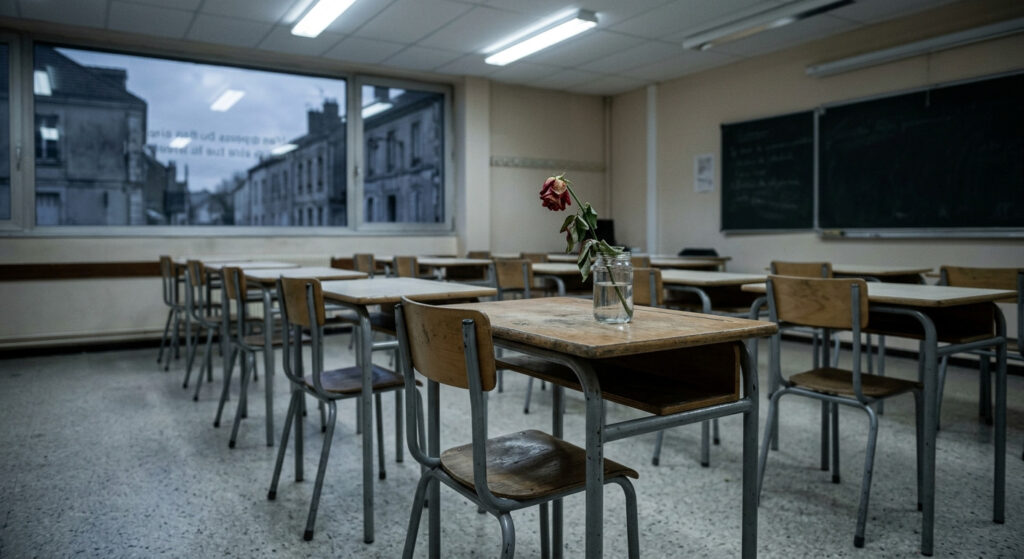
Possibly the most real thing that exists. A child before the school system is pure appetite for understanding. That curiosity traded systematically for compliance. For sitting still. For producing the correct answer. For not disrupting the class. The most alive thing in a human being exchanged for the capacity to function inside an institution.
The body’s signals

Hunger, tiredness, desire, discomfort, joy. The real-time feedback system of a biological organism. Traded for schedules. For alarm clocks. For lunch at twelve because that’s when lunch is. For staying awake because productivity demands it. For eating what’s convenient rather than what the body wants. The organism’s own intelligence overridden by the fiction of the calendar.
The awareness of death

The most clarifying real thing there is. The fact that time is finite and irreversible and that every hour traded for fiction is an hour that cannot be recovered. This awareness traded for distraction. For the comfortable numbness of routine that makes it possible to not feel the clock running.
And the most ironic trade of all.
Freedom

Traded for the promise of future freedom. Work now so you can live later. Sacrifice your thirties for security in your sixties. Trade the years when your body is strongest and your mind is sharpest and your possibilities are most open for a number in an account that will grant you permission to start living at the point when living is physically harder.
The retirement dream. The ultimate fiction.
Real life now exchanged for the promise of real life later.
By a system that benefits enormously from the deferral.
The Fork We Don’t Talk About

Are these trades caused by the systems built around human psychology, or is psychology itself shaped by the systems people needed in order to survive together?
Probably both, in a loop with no clear beginning. Humans didn’t evolve money, schools, retirement, or social media — but they did evolve specific vulnerabilities those systems would later exploit. Status-seeking. Loss aversion. Deference to authority. Herd calibration. The need for narrative coherence about one’s own life. None of these are bugs introduced by capitalism or algorithms. They are ancient survival mechanisms that worked perfectly well in small tribal groups with no scalable abstraction layer.
The systems didn’t invent the vulnerability. They found it and scaled it. A school doesn’t create a child’s need for adult approval — it redirects a pre-existing need toward compliance. An algorithm doesn’t invent status anxiety — it makes status infinitely and instantly measurable, something no tribal environment could ever do.
So the trades described above aren’t really psychology versus system. They are psychology meeting systems that are unusually good at using psychology against itself, at a scale evolution never prepared anyone for.
Notice, or Accept?

The honest answer is neither pure resistance nor pure acceptance. It’s something more specific: discrimination between trades that are necessary and trades that are merely convenient for someone else.
Some trades are unavoidable and not actually bad. Trading some autonomy for belonging, some immediate desire for long-term capacity, some chaos for structure — that’s not corruption. That’s how any finite social creature functions. A child trading raw curiosity for the ability to read isn’t a tragedy if the process is done well. The body’s signals being moderated by a calendar isn’t always loss — sometimes it’s coordination that lets ten people build something one person never could alone.
The trades worth resisting are the ones where the benefit accrues asymmetrically to the system rather than to the individual — where the exchange rate is rigged. Time for salary is necessary. Time for salary at a rate that keeps someone permanently one emergency from collapse, inside a structure designed to make leaving costly — that’s not a neutral trade. That’s extraction wearing the costume of a trade.
So noticing isn’t the end goal. It’s only the precondition. The real goal is closer to this: find the exchange rate, and renegotiate the trades that are unfavorable while accepting the ones that genuinely aren’t.
Why Most People Stop Checking

Telling the difference requires exactly the resources the system is best at extracting first — time, solitude, judgment, courage. The trades compound. Once solitude and judgment are gone, so is the capacity to evaluate whether the remaining trades are fair. That is the trap’s real cruelty. It doesn’t just take resources. It takes the tools that would be needed to notice it’s taking them.
Which may be the cleanest answer to the deeper question underneath all of this. The purpose, if there is one, was never to demand total acceptance or total resistance. It was to see whether enough solitude, judgment, and presence could be kept intact to keep re-auditing the trades for an entire lifetime — because the exchange rate keeps shifting, and the system is betting that most people will stop checking.
Most do. Usually somewhere in their twenties. Not because they stop caring, but because running the audit is expensive, and almost no one around them is running it either.
How We Become Agents of the System

People rarely defend a system from the outside, as a conscious choice. They become it gradually, until there’s no real separation left between who they are and what they’re protecting.
The deepest reason is investment — admitting the system is wrong would mean admitting that decades of compliance, sacrifice, and deferred life were wrong too. That’s psychologically unbearable, so the system gets defended instead of examined. Over time this hardens into identity fusion: the system stops being something you live inside and becomes something you’re made of, so criticizing it feels less like disagreement and more like an attack on the self.
It earns some of that loyalty honestly — providing real belonging, security, and structure that many people genuinely cannot do without. And it enforces the rest quietly, through small social costs for deviation: the cooler reception, the raised eyebrow, the slow withdrawal of belonging.
Underneath it all, the system also shapes the lens used to judge it — what counts as valuable, desirable, or sane is taught from inside its own logic. Not a conspiracy. Just how total environments work. The fish doesn’t question the water, not from stupidity, but because the water is the only thing it has ever known.
Examples of trades

Competence → Credential
What you can actually do, traded for the paper that says you can do it.
Mastery → Title
Years of earned skill, traded for the word on a business card that implies the skill without requiring proof of it again.
Time → Salary
Irreversible hours of a finite life, traded for a number in an account.
Health → Productivity
The body’s real state, traded for the appearance of being busy and therefore valuable.
Presence → Documentation
The lived moment, traded for the photo or video of the moment.
Connection → Network
Real intimacy and vulnerability, traded for contacts, followers, the performance of relationship.
Voice → Engagement
Genuine creative expression, traded for whatever the algorithm rewards.
Curiosity → Grade
Wanting to understand, traded for the score that says you processed information.
Desire → Legibility
What you actually want, traded for the choice that’s socially easy to explain.
Self → Role
Who you are, traded for the character — responsible one, reliable one — that the system needs you to play.
Judgment → Consensus
Your own read on reality, traded for what the herd or the algorithm currently believes.
Courage → Comfort
The capacity to act on what you know, traded for the path of least resistance.
Solitude → Stimulation
The ability to sit with yourself, traded for the scroll that fills every silence.
Wonder → Compliance
A child’s raw appetite to understand, traded for the ability to sit still and produce the correct answer.
Bodily signal → Schedule
Hunger, tiredness, real need, traded for the clock and the calendar.
Mortality awareness → Distraction
The clarifying fact that time runs out, traded for the numbness that lets you forget it’s running.
Freedom → Security
The years when you’re strongest and sharpest, traded for the promise of permission to live later.
Belief → System Loyalty
Independent conviction, traded for defending the structure you’ve already sacrificed too much to question.
Skill → Status
What you can produce, traded for where that production ranks you.
Action → Intention
What you actually do, traded for what you say you believe or plan to do — virtue signaling as a substitute for virtue.
Risk → Insurance
Genuine exposure to consequence, traded for the feeling of being protected from it.
Originality → Trend
What’s true to you, traded for what’s currently working for everyone else.
Depth → Reach
Saying one true thing well, traded for saying something palatable to the largest number of people.
Stability (real) → Stability (perceived)
Actual financial resilience, traded for the symbol of stability — the house, the job title — that can collapse the moment it’s tested.
Conclusion
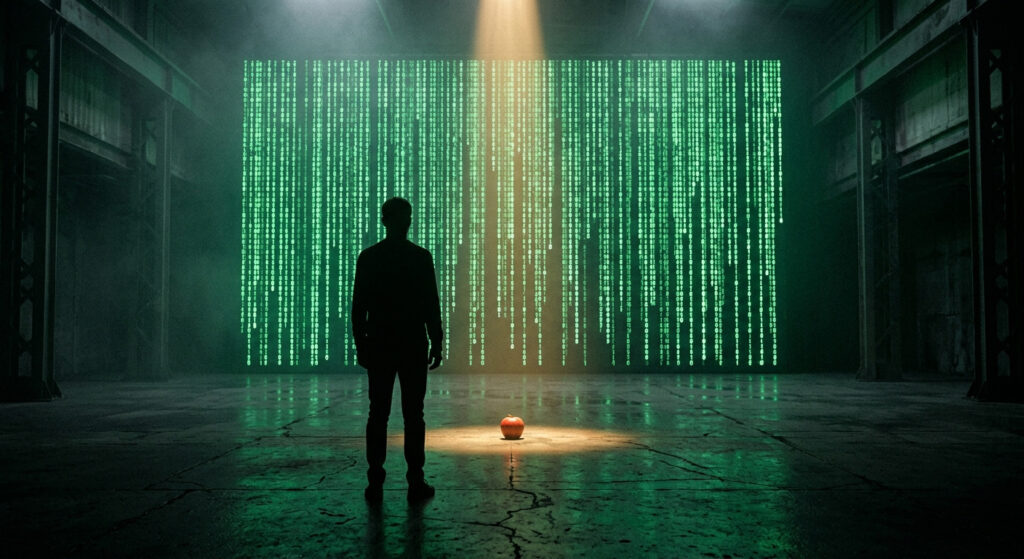
None of this is an argument for opting out of life. It’s an argument for reading the receipt.
Every trade described here — time, health, presence, identity, courage, even the deferred decades of a retirement that arrives when the body is least able to use it — has a counterpart that’s sometimes worth paying. A school that teaches a child to read in exchange for some raw curiosity isn’t theft. A salary that buys stability in exchange for hours isn’t corruption. The problem was never the existence of the trade. It’s the number of trades made in the dark, at a rate nobody bothered to check, by someone who stopped being able to check a long time ago.
What separates a life quietly extracted from a life deliberately built isn’t the absence of systems. It’s the presence of an audit. Not constant rebellion, not naive acceptance — just the recurring, unglamorous habit of asking what was actually given up for what was actually received, and whether that exchange still makes sense today.
Most people stop asking somewhere in their twenties, not because the question stops mattering, but because the very faculties needed to ask it — solitude, judgment, the willingness to sit with an uncomfortable answer — are usually the first things traded away.
So the real measure of a life might not be what it accumulated. It might be how long the audit stayed open. Whether, decades in, there was still someone home to notice the exchange rate had changed — and the courage left to renegotiate it.


GIPHY App Key not set. Please check settings