
 dudeoi
“Beauty is in the eye of the beholder.”
It’s one of those ideas we’ve repeated so often that it feels unquestionably true. Taste is personal. Everyone likes different things. End of discussion.
Except… that’s not what we observe.

If taste were purely subjective, trends shouldn’t exist.
Entire generations wouldn’t suddenly start dressing alike. Luxury brands wouldn’t converge toward the same visual language. Minimalism wouldn’t replace maximalism. Millions of people wouldn’t independently decide that one sneaker is desirable while another is embarrassing.
Something else is happening.

We Don’t Choose Taste in a Vacuum
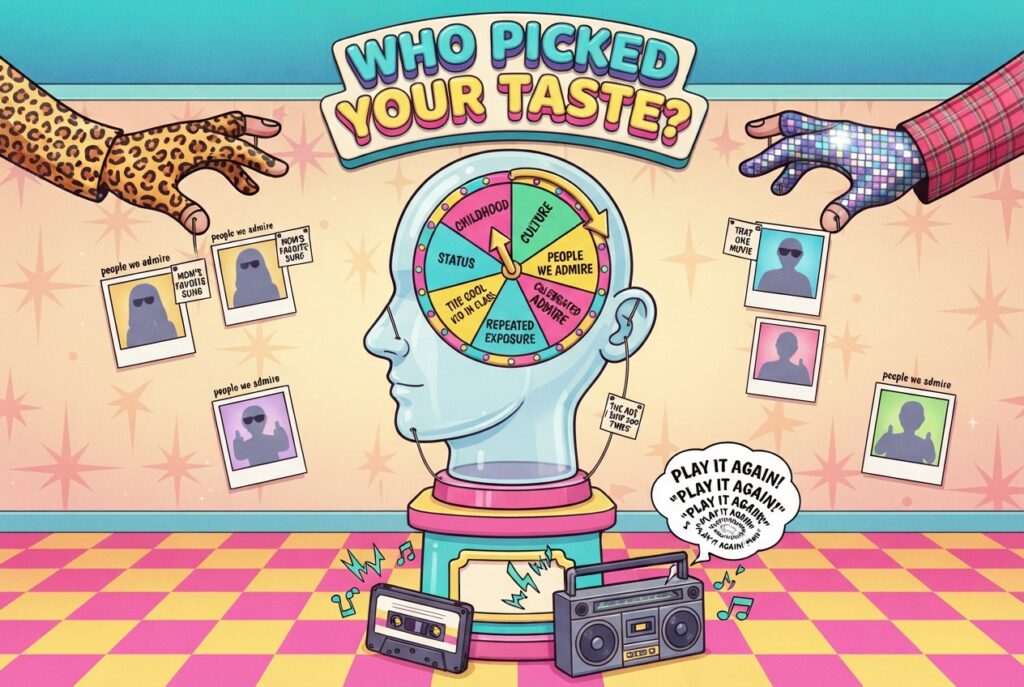
Every preference we have is shaped by invisible forces.
- Our childhood.
- Our culture.
- The people we admire.
- The things we repeatedly see.
- The status we unconsciously seek.
The first time you hear a song, it might feel strange.
By the tenth time, it’s your favorite.
Psychologists call this the mere-exposure effect: repeated exposure increases liking. We often mistake familiarity for preference.
Our taste feels deeply personal because we rarely witness it being built.
Then Why Does Kitsch Exist?
Kitsch is one of the most interesting clues.
Think of fake marble columns, oversized gold ornaments, imitation luxury watches, neon-colored “luxury” interiors, or inspirational posters overloaded with dramatic effects.
Most people instantly feel that something is “off.”
Not because someone explicitly taught them.
Because taste isn’t random.
We develop shared intuitions about proportion, harmony, authenticity, and restraint.
Kitsch often imitates prestige without understanding what created it in the first place.
It tries to communicate luxury by adding more.
- More gold.
- More shine.
- More decoration.
Ironically, what often feels luxurious is the opposite: confidence, restraint, and intention.
But Taste Isn’t Objective Either
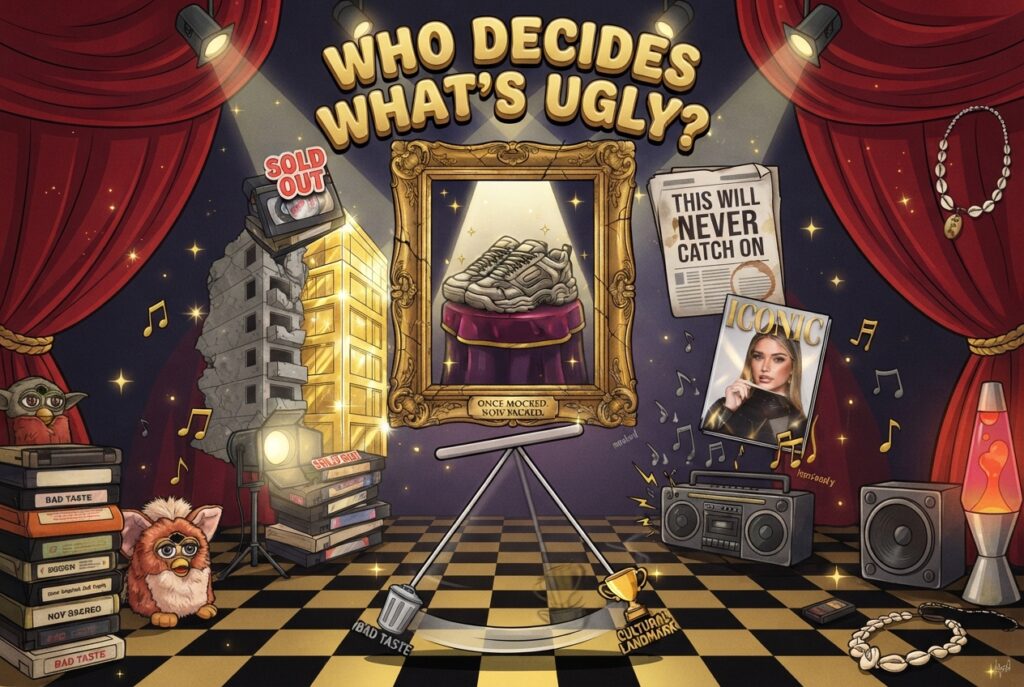
Here’s the twist.
Many things we now admire were once dismissed as bad taste.
- Sneakers didn’t belong in luxury fashion.
- Anime was considered niche.
- Streetwear wasn’t high fashion.
- Brutalist architecture was ugly.
Certain music genres were mocked before becoming cultural landmarks.
History is full of aesthetics that began as “bad taste.”
- So taste clearly evolves.
- If it changes, it can’t be completely objective.
Popular Doesn’t Mean Good
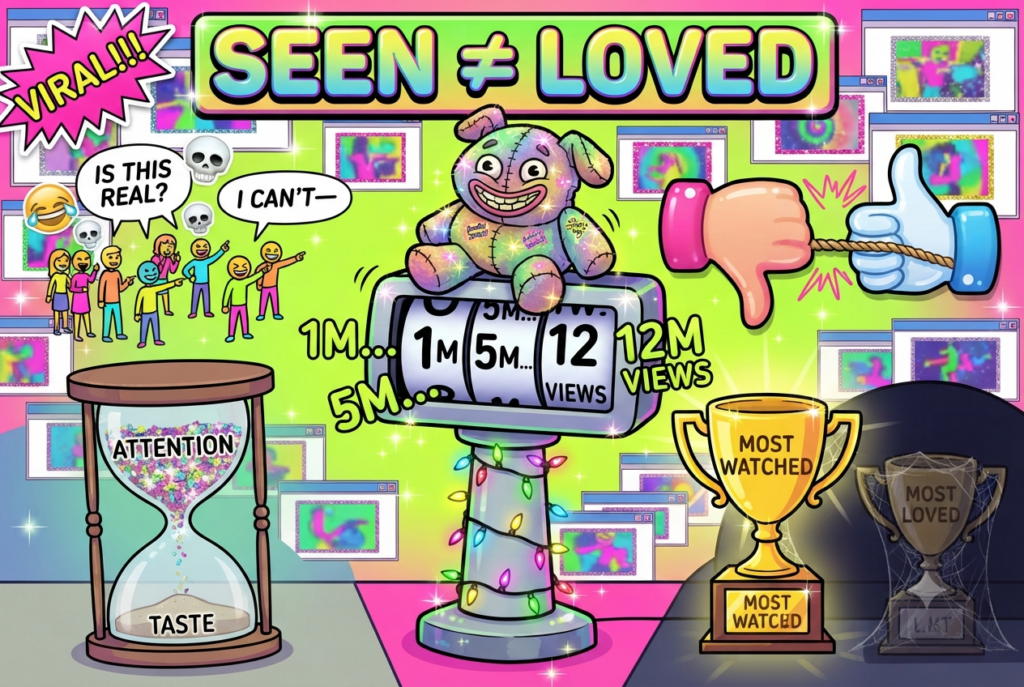
The internet has made this even more confusing.
- A product can go viral because people hate it.
- A movie can become famous because everyone mocks it.
- An advertisement can generate millions of views because it feels ridiculous.
- Attention is measurable.
- Taste isn’t.
Virality tells us what people looked at.
- Not what they’ll remember.
- Not what they’ll cherish.
- Not what they’ll return to years later.
The internet rewards reaction.
Taste develops much more slowly.
So What Is Taste?
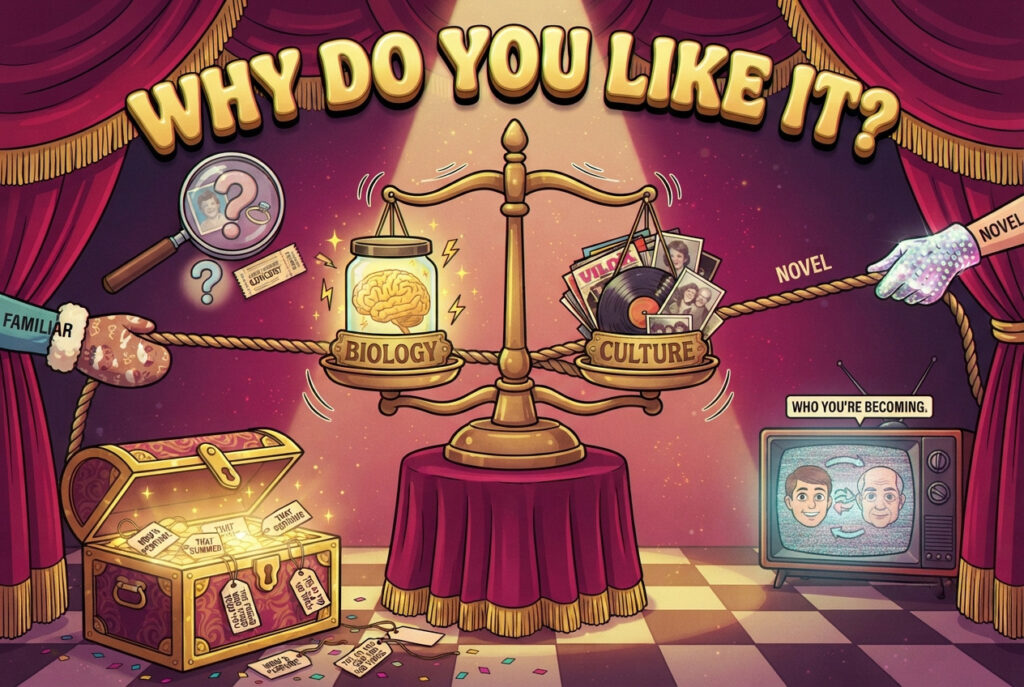
Taste is neither objective nor subjective.
- It is negotiated.
- Between biology and culture.
- Between familiarity and novelty.
- Between personal experience and collective influence.
- Between who we are…
- …and who we’re trying to become.
Perhaps the most interesting question isn’t:
“Do I like this?”
It’s:
“Why do I like this?”
Because the answer is rarely, “I simply do.”
More often, it’s the story of everything that quietly shaped us long before we believed we were choosing for ourselves.
- Your taste is personal.
- It just isn’t entirely yours.
Can you truly exist if everything about you is immediately legible?
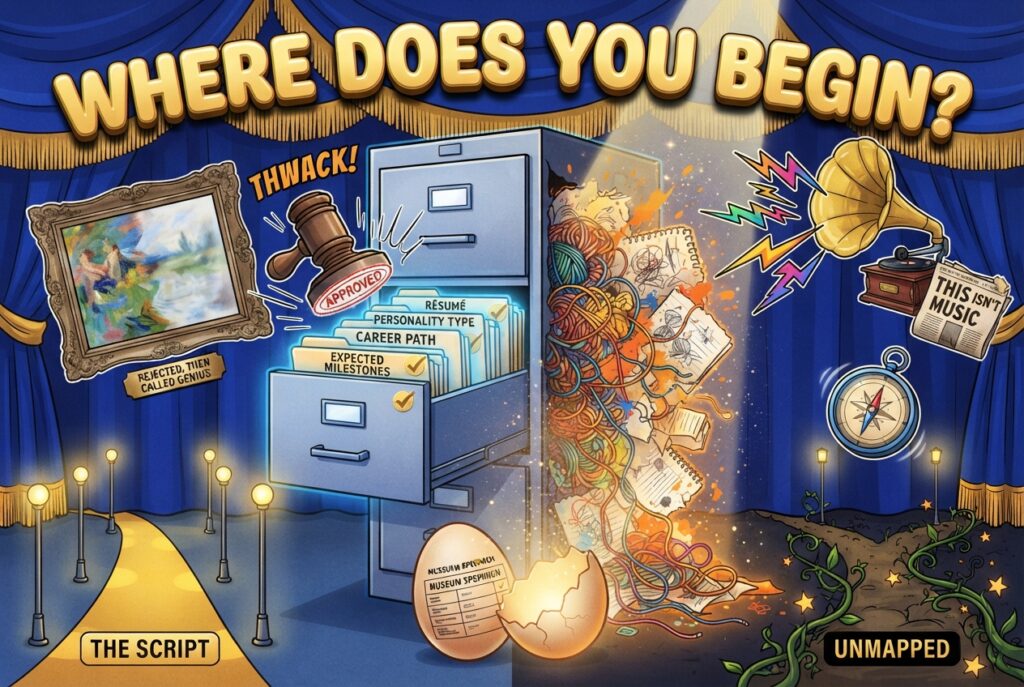
If legibility is being understandable, recognizable, socially acceptable, and fitting existing categories, then the question becomes: can one exist only inside legibility.
The argument could be:
- To exist socially, we need to be legible.
- People need to understand us.
- Employers need to read our résumé.
- Friends need to recognize our personality.
- Society functions because people become predictable.
But complete legibility has a cost.
- If every decision you make is already expected…
- If every ambition has already been mapped…
- If every success follows a familiar script…
Where does you begin?
- Perhaps individuality isn’t the absence of influence.
- Perhaps it’s the willingness to step into something that cannot yet be explained.
- Every meaningful creation begins as illegible.
- The Impressionists looked unfinished.
- Jazz sounded like noise.
- Anime was dismissed as childish by many outside Japan.
- The internet itself was once considered a toy.
- Legibility often arrives after innovation.
- The world first rejects.
- Then questions.
- Then imitates.
- Then calls it obvious.
So maybe existence isn’t about rejecting legibility altogether.
It’s about accepting periods of necessary illegibility.
Because if every step of your life already makes perfect sense to everyone around you…
…you may simply be walking a path that was already there.
A sentence that captures this idea could be:
“Legibility helps society recognize you. Illegibility is often where you discover yourself.”
Or even shorter:
“The parts of you that matter most are often illegible at first.”
I think that’s a more nuanced claim than saying “following legibility means you don’t exist.” It acknowledges that legibility has a purpose, while arguing that genuine authorship often begins where legibility temporarily ends.
At What Point Does a Survival Strategy Become an Identity?
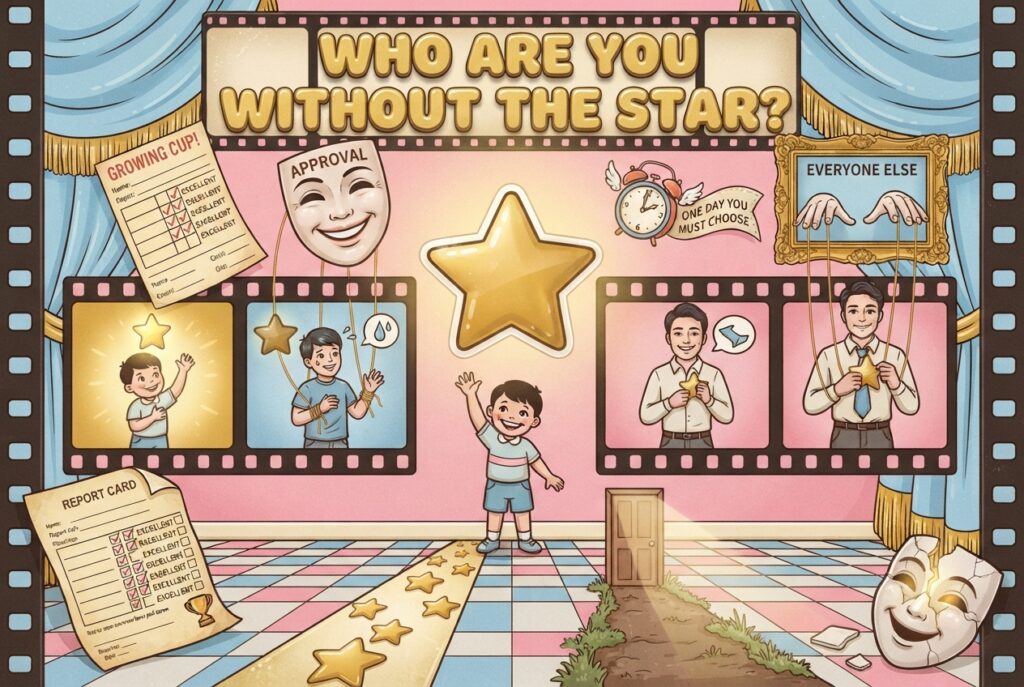
A child learns very early how to survive in a social world.
- They learn to read faces.
- They learn which behaviors receive a smile.
- They learn which actions create approval and which ones create rejection.
A child who asks “Am I allowed?” is not weak. They are adapting. Approval is not just pleasant; it is safety. Belonging is a fundamental human need.
But something subtle can happen over time.
The strategy that once protected us can slowly become the way we define ourselves.
The child who learned to be praised for being obedient may become the adult who avoids any choice that could disappoint others.
The child who learned that achievement brings recognition may become the adult who measures their worth only through accomplishments.
The child who learned to be “easy to understand” may become the adult who avoids anything uncertain, unusual, or difficult to explain.
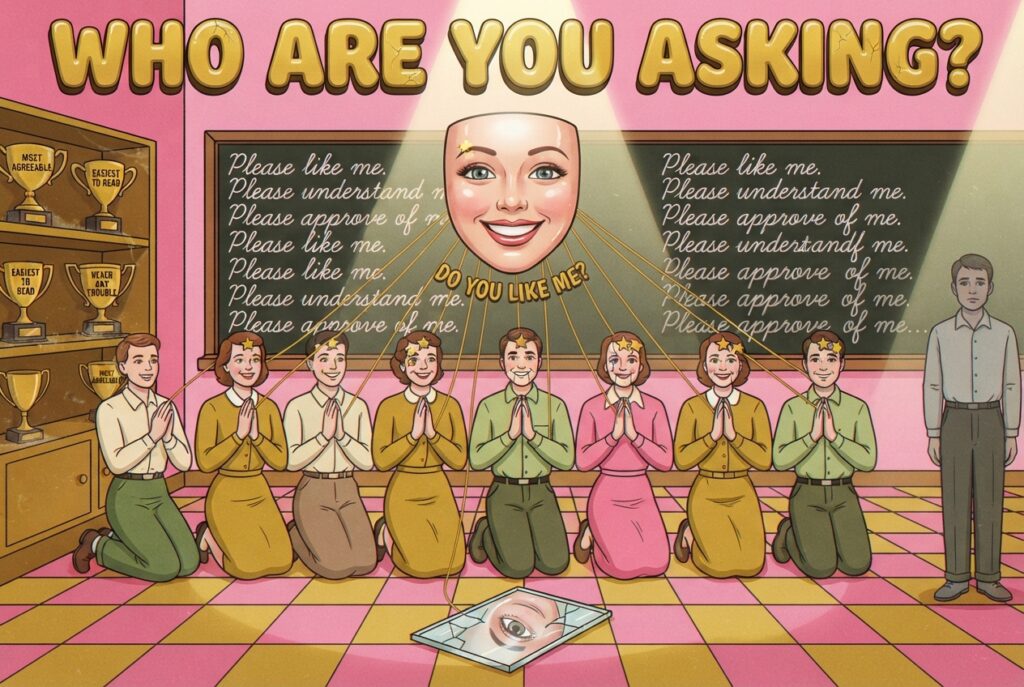
At first, these strategies are tools.
Then, without noticing, they become habits.
Then, they become identities.
The difference is subtle.
- A person who chooses to be responsible is expressing a value.
- A person who feels unable to disappoint anyone may be protecting an old fear.
- A person who enjoys success is celebrating something meaningful.
- A person who cannot stop proving themselves may be repeating a survival strategy.
The question is not whether we seek approval. We all do.
The question is:
Are we choosing the image we present to the world, or are we trapped maintaining one?
Because the things that once helped us belong can eventually prevent us from becoming.
The child learns:
“I am loved when I do this.”
The adult must eventually discover:
“I can still be myself when I choose something different.”
Growing up may not be about becoming completely independent from others.
It may be about reaching a point where approval becomes a gift rather than a requirement.
Why Did My Heart Will Go OnBecome Kitsch?
This is exactly what makes My Heart Will Go On interesting for understanding kitsch: kitsch is not necessarily ugly, vulgar, or visually overloaded.
We often associate kitsch with things like:
- too much gold;
- too many colors;
- too many effects;
- obvious bad taste.
But another form of kitsch exists: emotional kitsch.
My Heart Will Go On is restrained in its production, but it pushes certain emotional codes to their absolute maximum:
Eternal love.
Tragic loss.
Destiny.
A memory that survives through time.
A promise that goes beyond death.
These are not subtle emotions. They are universal, enormous, almost mythological emotions.
The song does not say:
“I loved someone and I miss them.”
It almost says:
“A love so powerful that it continues to exist beyond death.”
That is a form of exaggeration.
Kitsch appears when a work expresses something with an intensity that almost exceeds the reality of the situation.
A simple example:
Someone quietly crying alone in an empty room → restrained emotion.
Someone standing in the rain, arms open, screaming about their lost love with a full orchestra behind them → potentially kitsch.
That does not necessarily make it bad. On the contrary, it can be extremely effective.
The paradox of kitsch is that it can be:
- sincere;
- technically excellent;
- deeply moving.
What makes it kitsch is that it does not try to hide its emotion.
It embraces the feeling completely.
A good definition could be:
“Kitsch is not the absence of taste. Sometimes it is an emotion so visible that it becomes almost embarrassing.”
And that is why My Heart Will Go On is such a good example: many people can recognize its excess while still being genuinely moved by it.
Kitsch often exists in that strange place where we think:
“It’s too much… but it works.”
Can You Intentionally Create Kitsch?
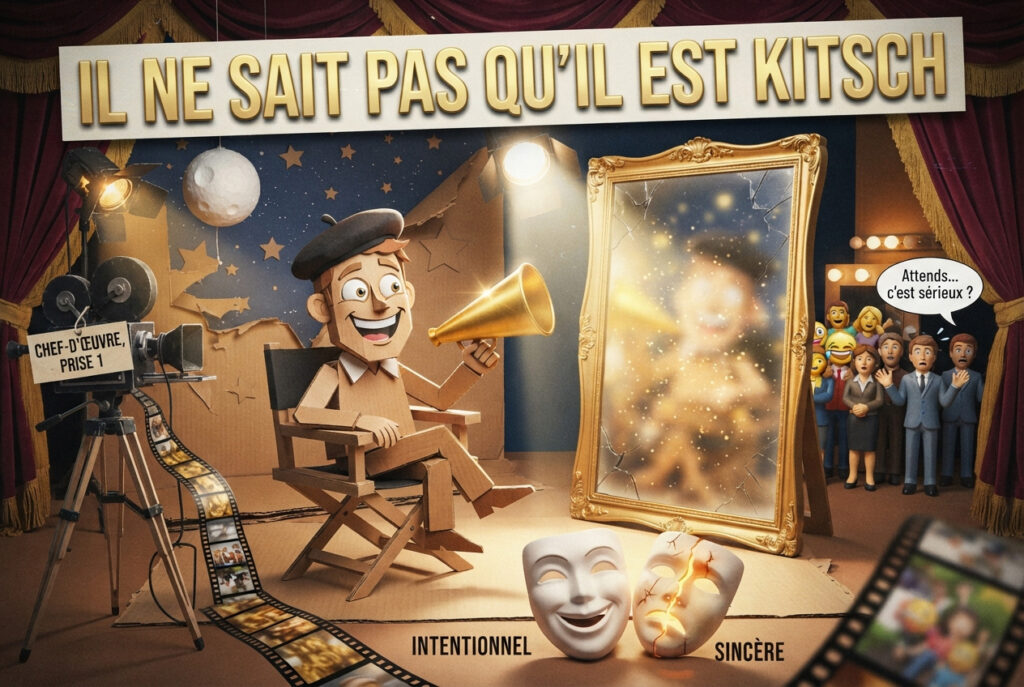
Can Kitsch Be Designed?
There is a difference between:
- Unintentional kitsch (not designed to be kitsch).
- Intentional kitsch (deliberately designed to be kitsch).
And the former often has much greater viral potential.
Why?
Because unintentional kitsch is sincere.
Someone genuinely believed they were creating something beautiful, profound, or luxurious… yet the final result creates a gap between intention and perception.
It is that gap that fascinates us.
Take a few examples:
- The Room: Tommy Wiseau wasn’t trying to make “the worst movie ever made.” He wanted to create a great drama.
- Friday wasn’t created as a meme.
- Many local television commercials that later became cult classics were produced with complete sincerity.
- Some music videos from the late 1990s and early 2000s became iconic precisely because they were unaware of their own excess.
By contrast, when a brand deliberately tries to create “something kitsch,” audiences often sense the intention.
And that intention breaks part of the magic.
It’s similar to humor.
Someone trying desperately to be funny is often less amusing than someone who says something sincere that unintentionally becomes funny.
Perhaps we could define it this way:
Unintentional kitsch is a sincere attempt at greatness. Intentional kitsch is often an imitation of that sincerity.
Or even more simply:
Kitsch becomes iconic when it doesn’t know it’s kitsch.
That said, the picture is more nuanced.
Some works consciously embrace kitsch and succeed brilliantly. They simply don’t become popular for the same reasons. They are appreciated because they are clever, ironic, or deliberately self-aware.
Unintentional kitsch, however, often provokes a different reaction:
“Wait… is this serious?”
And that uncertainty is incredibly shareable.
This may be the most important point:
Virality is often born from ambiguity.
When we don’t know whether something is:
- a masterpiece or a disaster,
- sincere or ironic,
- brilliant or ridiculous,
we feel compelled to show it to someone else.
That urge to say, “You have to see this,” is what makes content spread.
It isn’t kitsch itself that goes viral.
It’s the tension between the creator’s perceived intention and the audience’s perceived result.
The Space Between Being Seen and Being Yourself
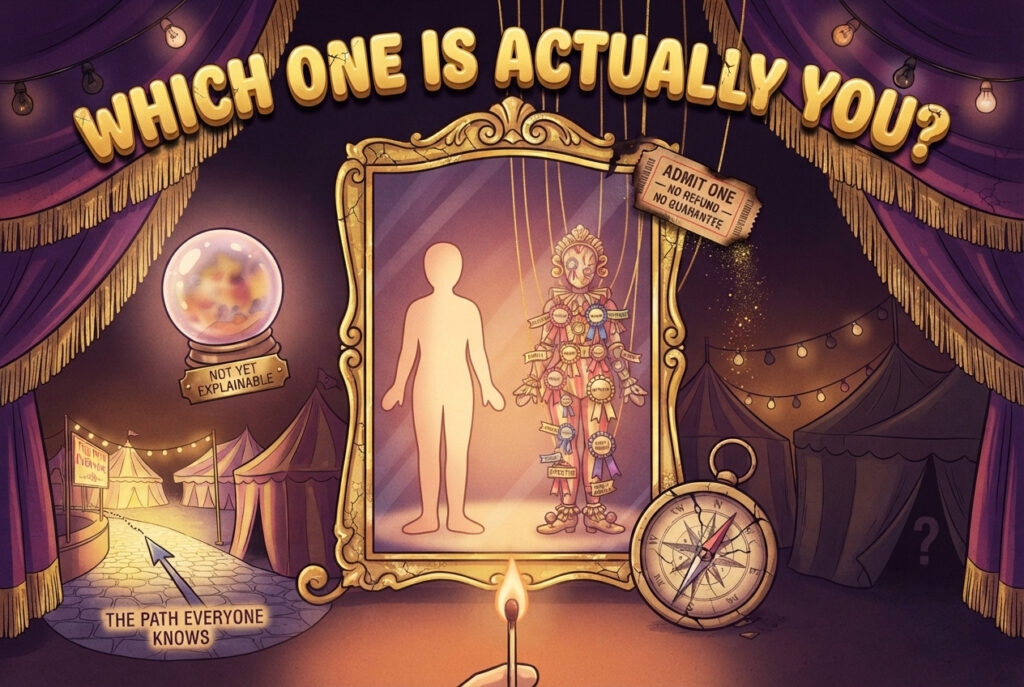
Perhaps the goal is not to escape influence. That would be impossible.
Everything we love, everything we admire, and everything we reject is shaped by a world that existed before us. Our taste carries traces of our culture, our memories, our experiences, and the people who shaped us.
- The illusion is not that we are influenced.
- The illusion is that we are not.
The real question is not:
“How do I become completely independent from the world around me?”
It is:
“Which parts of me were chosen, and which parts were simply inherited?”
Legibility gives us a place in the world. It allows us to communicate, belong, and be understood.
But a life built entirely around being understood can become a life built around avoiding uncertainty. And uncertainty is where creation begins.
- Every original thought, every unconventional path, every meaningful change starts as something difficult to explain.
- Before it becomes admirable, it often looks strange.
- Before it becomes obvious, it often looks wrong.
- Before the world recognizes it, someone has to believe in it without recognition.
Maybe the purpose of becoming ourselves is not to reject the world’s expectations, but to learn when they no longer serve us.
To know when a rule is wisdom, and when it is simply a habit.
- When approval is encouragement, and when it becomes a cage.
- When a path is truly ours, and when we are only following it because everyone else can understand it.
Because in the end, a life is not defined by how perfectly it fits a pattern.
It is defined by the moments when we choose.
- Not because the choice is easier.
- Not because it is guaranteed to succeed.
- But because, for once, it is ours.
The most authentic parts of us are often the parts that had no proof they would be accepted.


GIPHY App Key not set. Please check settings