
 dudeoi
American History X was one of the first films that truly marked me. In fact it’s perhaps the first DVD I’ve ever bought. It felt like more than a movie — as if a raw life lesson was hidden inside its violent, intimate story. It stayed with me long after the screen went dark.
I understood then what cinema should feel like: inhabiting another person’s world so fully that you forget the screen, untouched by any distraction meant to impress.

OUR SPONSOR OF THE DAY : NEONNIGHT.FR

The Story

American History X tells a story that could belong to any family, in America or beyond — the same way The Tree of Life does.
Its central theme is how personal pain turns into hatred and destruction, and how that destruction becomes a generational echo, repeated and transmitted without anyone realizing it.
It is also the intimate tragedy of a family slowly torn apart by forces they can’t fully see or name — resentment, fear, unspoken wounds, the subtle erosion of trust.
The film shows how a household can fracture long before anyone realizes it’s happening, and how the consequences of that quiet collapse ripple through every member of the family.
The Cinematography

The cinematography of American History X is something we rarely see today — direct, unembellished, and free of stylistic distractions. It strips away all unnecessary aesthetic flourishes to let the performances and the emotional weight of the story hit with full force.
The visual approach is deceptively simple: the present is shot in color, while the past unfolds in stark black and white. Unlike more self-conscious modern films, where such choices can feel like stylistic flexes, here it works with complete emotional clarity.

The contrast between color and monochrome doesn’t just mark different timelines — it mirrors the internal evolution of the characters, their perception of the world, and the moral journey they undergo.
This restrained visual language makes the film feel more honest, more raw. Instead of calling attention to itself, the cinematography becomes the invisible frame through which the story breathes.

The film’s greatest strength lies in how it places the actors’ performances at the center of everything. Their emotional truth becomes the engine of empathy — the direct bridge between the audience and the characters’ inner world, using slow motion for key psychological sequences.
Most shots are captured with slightly longer lenses, allowing the camera to linger on subtle facial shifts, micro-expressions, and the physical presence of each actor. This creates an intimate emotional proximity, where even the smallest gesture carries weight. It’s a direct, human approach to storytelling — one that feels increasingly rare today.
The themes

The brilliance of American History X lies in its ability to make Derek Vinyard’s worldview feel uncomfortably familiar.
His ideology is abhorrent, yet the social frustrations he taps into—immigration, inequality, entitlement, and responsibility—mirror conversations found in countless modern countries.
This relatability is what makes the film so powerful and so dangerous: it shows how destructive ideas often begin with something that seems rational.
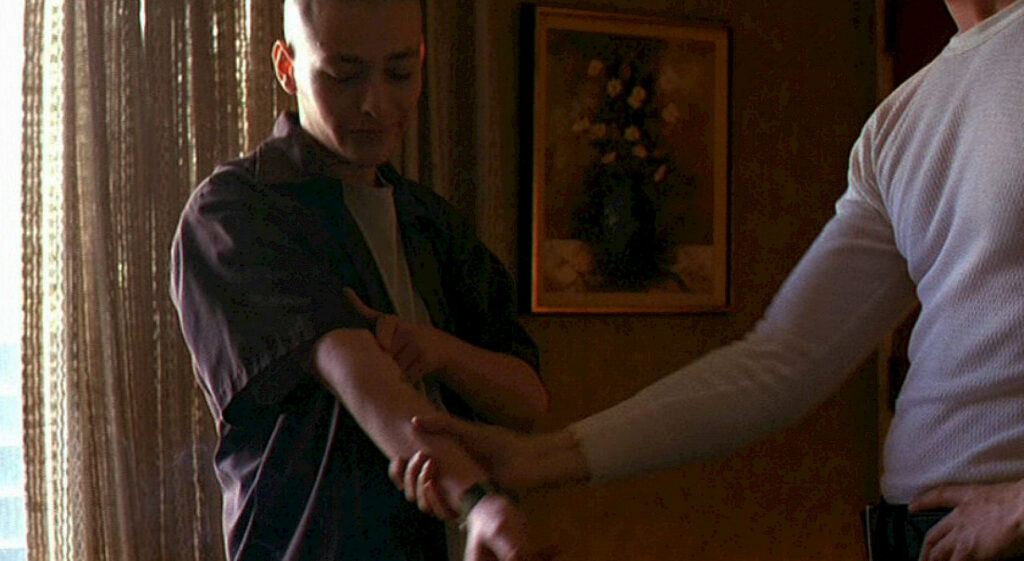
Derek’s past beliefs aren’t presented as a simplistic straw man that can be waved away. They’re given enough depth and coherence to feel uncomfortably relatable, which is precisely what binds the audience to him and heightens the power of his transformation.
This is perhaps what could happen to a wounded adolescent, struggling to make sense of his father’s murder and the injustice surrounding it.

Although his methods are wrong, there is a certain nobility in Derek’s struggle—his attempt to reclaim control and power over his life serves as a coping mechanism.
That’s why he is such an effective leader, inspiring his brother Daniel, who despite his underneath perceptiveness can’t avoid following the same path of extremism.
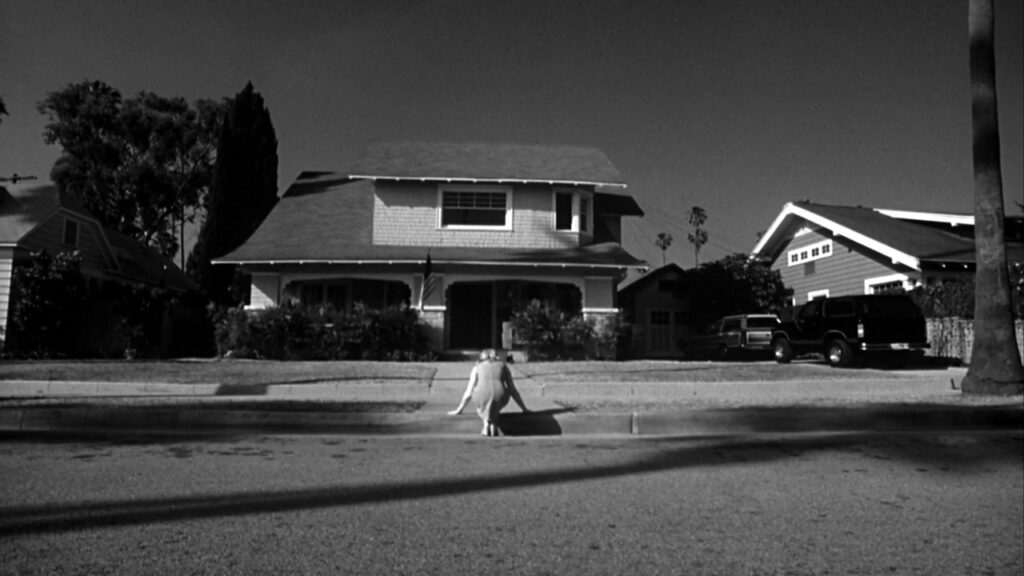
What struck me most was how a single dramatic event and the decisions of one family member can shape the trajectory of an entire family for the rest of their lives.
How a mother simultaneously struggles to shoulder responsibility while also withdrawing, gradually spiraling into poverty and disillusionment. This illustrates how deeply interconnected family members are, and how a child’s struggles can ripple onto parents who feel accountable for their perceived failures.
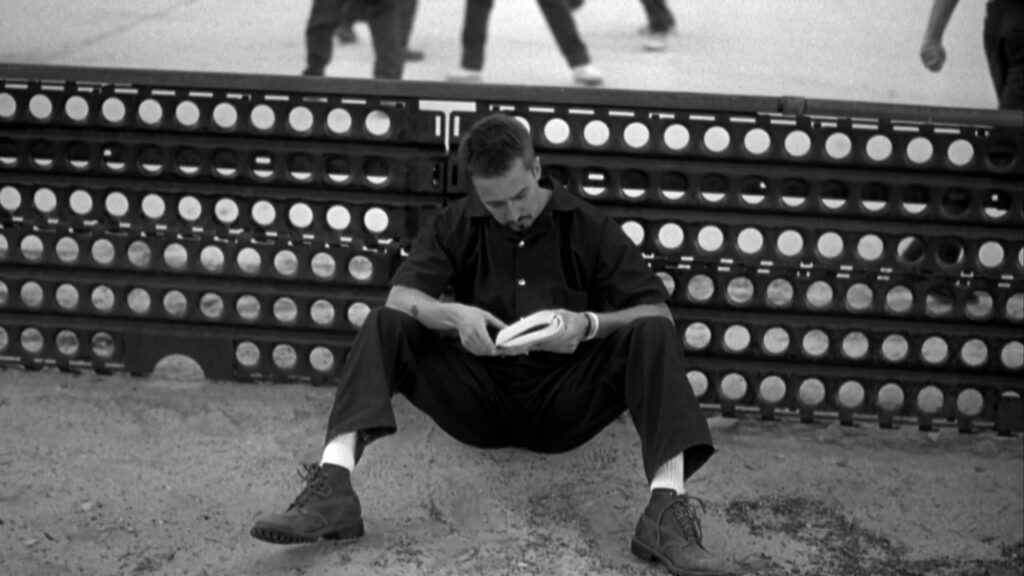
Ultimately, this movie resonates deeply with families who have experienced dramatic events and painful moments, serving as a powerful reflection on how trauma, choices, and misunderstandings can shape relationships and generational dynamics.
The Actors
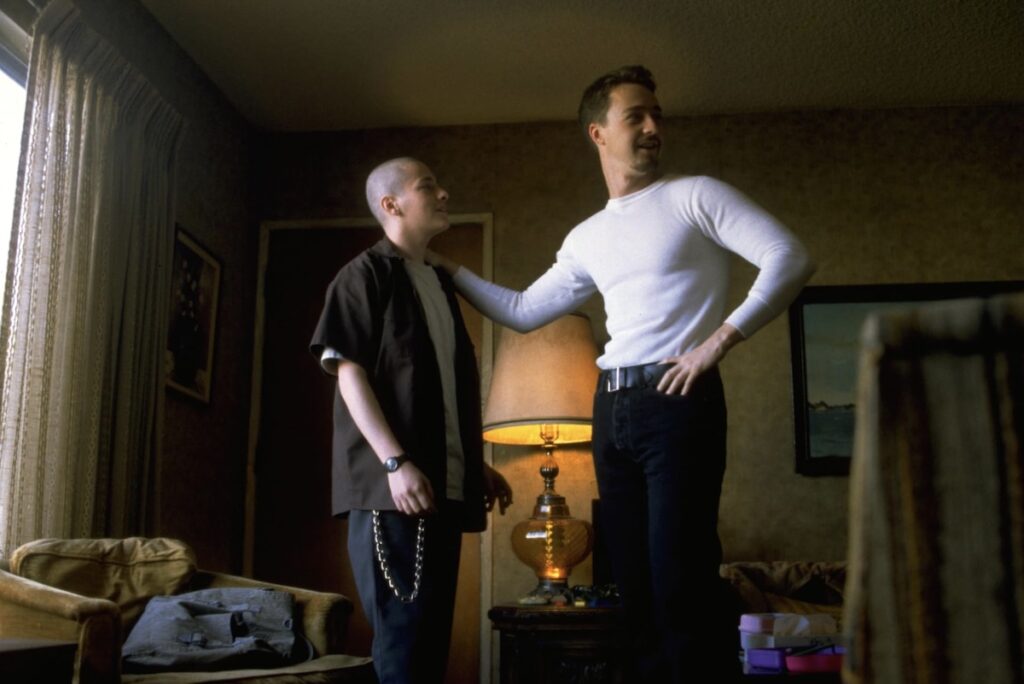
Edward Norton is undeniably one of the most talented actors of his generation, even if he doesn’t always receive the same recognition as someone like Leonardo DiCaprio.
I believe the film’s emotional impact owes much to its cast—Edward Norton, Edward Furlong, Beverly D’Angelo, and Avery Brooks—who fully embodied their characters. Each performance is credible and grounded, creating a sense of symbolic coherence within the story.
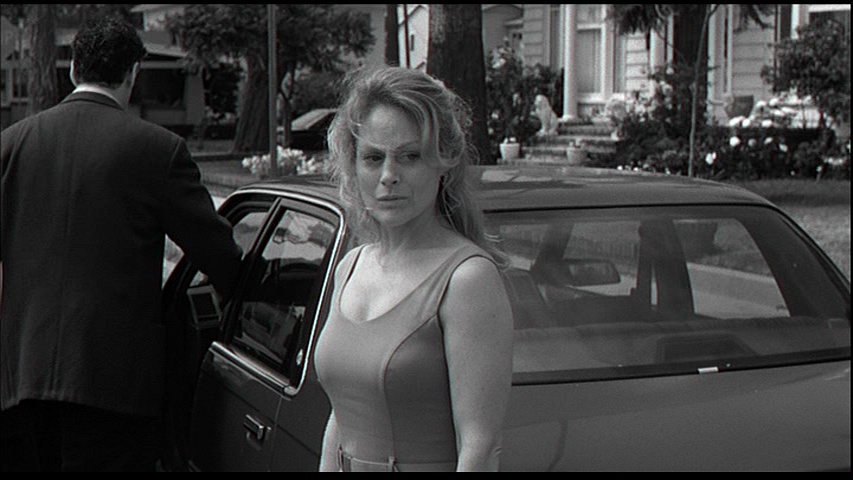
For instance, Avery Brooks’ charisma leaves a strong impression on Derek, mirroring Derek’s own charismatic presence and eventual emergence as a leader.
Derek had to be portrayed across multiple stages of his life: as the innocent teenager, the radicalized extremist, and ultimately the redemptive figure. That’s where Edward Norton excels, in my opinion—he makes us care deeply for the character and empathize with him from beginning to end, even in his darkest moments.
The Soundtrack

Composed and recorded by Anne Dudley, the soundtrack of American History X is, in my view, one of the most emotionally powerful scores ever created.
It ranges from the dramatic opening, setting the tone for the story, to the moment he is aware he is going to be separated from his brother by the police, to the tender moments when Derek reflects on his innocent, ordinary childhood with his brother at the beach.
The final scene remains, to this day, one of the most heartbreaking moments in cinema for me, with the score playing a crucial role in amplifying the emotional impact.
OUR SPONSOR OF THE DAY : NEONNIGHT.FR
Conclusion

Why does this film resonate so deeply with me? Perhaps because it mirrors the invisible prisons many people live in—trapped by unresolved trauma, unable to express it, and with no clear path to overcome it.
At its core, the movie is a powerful exploration of transformation, revealing how profound personal change can ripple outward, carrying consequences for everyone connected to it.
How art, and cinema in particular, can serve as a tool for people to step out of their own lives, experience a parallel dramatic event, and grasp the bigger picture.
Ultimately, it is an intimate story of a family struck by tragedy, torn apart, yet striving to heal, forgive one another, and find redemption.


GIPHY App Key not set. Please check settings