
 dudeoi
Force Majeure (also known as Snow Therapy) is a film written and directed by Ruben Östlund, the same director who won the Palme d’Or for Triangle of Sadness.
It is one of the most incisive films exploring constructed identity in modern society, where the threat of nature has largely been removed, leaving social roles and instincts rarely tested by real danger.

OUR SPONSOR OF THE DAY : NEONNIGHT.FR

Quick plot
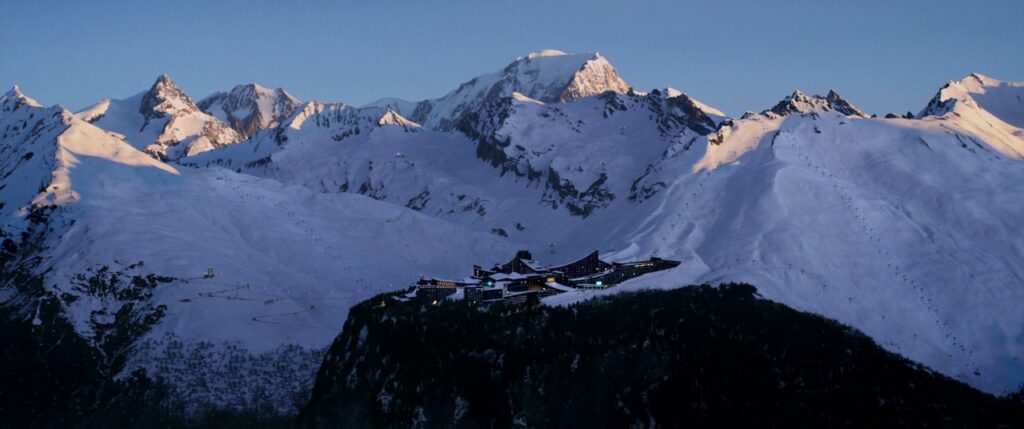
A family on a ski vacation in the French Alps enjoys a seemingly perfect getaway. During a lunch on a mountain terrace, a controlled avalanche suddenly appears to threaten them.
In the moment of panic, the father reacts instinctively in a way that shocks his wife and disrupts the family dynamic.
What follows is not about survival, but about the aftermath: the couple’s relationship begins to unravel as they revisit the event, question each other, and confront the gap between who they thought they were and what actually happened.
The Snow Therapy’s Core Themes
Ruben Östlund’s film is deceptively simple, but it cuts into several deep psychological and social dynamics:
1. Fragility of Identity (especially masculinity)
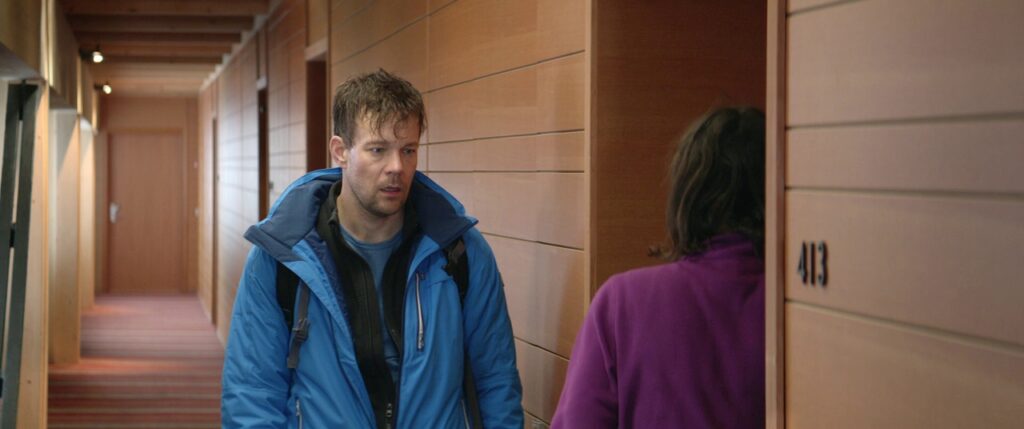
A single instinctive reaction (panic) shatters the father’s self-image.
- he sees himself as protector
- others expect him to be stable, reliable
- one moment exposes a gap between who he is vs who he thinks he is
Core idea:
Identity in society is stable until raw reality tests it
2. Social roles vs instinct

The film contrasts:
- social expectation → protect your family
- biological instinct → self-preservation
When crisis hits, instinct overrides role.
The problem isn’t the reaction—it’s the mismatch with the role society assigns.
3. Judgment and perception

The real tension comes after the event:
- the wife reinterprets everything
- others judge him
- he tries to deny or reshape the narrative
Status here = freedom from judgment
Once that disappears, his position collapses.
4. Narrative control and denial

He repeatedly:
- denies what happened
- reframes events
- tries to maintain his identity
Core idea:
people don’t just act—they defend the story of who they are
5. Emotional distance and modern relationships
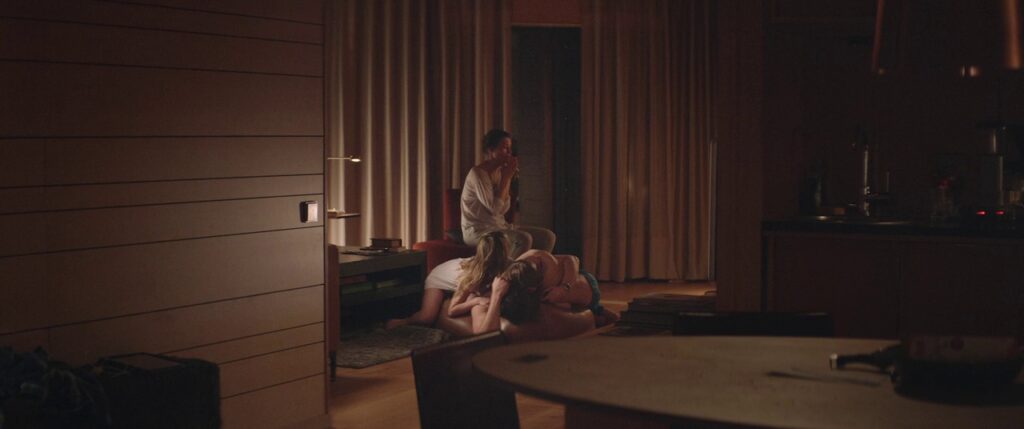
The couple’s relationship reveals:
- underlying fragility
- dependence on roles rather than deep connection
- discomfort with confronting truth
The avalanche doesn’t break the relationship—it exposes it.
6. Status as stability
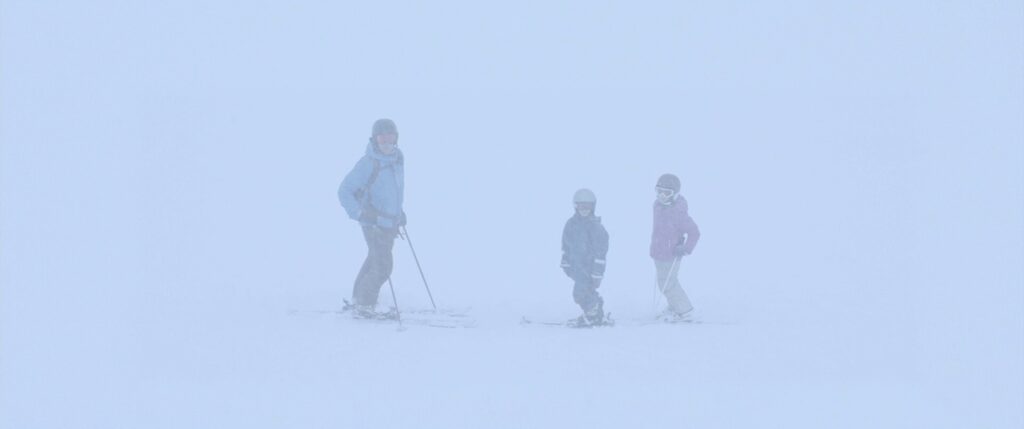
Before the event:
- he has stable status (father, husband, competent man)
After:
- that status is questioned
- he loses moral authority in the family
This ties directly to this idea:
Status provides freedom from scrutiny—until it’s challenged
7. Ambiguity of redemption
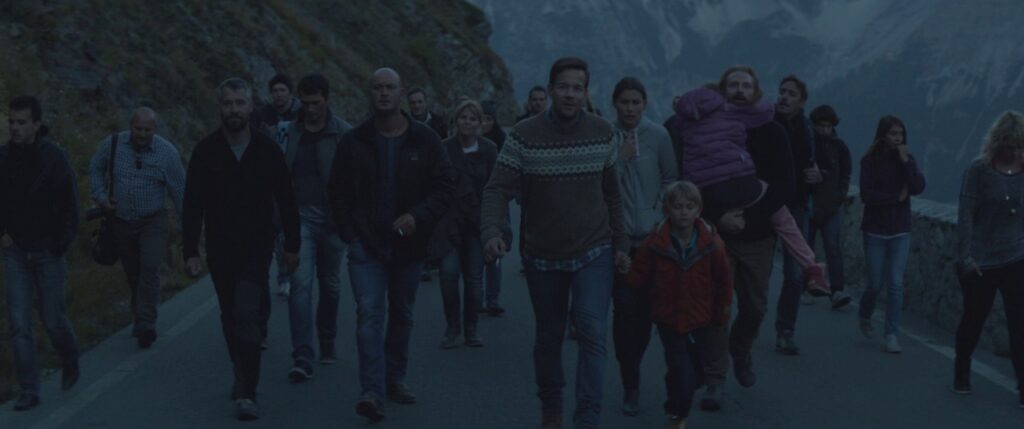
Later moments try to “restore” balance, but:
- are they genuine?
- or another performance?
The film refuses to give clear moral closure.
A Deeper look into Persona vs Identity: The Core Tension
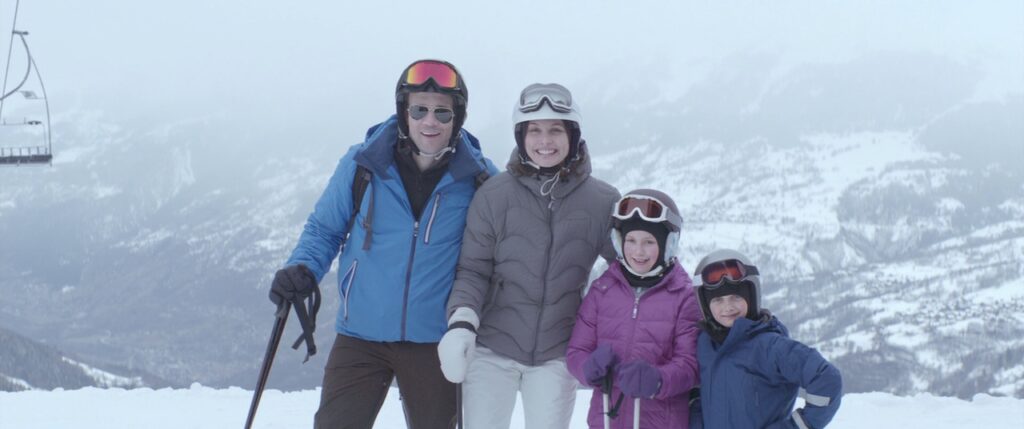
To go deeper into Persona vs Identity in Force Majeure, it helps to treat the film as a study of what happens when a socially constructed self (persona) collides with an unfiltered reaction (identity under pressure).
- Persona → the version of yourself shaped by social expectations
- Identity (under pressure) → what emerges when those expectations collapse
The film is built entirely around the gap between the two.
1. The Persona: Stable, Social, Performed

Before the incident, the father embodies a familiar persona:
- responsible husband
- protective father
- composed, rational man
This persona is:
- socially reinforced (family, environment, norms)
- internally believed (he thinks this is who he is)
- never truly tested
It exists in a low-risk environment where behavior aligns with expectations.
2. The Moment of Rupture
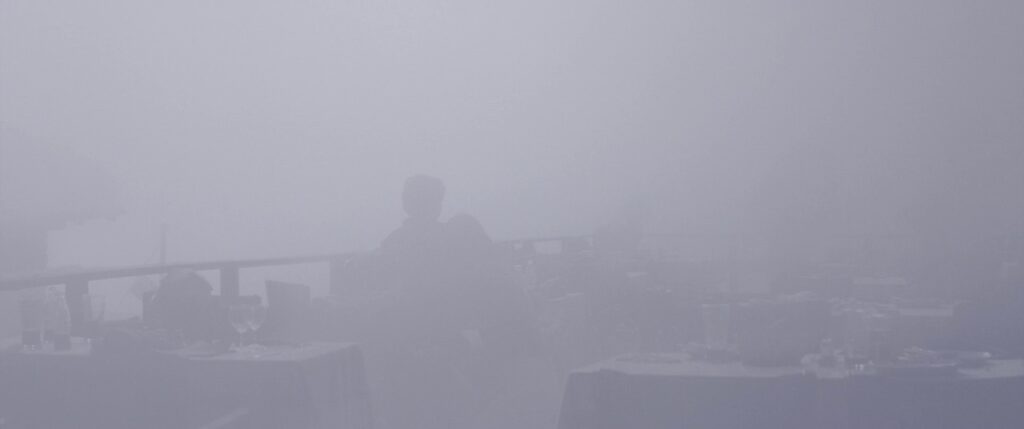
The avalanche scene is not just an event it’s a test condition.
- no time for reflection
- no social performance
- only instinct
His reaction bypasses the persona entirely.
What appears is not “who he wants to be”
but how he actually reacts under threat
3. The Aftermath: Defending the Persona

The real film begins after the event.
He doesn’t just explain—he protects his persona:
- denial (“it didn’t happen like that”)
- reframing
- seeking validation from others
This reveals something crucial:
People are often more committed to maintaining their identity narrative than confronting reality.
4. Identity as Negotiation
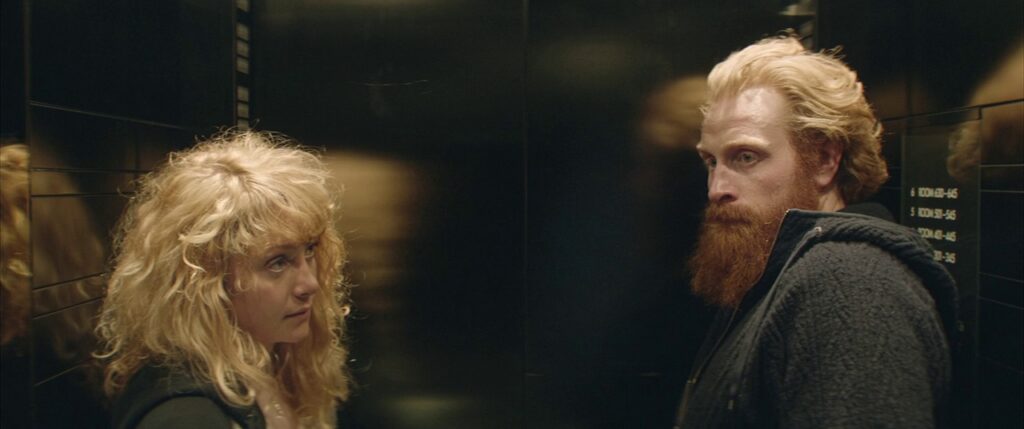
The wife plays a key role:
- she becomes the witness of reality
- she refuses the revised narrative
This creates a conflict:
- his version → preserve identity
- her version → align with reality
Identity becomes:
Something negotiated between self-perception and external recognition
5. Why the Collapse Is So Violent

The intensity comes from the size of the gap:
- Persona: “I protect my family”
- Reality: instinctive self-preservation
The larger the gap:
→ the more unstable the identity
6. Modern context (important)

The film suggests something broader:
In modern society:
- real danger is rare
- identities are rarely tested
So personas can:
- grow stable
- feel “true”
- go unchallenged
Until a moment forces a confrontation.
7. The Necessity of Illusion
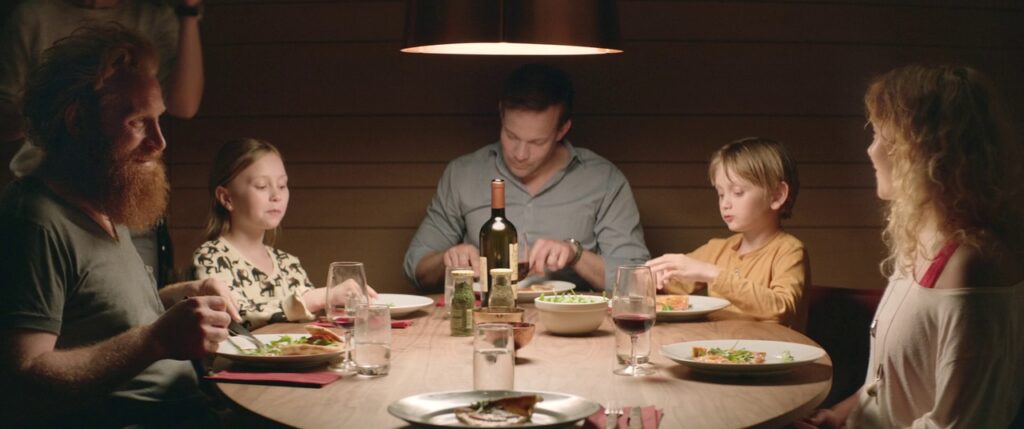
Force Majeure suggests something unsettling: the gap between persona and identity may not just be a flaw, but a necessity.
Social life depends on a degree of illusion. We expect others to be reliable, consistent, and role-aligned even when reality is more complex. These expectations don’t fully reflect truth, but they create stability and make social life predictable.
In this sense, the persona is not only a mask but a functional construct: it reduces uncertainty and holds relationships together. Problems arise when reality breaks this shared illusion.
In Force Majeure, the father’s image as a protector is not just personal belief but a shared assumption. When it collapses, it destabilizes the entire relational structure.
This raises a key question: do we need simplified versions of each other in order to function?
The film suggests that full transparency may be socially impossible. Illusion is therefore not just deception, but a form of social infrastructure that maintains coherence.
The tension is not between truth and falsehood, but between:
- accuracy, which exposes instability
- illusion, which preserves order
8. The Screaming Party
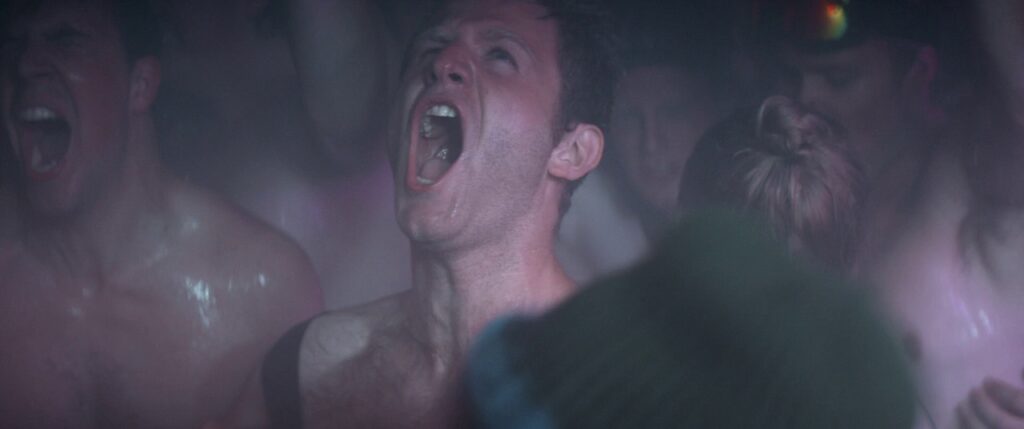
The “men screaming” party in Force Majeure is a controlled ritual of masculinity rather than chaos.
It allows a temporary suspension of the persona—where aggression, noise, and instinct are socially permitted within a structured group setting. What looks like loss of control is actually a socially organized release of tension.
The scene also works as a compensatory mechanism. The party provides a space where masculinity is collectively reaffirmed without challenge from reality.
In contrast to the family sphere, which exposes him to judgment, this environment offers pure social mirroring restoring a temporary sense of coherence and status.
Ultimately, it shows that even “letting go” is structured: identity is not freed from systems, it is briefly stabilized by them in a different form.
9. Male attractiveness and perceived masculinity
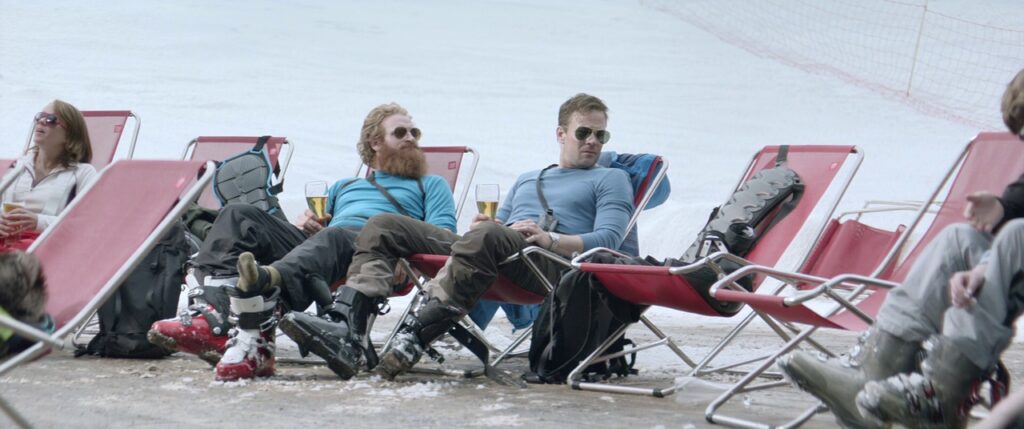
In Force Majeure, the brief exchange where a girl first suggests someone finds the father attractive, then corrects herself, illustrates how fragile identity is when it depends on external perception.
A single statement temporarily elevates his status through imagined desirability, before an immediate correction collapses it. Nothing about him changes—only how he is perceived in that moment.
The scene highlights a core idea of the film: identity is not fixed or stable, but continuously constructed and deconstructed through the gaze of others.
OUR SPONSOR OF THE DAY : NEONNIGHT.FR
Conclusion
Force Majeure shows that identity is not something stable or purely authentic, but a constructed persona sustained by social expectations and low-risk environments. When a sudden moment of pressure breaks this stability, it reveals the gap between who we believe we are and how we actually act.
The film suggests that this collapse is not only personal but structural: relationships and social roles depend on shared illusions that make behavior predictable and coherent. When these illusions are disrupted, instability replaces certainty.
In the end, Force Majeure does not simply contrast truth and falsehood—it shows that identity itself exists in the fragile balance between reality and the necessary illusions that hold social life together.


GIPHY App Key not set. Please check settings