
 dudeoi
Human consciousness is not a unified stream of perception, but a layered system of perception, memory, emotion, prediction, and identity. Within it, perception is inherently fragmented, and coherence is continuously constructed rather than given.
In this context, truth is not only a philosophical concept but a stabilizing process that reduces internal contradiction by aligning competing models of reality. When people describe truth as something that “frees the mind,” they refer to a shift in which conflicting internal representations become less entangled.
Under fragmented perception, the role of the artist emerges in parallel not as decoration of reality, but as participation in how experience is organized, structured, and made perceptible.


OUR SPONSOR OF THE DAY : NEONNIGHT.FR
Truth (or coherence) will set you free
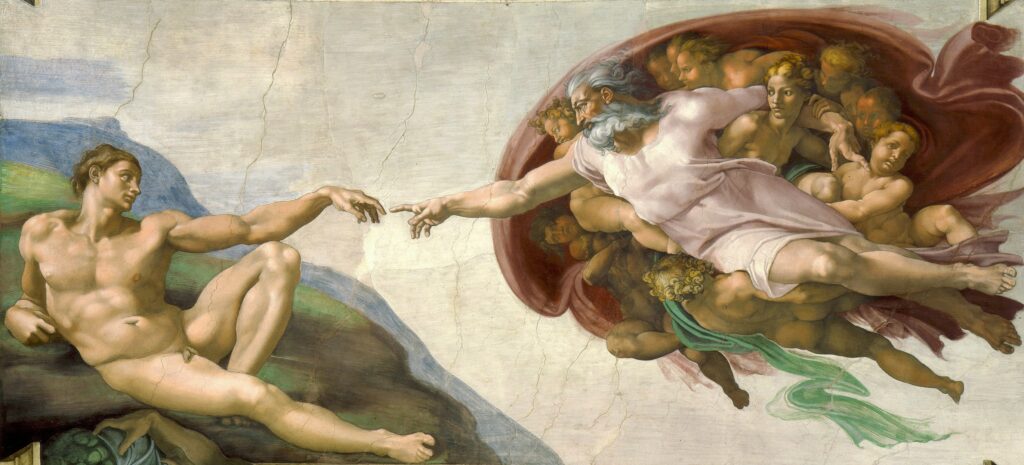
1. The mind as a predictive system, not a passive observer
Modern cognitive science views the brain as a prediction engine.
Instead of simply perceiving reality, the brain continuously:
- predicts what will happen next,
- compares prediction with sensory input,
- updates internal models when mismatches occur.
So at any moment, you are not experiencing “reality directly,” but: reality filtered through layers of expectations and interpretations.
This system is efficient but it becomes unstable when internal models conflict.
2. What “mental entanglement” actually means
Mental tension arises when the brain holds incompatible models at the same time.
Examples:
- “I am confident” vs “I feel insecure”
- “I am honest” vs “I am hiding something”
- “My life is fine” vs “something feels wrong”
- “I should be this person” vs “I am not that person”
Each of these creates prediction conflict:
- one model predicts one reality,
- another model predicts a different one,
- and both are being maintained simultaneously.
The brain must constantly manage the mismatch.
This produces:
- anxiety,
- cognitive fatigue,
- emotional tension,
- and internal fragmentation.
3. Why deception increases cognitive load
When someone maintains a distorted or incomplete version of reality, the brain is forced into extra work:
a) Suppression
Unwanted truths must be actively ignored or pushed away.
b) Simulation
A consistent “story” must be maintained externally and internally.
c) Error management
Contradictions must be explained away or rationalized.
d) Social calibration
Behavior must constantly be adjusted to match the maintained image.
This creates what can be called multi-layer cognitive overhead — multiple mental systems running at once to preserve coherence in a false model.
4. Truth as model simplification
When a person aligns with reality especially emotionally difficult reality something important happens:
They collapse multiple competing models into one.
Instead of:
- “I am okay” (social mask)
- “I am not okay” (internal feeling)
- “I should not feel this” (judgment layer)
There is only: “This is what is happening.”
This reduces:
- contradiction,
- internal negotiation,
- and predictive instability.
The mind becomes less computationally burdened.
5. Emotional mechanics: why truth hurts first
Truth often produces short-term discomfort because:
1. Prediction error spike
The brain realizes its internal model was inaccurate.
2. Identity disruption
If a belief is tied to self-image, correcting it feels like a loss of identity.
3. Emotional release
Suppressed emotions become consciously accessible.
So the initial phase is not peace it is reorganization stress.
6. Why relief comes afterward
After the adjustment phase, the system stabilizes.
This leads to:
- fewer internal contradictions,
- less need for self-monitoring,
- reduced emotional suppression,
- more consistent decision-making.
The result is experienced subjectively as:
- calm,
- clarity,
- groundedness,
- “lightness of mind.”
In computational terms: the brain is running fewer competing models simultaneously.
7. Truth and identity integration
A stable identity requires that internal states and external expression are not in constant conflict.
When they are aligned:
- behavior becomes more automatic,
- decisions require less internal negotiation,
- self-perception becomes more stable over time.
When they are misaligned:
- identity becomes performative,
- and performance requires constant regulation.
This is why authenticity often feels “effortless” compared to performance.
8. Philosophical convergence
Different traditions describe the same mechanism in different language:
- Buddhism: suffering arises from attachment and misperception of reality
- Stoicism: distress comes from resisting what is outside control
- Taoism: imbalance arises from opposing natural flow
Each is essentially describing: reduced internal conflict leads to reduced suffering.
9. The key distinction: truth is not comfort, it is coherence
A common misunderstanding is that truth should feel good.
In reality:
- truth can be painful initially,
- but it increases structural coherence.
So the benefit is not emotional pleasure it is system stability.
A coherent mind:
- wastes less energy maintaining contradictions,
- responds more effectively to reality,
- and experiences less internal fragmentation.
10. Final synthesis
Truth “de-entangles” the mind because it removes the need to maintain multiple conflicting internal simulations of reality.
Instead of: managing contradiction, the mind shifts toward: integrating experience into a single coherent model.
This is why the experience of truth often feels like:
- simplification,
- clarity,
- grounding,
- and reduction of mental noise.
Not because reality becomes simpler but because the mind stops fighting itself.
Truth, Society, Capitalism, and the Role of Artists
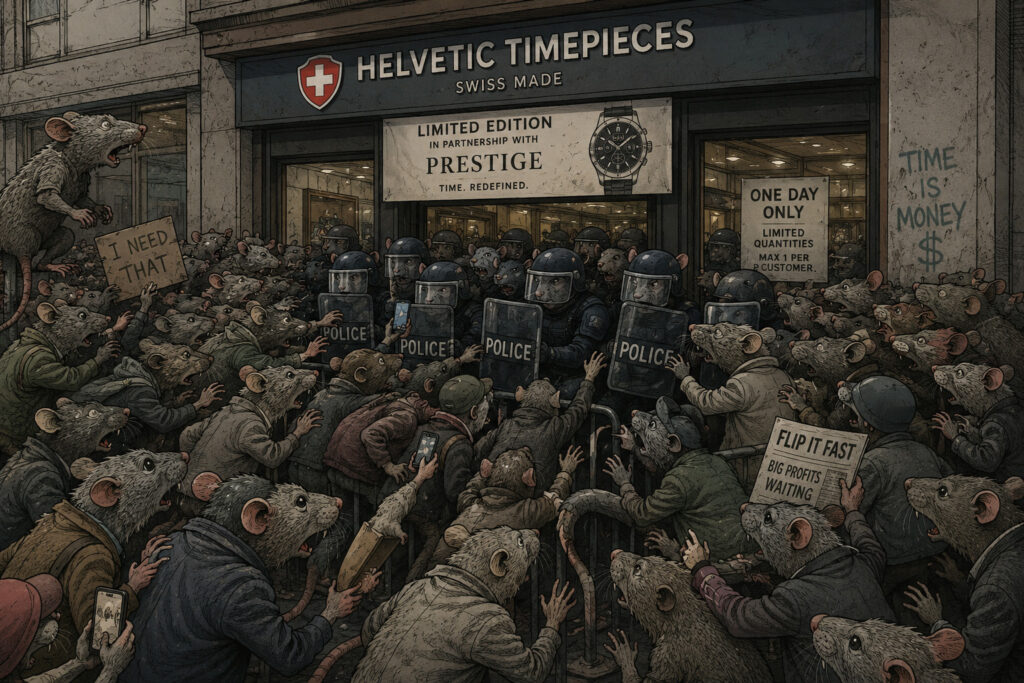
1. How modern society interacts with truth
In modern systems, truth is not usually attacked directly. Instead, it is often refracted through layers of attention, incentives, and narrative construction.
What people experience as “reality” is increasingly shaped by systems that compete for:
- attention,
- engagement,
- emotional response,
- and economic value.
As a result, visibility does not always align with accuracy.
This creates an environment where: what is most seen is not always what is most true.
2. Attention as a selection mechanism
In attention-driven economies, content is rewarded based on:
- speed of comprehension,
- emotional intensity,
- simplicity,
- shareability.
This produces a natural bias:
- complex truths spread more slowly,
- emotionally charged narratives spread faster,
- nuanced reality is often compressed into simplified forms.
The result is not necessarily falsehood, but reduced fidelity to complexity.
3. Identity and narrative construction
Modern consumer and media systems do not only transmit information they also provide ready-made identity frameworks:
- lifestyles,
- values,
- aesthetics,
- social roles.
Individuals are often invited to: adopt versions of identity that are pre-structured and externally defined.
This can reduce direct engagement with unfiltered experience, replacing it with mediated self-narratives.
4. Capitalism’s structural paradox
Capital-driven systems rely on two opposing forces:
- Trust and functional reality
- Attention and persuasive appeal
For systems to remain stable, some level of truth is necessary:
- products must function,
- promises must be partially reliable,
- expectations must not collapse entirely.
However, competition for attention often incentivizes:
- simplification,
- exaggeration,
- emotional framing.
This tension produces a continuous negotiation between realism and persuasion.
5. The function of artists in this system
Artists occupy a unique position between perception and construction.
They can act as:
A. Translators of experience
Artists convert lived reality into:
- images,
- sound,
- narrative,
- form.
They make internal or invisible experiences externally perceivable.
B. Revealers of contradiction
Some artistic works expose tensions within society, such as:
- identity fragmentation,
- alienation,
- artificiality,
- emotional disconnection.
They function as tools for making hidden structures visible.
C. Builders of alternative worlds
Artists also construct coherent symbolic systems:
- aesthetic universes,
- emotional languages,
- cultural imaginaries.
These systems allow people to experience meaning through structured perception.
D. Restorers of coherence
In environments characterized by fragmentation and overload, artistic form can reintroduce:
- clarity,
- focus,
- emotional integration,
- perceptual depth.
Art can therefore act as a stabilizing force for attention and meaning.
6. Core structural tension
Across modern systems, a recurring tension appears:
- Truth tends toward complexity, coherence, and accuracy
- Attention systems tend toward simplification, intensity, and immediacy
This does not make one side purely good or bad. It simply creates a dynamic field in which perception is constantly shaped.
7. Synthesis
Modern societies do not eliminate truth, but they influence:
- how truth is packaged,
- how quickly it spreads,
- and how much attention it receives.
Artists function within this environment as intermediaries of perception:
- sometimes clarifying reality,
- sometimes reshaping it,
- and often doing both at once.
In this sense, art becomes one of the key spaces where: reality, interpretation, and imagination continuously interact.
A Realistic Theory of Artists Under Fragmented Perception

1. Starting condition: fragmented experience
Contemporary perception is not continuous or unified. It is:
- discontinuous (multiple contexts at once)
- mediated (images, systems, platforms)
- overloaded (excess signals, reduced attention)
- partially incoherent by default
So art does not begin with “reality,” but with: fragmented experience that requires organization to become intelligible
2. Core function: art as perceptual processing
Art is not a representation of reality, but a processing of fragmentation into usable perception.
It operates through four possible strategies:
A. Compression (Closure / Aesthetic unification)
Art reduces complexity into a coherent, stable form.
- selects and removes contradictions
- creates visual or conceptual unity
- produces immediate legibility and emotional certainty
This is common in:
- branding
- luxury aesthetics
- advertising
- mainstream visual culture
Effect on perception:
creates closure (the feeling that experience is complete and resolved)
Not false, but selective: it stabilizes perception by excluding noise.
B. Translation (Legibility without full closure)
Art converts fragmentation into another structured form.
- preserves complexity but reorganizes it
- makes relationships readable without fully resolving them
- balances clarity and ambiguity
Found in:
- editorial design
- narrative art
- conceptual fashion
- documentary practices
Effect on perception:
creates structured understanding without final resolution
C. Exposure (Fragmentation made visible)
Art preserves or reveals discontinuity instead of resolving it.
- keeps tension unresolved
- highlights breaks, gaps, contradictions
- resists aesthetic smoothing
Found in:
- contemporary art
- experimental film
- avant-garde practices
Effect on perception: creates awareness of fragmentation itself
Not confusion for its own sake, but perceptual honesty about discontinuity.
D. System-building (Rule-based re-organization)
Art creates frameworks that generate meaning rather than fixed outcomes.
- defines internal logic or constraints
- allows outputs to evolve or vary
- prioritizes structure over final form
Found in:
- generative art
- design systems
- conceptual luxury identities
Effect on perception: creates awareness of how meaning is produced
3. The real axis: not illusion vs coherence, but degree of closure
These strategies are not moral categories—they are degrees of perceptual closure:
| Strategy | Degree of closure | Viewer experience |
|---|---|---|
| Compression | High closure | “This is complete” |
| Translation | Medium closure | “This makes sense, but is open” |
| Exposure | Low closure | “This remains unresolved” |
| System-building | Variable closure | “I see the structure behind it” |
4. Key idea: no artist belongs to one category
Artists do not belong to a type. They:
- shift strategies depending on medium
- adjust closure depending on audience and context
- combine multiple modes within a single work
A single brand, artwork, or practice can contain all four simultaneously.
5. Deeper principle: art is control over when meaning closes
The fundamental operation of art is not representation, but: the management of when and how perception becomes “finished.”
- Close too early → experience becomes fixed, consumable
- Never close → experience becomes unreadable
- Balance closure → experience becomes alive and interpretable
20 artists classified under this framework
1) Compression (strong aesthetic closure / unified worlds)
Artists who produce high-coherence perceptual worlds.
- Claude Monet : nature compressed into stable perceptual atmospheres (light as unity)
- Gustav Klimt : ornamental coherence, emotional saturation, closed symbolic systems
- Sandro Botticelli : idealized mythic worlds with strong visual unity
- Wes Anderson : extreme cinematic closure, symmetrical reality systems
- Alfred Hitchcock : tightly controlled narrative perception, engineered suspense systems
2) Translation (structured ambiguity / meaning organization)
Artists who organize complexity without fully closing it.
- Paul Cézanne : perception broken into structured reassembly (bridge between chaos and form)
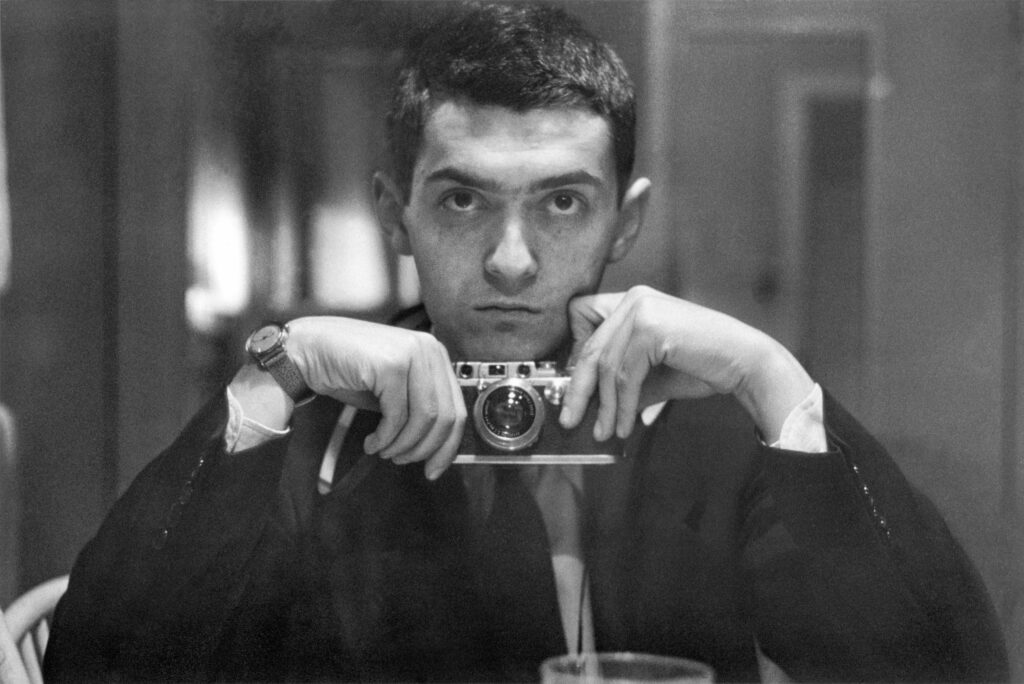
- Stanley Kubrick : rational systems applied to irrational human conditions
- Christopher Nolan : temporal fragmentation translated into narrative logic systems
- Andrei Tarkovsky : time and memory structured into poetic coherence
- Hayao Miyazaki : emotional worlds that preserve ambiguity inside narrative clarity
3) Exposure (fragmentation préservée / tension perceptive)
Artists who refuse closure and expose discontinuity.
- Pablo Picasso : fractured perception made visible (Cubism as structural rupture)
- Francis Bacon : identity as unstable, distorted perceptual field
- David Lynch : narrative fragmentation, dream logic, perceptual instability
- Rainer Werner Fassbinder : emotional and social fragmentation without resolution
- Nan Goldin : raw, unfiltered lived experience without aesthetic smoothing
4) System-building (rule-based generation of perception)
Artists who design frameworks rather than fixed works.
- Sol LeWitt : art as instruction system (execution separated from idea)
- Marina Abramović : structured endurance systems of perception and attention
- Hito Steyerl : media systems, informational architecture, perception critique
- Jean-Luc Godard : cinematic grammar broken into reconfigurable systems
- Yayoi Kusama : obsessive modular repetition creating infinite perceptual systems
OUR SPONSOR OF THE DAY : NEONNIGHT.FR
Conclusion
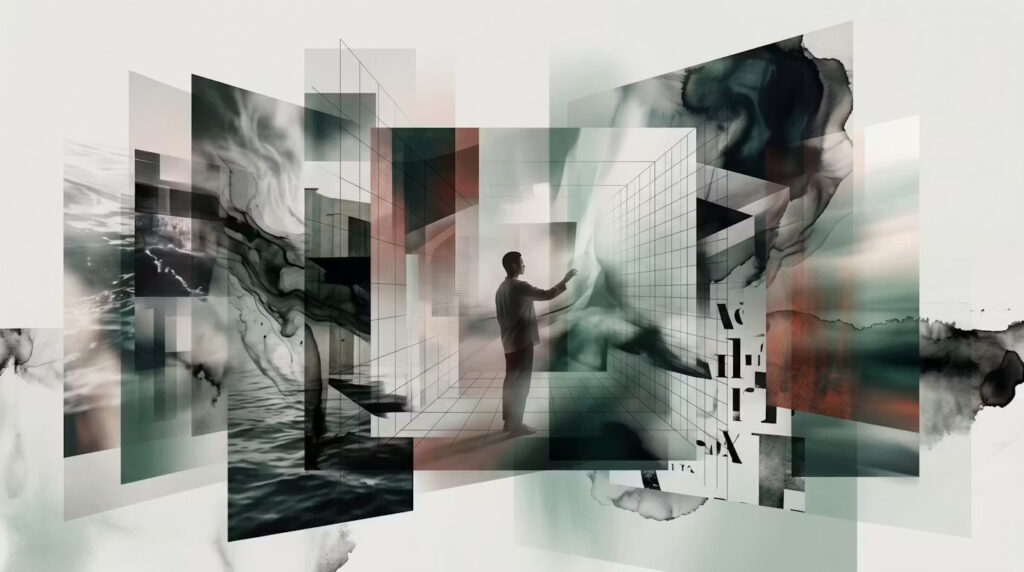
Truth, understood as cognitive de-entanglement, is not the arrival of perfect knowledge but the progressive reduction of internal contradiction. It simplifies the mind not by diminishing reality, but by aligning competing models of reality into a single coherent structure of experience.
Within fragmented modern environments, art operates as a secondary but parallel mechanism of the same process. It does not merely represent reality, but organizes perception under varying degrees of closure sometimes compressing experience into stability, sometimes translating it into legible structure, sometimes exposing its fragmentation, and sometimes encoding it into generative systems.
In this sense, both truth and art participate in the same deeper function: the continuous negotiation between complexity and coherence. One acts internally, within cognition; the other externally, within shared perception.
What we call clarity whether in thought or in art is therefore not the absence of complexity, but the momentary stabilization of it into forms the mind can hold without division.


GIPHY App Key not set. Please check settings