
 dudeoi
On the surface, Heat (1995) is a story about a professional thief and the detective determined to capture him. Michael Mann gives us the vocabulary of the crime genre in its purest form: the meticulously planned vault robbery, the armored car ambush, and the legendary shootout on Figueroa Street, a sequence that remains one of the most technically disciplined and precise action scenes ever filmed.
It would be easy to see Heat as simply the ultimate refinement of a familiar machine: the cops-and-robbers story elevated through extraordinary craftsmanship. The film certainly possesses all the elements of the genre, and Mann treats them with almost documentary attention to detail. The weapons, the procedures, the surveillance, and the tactics all feel real because they are constructed with an almost obsessive respect for competence.

OUR SPONSOR OF THE DAY : NEONNIGHT.FR

Beyond the Crime Story

But the crime story is not actually the subject of Heat. It is the mechanism through which Michael Mann examines something older and more fundamental. The robbery, the investigation, and the confrontation between Neil McCauley and Vincent Hanna function almost like a philosophical experiment. By placing these two men under extreme pressure, Mann explores what happens when a human being organizes their entire existence around one defining principle.
The central question of Heat is therefore not simply who wins the confrontation between law and crime. It is a much more uncomfortable question:
What does it mean to become completely who you are? And what is the cost of reaching that state?
The Fantasy of Total Existence
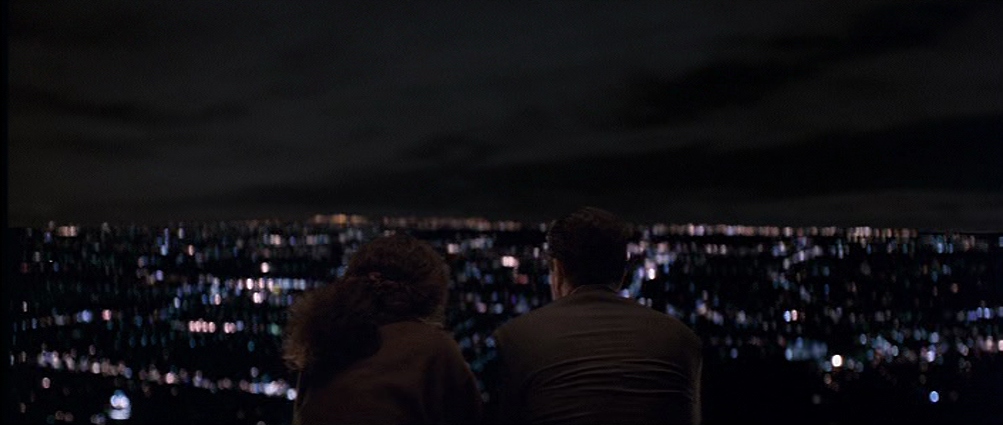
Neil McCauley and Vincent Hanna appear to represent opposing worlds. One is a professional criminal operating outside the boundaries of society; the other is a detective whose purpose is to enforce those boundaries. Yet the deeper the film goes, the clearer it becomes that they are not opposites as much as reflections.
Both men have built their lives around a single organizing principle. Both have removed everything that interferes with that purpose. They have sacrificed comfort, stability, and ordinary forms of attachment in exchange for something much rarer: complete alignment between who they are and what they do.
Most people live with a certain distance between different versions of themselves. There is the person they are professionally, the person they are privately, the person they want to become, and sometimes the person they pretend to be. Human existence usually involves negotiation between competing desires and responsibilities.
Neil and Vincent have almost eliminated that distance.
When Neil works, there is no separation between Neil the individual and Neil the professional. The operation is not simply something he performs; it is the clearest expression of himself. Likewise, when Vincent investigates a case, the pursuit is not merely his occupation. It is the place where his energy, intelligence, and instincts become perfectly aligned.
This is what makes them fascinating.
They represent a fantasy that exists beneath many human ambitions: the possibility of a life without contradiction. A life where every part of yourself points in the same direction. A life where you no longer have to ask who you are because your actions already provide the answer.
There is something undeniably powerful about that state.
But Heat is interested in the question of whether such purity can actually exist without a cost.
Neil McCauley: Freedom Through Detachment
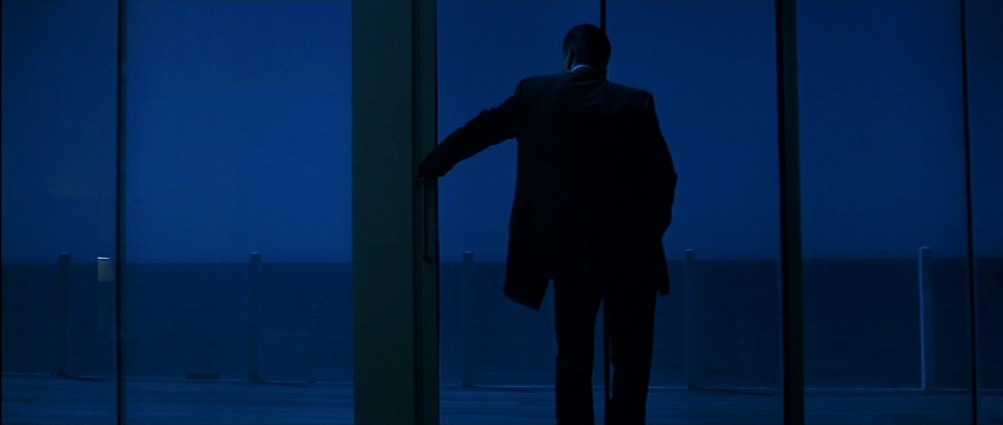
Neil’s famous philosophy is expressed early and multiple times in the film:
“Don’t let yourself get attached to anything you are not willing to walk out on in thirty seconds flat if you feel the heat around the corner.”
The line appears to be practical advice from a professional criminal. Yet it reveals something much deeper about the way Neil understands existence.
For Neil, freedom comes from refusing to be controlled by anything outside himself. Attachments create vulnerability. Possessions create obligations. Relationships create points of weakness. His entire philosophy is built around maintaining the ability to leave everything behind instantly.
In many ways, Neil has transformed detachment into a form of discipline. He has created a life where nothing possesses him because he has trained himself to possess nothing.
Most people develop skills in order to construct a life around them. Competence is usually a means toward something else: security, family, recognition, comfort, a future.
Neil has reversed that relationship.
The competence itself has become the purpose.
The planning, the precision, the surveillance, and the ability to remain completely calm under impossible pressure are not tools that allow him to reach another destination. They are the moments where he feels most fully alive.
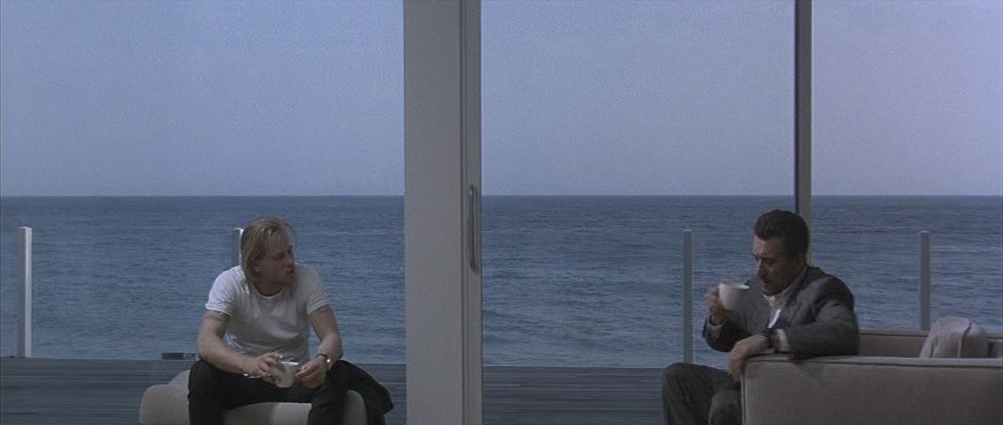
Mann’s visual treatment of Neil reflects this philosophy. His apartment is elegant but almost empty, a glass structure overlooking the ocean. It is beautiful, but it feels temporary, almost like a place designed for someone who might disappear at any moment.
It is not minimalism as an aesthetic choice.
It is minimalism as a worldview.
A space containing only what can never become a burden.
Vincent Hanna: The Need for the Pursuit
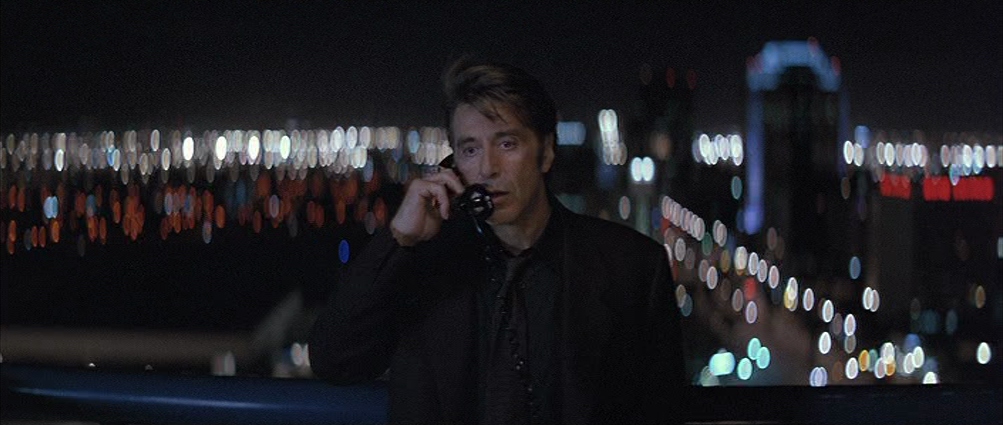
Vincent Hanna is Neil’s mirror, even though his life appears completely different. Neil seeks freedom through detachment; Vincent seeks meaning through pursuit. Yet both men have created identities where one activity has become inseparable from their sense of self.
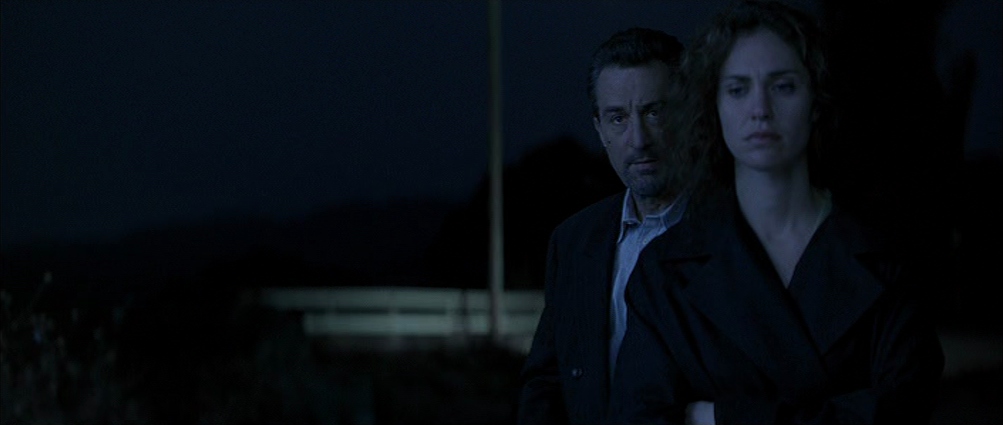
When Vincent tells Justine:
“All I am is what I’m going after.”
he is not defending his behavior. He is revealing the truth of his existence.
Vincent is not simply a man who works too much. The pursuit is the place where he feels most coherent. At crime scenes, when everything is chaotic, he becomes focused. His intuition, intelligence, and intensity all converge into a single direction.
The chase does not distract Vincent from himself.
The chase is where he finds himself.
This is why Neil and Vincent recognize each other. They understand something about each other that almost nobody else can. They have both discovered a place where the noise disappears and they become completely present.
The tragedy is not that they have found meaning.
The tragedy is that meaning has become inseparable from a single path (fate).
The Diner Scene: Recognition Between Equals
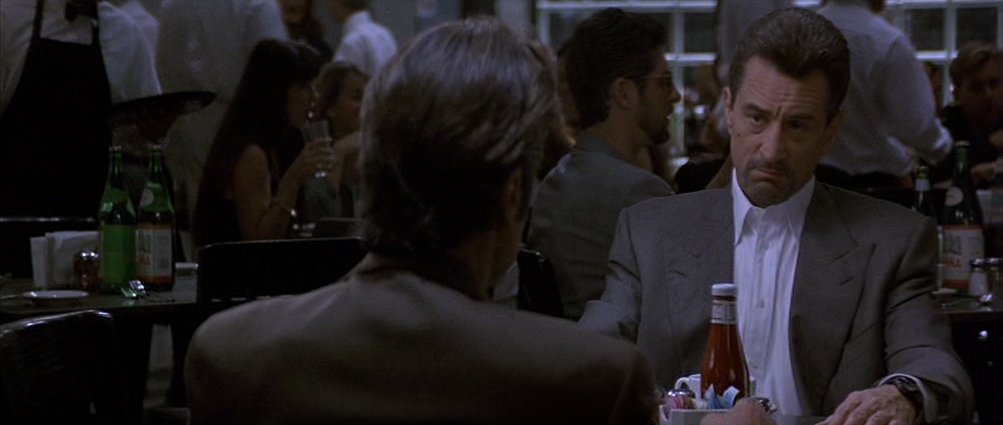
The famous diner conversation is the philosophical center of Heat because it removes everything external. There is no action, no weapons, no pursuit. There are simply two men sitting across from each other, acknowledging the reality of who they are.
The remarkable aspect of the scene is that neither man tries to convert the other. Vincent does not tell Neil that he should abandon his life. Neil does not tell Vincent that his dedication is meaningless.
They simply recognize each other.
They are two men who understand the same sacrifice.
Both know what they are willing to give up. Both know that their chosen paths have consequences. Both understand that there is no easy way out.
The scene almost feels less like a meeting between enemies and more like two masters from opposing traditions acknowledging the same discipline.
The question is not:
“Who is right?”
The question is:
“What is a human being willing to dedicate their entire existence to?”
The Unanswered Question
The power of Heat comes from the fact that it never completely answers whether Neil and Vincent are wrong.
The film does not simply say that they should have chosen ordinary happiness. The barbecue, the family, and the quiet life are valuable, but Mann never suggests that they are the only meaningful forms of existence.
Some people are driven by things beyond comfort.
- The artist who sacrifices stability for creation.
- The explorer who risks everything to discover something unknown.
- The craftsman who spends a lifetime mastering one discipline.
Human beings have always admired those who dedicate themselves completely to something.
The danger is not commitment itself.
The danger is when commitment becomes so complete that it leaves no room for questioning.
Neil and Vincent are not tragic because they lack identity.
They are tragic because they possess identity with extraordinary clarity.
They have found something rare: a life where they know exactly who they are.
But the same certainty that gives them strength may also prevent them from becoming anything else.
The Sacred Desire for Total Alignment
1. The desire to escape fragmentation
Ordinary human experience is often fragmented. We have competing desires:
- security versus adventure,
- comfort versus achievement,
- belonging versus individuality,
- pleasure versus discipline.
Most people constantly negotiate between these forces.
Someone who appears completely aligned seems to escape this fragmentation. They represent a state where the internal conflict has been resolved.
The feeling is almost:
“This person is not divided against themselves.”
That is deeply attractive because many people experience themselves as divided.
2. The ancient admiration for the person who answers a calling
Across cultures, humans have created stories around people who dedicate themselves completely to something.
- The warrior who accepts sacrifice.
- The saint who renounces comfort.
- The artist who suffers for creation.
- The explorer who risks death for discovery.
Why do these figures appear again and again?
Because they embody a powerful human question:
“What is worth giving your entire life to?”
A person who has found that answer appears to possess something many people search for.
- Not happiness.
- Not comfort.
- But meaning.
3. The perception of truth
There is also a social and psychological reason.
Humans are extremely sensitive to authenticity. We notice when someone appears to be performing, seeking approval, or adapting themselves to expectations.
A person who acts consistently with their deepest values sends a powerful signal:
“There is no mask here.”
That creates trust and fascination.
Even if we disagree morally with someone, we can still perceive the coherence between their beliefs and actions.
This explains why some controversial figures can inspire admiration. The admiration often comes not from agreement, but from perceiving integrity of existence.
4. The connection to destiny
There is something almost mythological about a person whose identity and action seem perfectly matched.
They appear to have discovered their “path.”
This is why we are fascinated by figures like Achilles, Odysseus, samurai, explorers, artists, and fictional characters like Neil McCauley.
- They are not simply successful.
- They seem inevitable.
- Their life feels like it could not have been otherwise.
This gives them a quality associated with fate.
5. The attraction of sacrifice
This is perhaps the deepest element.
We instinctively understand that something given freely at great cost has a different value.
A person who sacrifices comfort, safety, wealth, or social approval for something they believe in demonstrates commitment.
Sacrifice communicates:
“This matters more than my own convenience.”
And humans tend to perceive that as meaningful.
But there is a fascinating paradox.
The same quality that makes someone admirable can also make them tragic.
A person completely devoted to one identity can achieve extraordinary things.
But they may also lose the ability to encounter the unknown, to transform, to become someone else.
That is why Heat is so powerful.
Neil and Vincent represent the ultimate fantasy:
“What if I became completely myself?”
But the film asks the darker question:
“What if becoming completely yourself leaves no room for becoming anything more?”
Perhaps the deepest human ideal is not perfect alignment.
It is a person who can dedicate themselves completely while still remaining open to transformation.
That combination devotion without imprisonment may be the rarest form of freedom.
Character is who you are when no one is watching
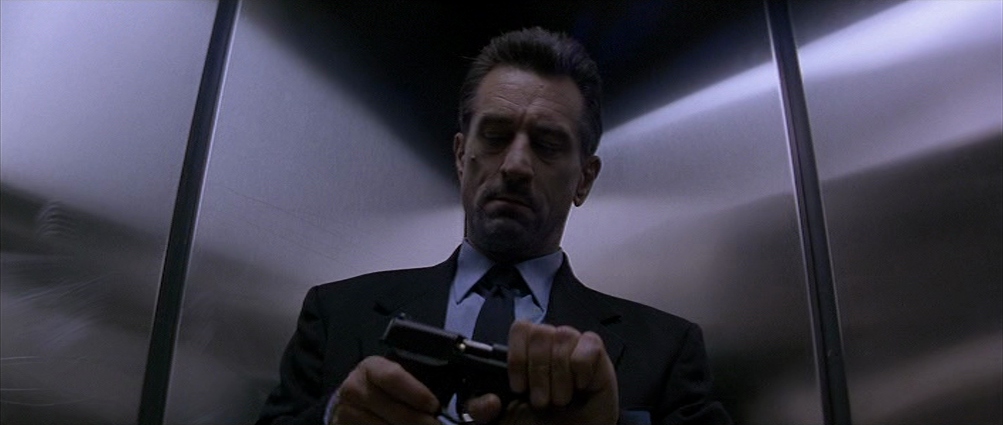
“Character is who you are when no one is watching” points toward the same fascination: the belief that the deepest truth of a person is revealed when external incentives disappear.
When nobody is watching, there is:
- no audience to impress,
- no status to gain,
- no reputation to protect,
- no social reward to receive.
What remains is the person’s internal structure.
This is why we often admire people whose actions appear consistent even in private. Their identity does not seem like a performance adapted to the expectations of others. Their principles continue to exist even without witnesses.
In this sense, character is the alignment between the invisible self and the visible action.
It answers a similar question:
“Who are you when there is no external pressure forcing you to be someone else?”
This is also why figures like Neil McCauley fascinate us despite their moral ambiguity.
Neil does not appear to change depending on the room he enters. He has the same discipline alone, with his crew, under pressure, and facing death. His code is not a public image. It is internalized.
There is something compelling about a person who does not need to manufacture themselves.
They are not asking:
“How should I appear?”
They are asking:
“What is the correct action according to what I believe I am?”
That creates a perception of truth.
But Heat complicates this idea.
Because the phrase “who you are when no one is watching” assumes that the private self is the truest self.
Mann asks a harder question:
What if the person you are when nobody is watching is also the person who has become trapped?
Neil’s code is authentic. His discipline is real. His commitment is genuine.
But authenticity alone does not guarantee freedom.
Someone can be sincerely themselves and still be unable to evolve.
This is the paradox:
- A person who is always performing may lack authenticity.
- But a person who is completely fixed may lack possibility.
The deepest form of character may therefore not be simply:
“Being exactly the same person everywhere.”
It may be:
“Knowing what is essential about yourself while remaining open to what you can become.”
That is why characters with total alignment feel almost sacred to us. They reveal the possibility of a human being who is not fragmented.
But the great philosophical question is whether a human being can achieve that unity without becoming a monument to their own past.
The Origins of Admiration
Admiration is a peculiar emotion. It is often confused with respect, affection, or dignity, yet it follows a very different logic.
We can respect someone without admiring them. We can love someone without wishing to become like them. We can recognize the value of a peaceful life without experiencing the particular feeling inspired by a great artist, an explorer, a saint, or a historical figure.
Admiration is not a moral reward. It is a psychological response to something far rarer.
Since the earliest stories of humanity, we have been captivated by individuals who dedicate their lives to a calling. The warrior who embraces sacrifice, the monk who renounces the world, the explorer who ventures into the unknown, the craftsman who spends a lifetime perfecting his craft, and the artist who would rather fail than betray his vision. These figures belong to different worlds, yet they share the same underlying structure: each has accepted a significant cost in pursuit of something they considered more important than their own comfort.
Perhaps this is where admiration begins.
Sacrifice functions as a universal language of commitment. When someone tells us that something matters to them, we listen. But when they are willing to sacrifice time, security, comfort, wealth, reputation, or even their life for it, that value ceases to be an abstract idea. It becomes something embodied.
Admiration arises from this coherence between what a person professes and what they are willing to lose.
By contrast, a life primarily organized around self-preservation may be entirely respectable. It may be happy, stable, and deeply dignified. Yet it rarely evokes the same emotion. Not because it possesses less value, but because it does not display the same degree of commitment to something beyond immediate self-interest.
This distinction is essential. Dignity belongs equally to every human being. Admiration does not, because it responds to different qualities: mastery, courage, self-transcendence, devotion to a calling, and the conscious acceptance of the price that calling demands.
This pattern extends far beyond cinema. Religion recognized it long ago. Saints, prophets, martyrs, and monks are not admired because they chose the most comfortable path, but because they organized their entire existence around a truth they believed was greater than themselves. The sacred often begins where comfort ceases to be the highest principle.
This is also why figures like Neil McCauley and Vincent Hanna captivate us. We do not necessarily want to live as they do. Their loneliness, obsession, and sacrifices make their lives profoundly tragic. Yet they embody a possibility that has echoed throughout human history: that of a person whose every action flows from a single inner necessity.
We do not admire them because they are happy.
We admire them because they seem to have answered a question that most of us continue to ask ourselves:
What is worthy of dedicating an entire life to?
OUR SPONSOR OF THE DAY : NEONNIGHT.FR
The Final Image
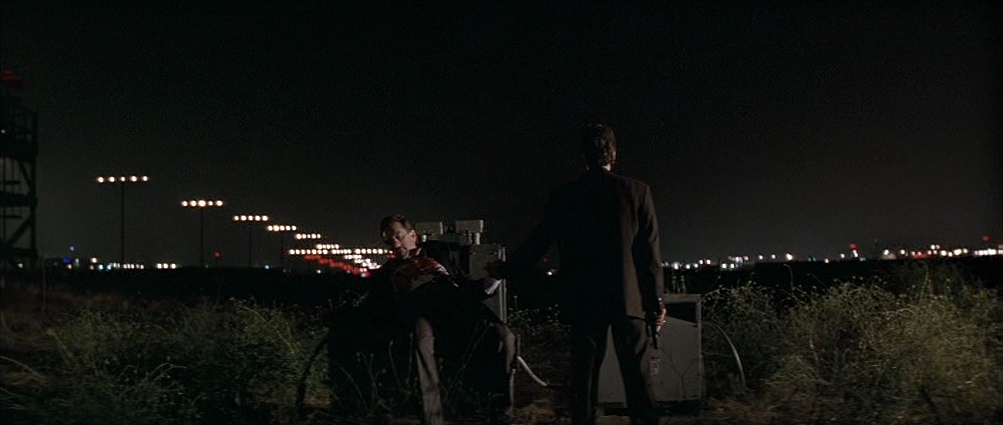
The ending of Heat is not a victory.
Vincent does not stand over Neil as a defeated enemy. Instead, he holds the hand of the one person who truly understood him.
In that moment, the distinction between criminal and detective almost disappears. What remains is two human beings who recognized the same hunger for something absolute.
They spent their lives becoming one thing.
And the film leaves us with the question of whether that was their greatest achievement or their greatest limitation.
Perhaps it was both.
Because Heat does not argue that commitment is wrong, nor that comfort is the highest human value. It presents a more difficult paradox:
Without dedication, a person may never discover what they are capable of.
But with absolute dedication, a person may risk losing the ability to change.
The tragedy of Neil McCauley and Vincent Hanna is not that they failed to become themselves.
It is that they succeeded completely. And perhaps the hardest challenge of all is not becoming one thing.
It is becoming something deeply while remaining open to what you might become next.


GIPHY App Key not set. Please check settings