
 dudeoi
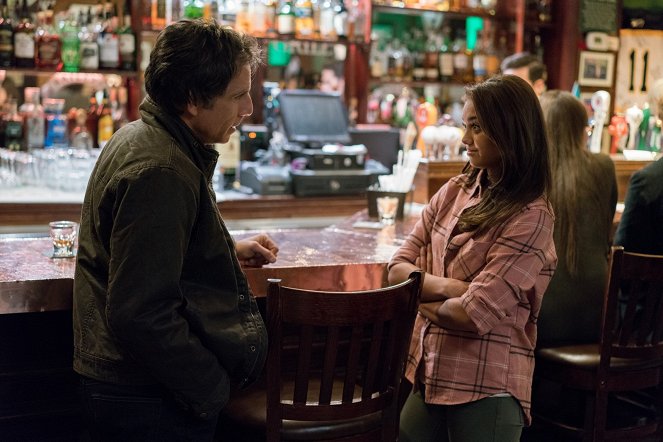
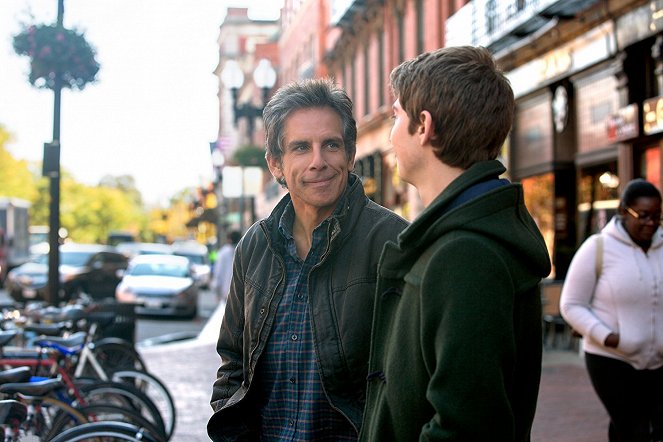
Brad’s Status is a relatively hidden gem film written and directed by Mike White (the creator of The White Lotus), starring Ben Stiller.
It offers one of the most precise explorations of status anxiety and social comparison themes that feel especially relevant in today’s social media-driven world, where visibility and perceived success constantly shape how we evaluate ourselves and others.

OUR SPONSOR OF THE DAY : NEONNIGHT.FR

The plot

Brad’s Status is not really about success. It’s about the psychological violence of comparison.
On the surface, the film follows Brad, a middle-aged man obsessed with the apparent success of his former classmates.
But underneath, the movie is exploring something much deeper: the relationship between status, identity, ego, masculinity, meaning, and modern anxiety.
The themes
“Comparison is the thief of joy.” —Theodore Roosevelt
1. Status as Existential Validation
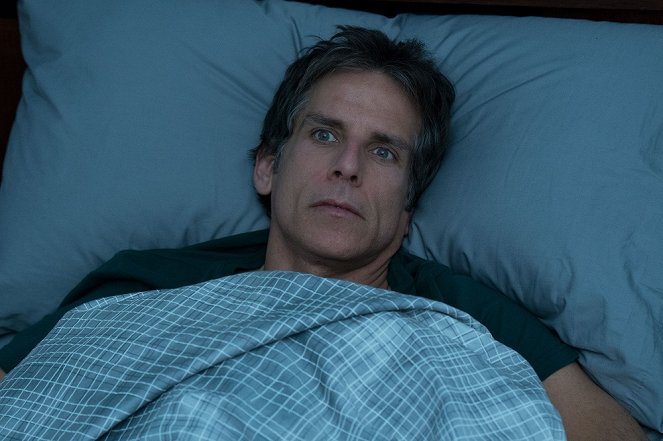
Brad does not simply want money or prestige.
He wants proof that his life mattered. That’s the core engine of the film.
Every successful friend becomes evidence against him:
- one is wealthy,
- one is free from constraint,
- one is politically influential,
- some are intellectually or artistically admired.
- all are validated by society
Brad interprets their success not as information, but as existential judgment.
Their lives feel like: “We could have been more.”
The movie understands something painful: humans often use status as a substitute for metaphysical meaning.
In secular modern society, prestige becomes:
- proof of worth,
- symbolic immortality,
- evidence that our existence counted.
2. The Tyranny of Comparison
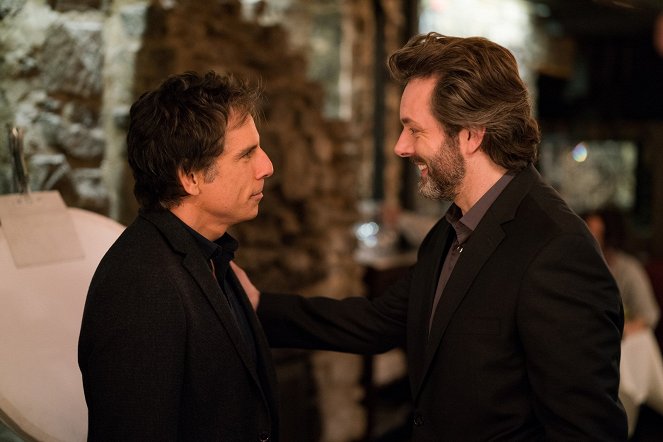
Brad’s suffering is largely self-generated.
Objectively:
- he has a loving family,
- financial stability,
- meaningful work he chose,
- a good relation with his son.
But psychologically, none of this survives comparison.
The film shows that status is not absolute. It is relational.
- We can feel poor while being wealthy.
- We can feel like a failure while objectively succeeding.
This aligns deeply with modern social psychology: humans evaluate themselves socially, not rationally.
Brad is trapped in: “relative deprivation.”
He cannot experience gratitude because identity is organized around ranking.
3. Masculinity and Hierarchical Pressure

The film quietly explores male identity under status competition.
Brad’s crisis is specifically masculine in structure:
- provider anxiety,
- achievement pressure,
- fear of mediocrity,
- fear of invisibility,
- fear of having “lost.”
He is terrified not only of failure, but of ordinaryness.
Modern masculinity often links worth to:
- accomplishment,
- influence,
- recognition,
- hierarchy.
Brad internalized the idea that: to matter is to rise above others.
This is why he cannot relax into his own life.
4. The Fantasy of the Alternative Self

A major hidden theme: Brad mourns unrealized versions of himself.
His successful friends function psychologically as:
- alternate timelines,
- parallel selves,
- roads not taken.
The pain is not: “they succeeded.”
The pain is: “that could have been me.”
This creates a kind of identity haunting.
The movie understands that regret is often narcissistic: not grief for what was lost, but grief for the imagined grand self that never materialized for him.
5. Prestige as Social Hallucination

The film constantly destabilizes prestige.
Brad imagines his friends as:
- fulfilled,
- important,
- complete.
But the closer he gets to prestige, the more fragile and artificial it appears.
This is crucial.
The movie suggests status is partly theatrical:
- visibility mistaken for meaning,
- recognition mistaken for fulfillment,
- external admiration mistaken for inner peace.
Brad worships symbolic success because he cannot emotionally perceive ordinary meaning anymore.
6. The Collapse of Meritocracy

Brad belongs to a generation taught:
- talent leads to success,
- intelligence gets rewarded,
- good intentions matter.
But reality appears more chaotic:
- luck,
- timing,
- networks,
- personality,
- visibility,
- social performance
matter enormously.
This destabilizes his worldview. If the hierarchy is not fully fair, then status loses moral legitimacy.
But humans still emotionally obey it anyway. That contradiction destroys him internally.
7. The Fear of Being Invisible

This may be the deepest theme in the film. Brad fears disappearing. Not physically symbolically. Like not being invited to the memorial of his favorite teacher or to his schoolmate wedding.
He fears:
- being forgotten,
- being average,
- leaving no mark,
- becoming socially insignificant.
This connects to existential psychology and even Ernest Becker’s ideas: humans seek symbolic immortality through achievement, prestige, legacy, and recognition.
Status becomes defense against mortality. That’s why Brad’s obsession feels deeper than envy. It feels existential.
8. The Son as Moral Mirror
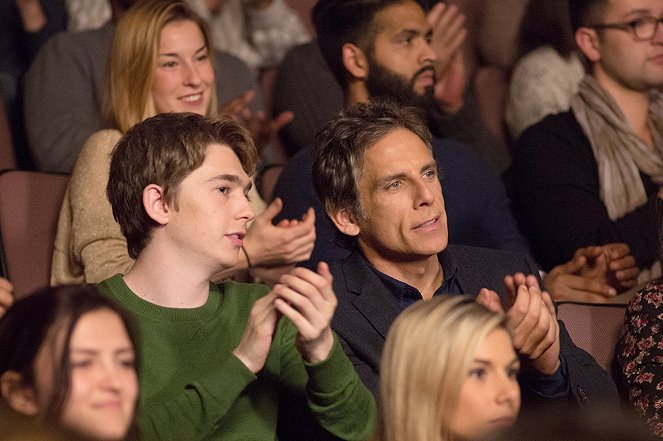
Brad’s son represents a possibility outside status pathology.
The son still operates through:
- curiosity,
- openness,
- authenticity,
- potential.
Brad slowly realizes he is transmitting anxiety rather than wisdom.
This creates the emotional core of the film: will he pass down status obsession as inheritance?
The movie quietly asks: Can a human being experience life directly, without filtering existence through hierarchy?
9. The Realization at the End

The ending is subtle because the revelation is subtle.
Brad does not suddenly become enlightened.
Instead, he briefly sees:
- how much suffering came from comparison,
- how distorted his perception became,
- how he overlooked the life directly in front of him.
The film’s deepest insight is:
- Status hunger expands infinitely.
- There is no final level where ego relaxes permanently.
- Someone will always be richer, more admired, more influential, more extraordinary.
- If identity depends on outranking others, peace becomes structurally impossible.
The Central Thesis of the Film

At its deepest level, Brad’s Status is about this: Modern humans often confuse being witnessed with being valuable.
And once identity becomes organized around social ranking, ordinary life begins to feel like failure even when it is full of meaning.
My take is that Brad’s Status understands something most people feel but rarely articulate clearly:
Status anxiety is not really about wanting more it’s about fearing that our life meant less.
Brad is not starving, oppressed, or even objectively unsuccessful. What destroys him is symbolic comparison. He interprets other people’s visible success as evidence of his own insufficiency.
What makes the film powerful is that it avoids the simplistic “money doesn’t matter” message. Status does matter socially and psychologically. Humans are hierarchical creatures. Recognition affects:
- opportunity,
- attraction,
- influence,
- self-perception,
- even perceived reality.
The film is honest about that.
But it also shows how dangerous it becomes when identity fuses completely with hierarchy. Once self-worth depends on relative position, satisfaction becomes mathematically unstable because there is always another level above us.
What we find especially accurate is the way Brad cannot emotionally access his own life anymore. He has:
- love,
- intelligence,
- stability,
- a good son,
- meaningful work.
Yet psychologically, those things become invisible because his perception is organized around ranking rather than presence.
That’s very modern.
Social media amplified this massively. Humans evolved comparing themselves locally:
- tribe,
- village,
- coworkers,
- nearby peers.
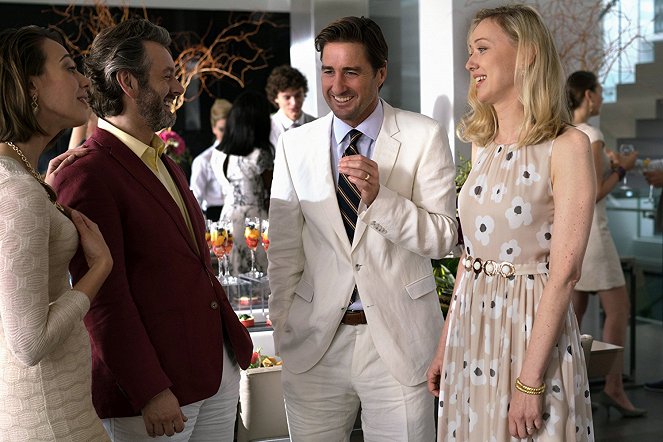
Now people compare themselves against the top 0.001% of visibility constantly:
- celebrities,
- founders,
- influencers,
- elite artists,
- hyper-successful outliers.
The nervous system was not built for permanent global comparison.
We also think the film is deeply about masculinity, though quietly. Many men are taught explicitly or implicitly that value comes from:
- achievement,
- competence,
- status,
- impact,
- hierarchy.
So “ordinary life” can unconsciously feel like failure, even when it’s emotionally rich.
The tragic part is that Brad is chasing symbolic significance while already possessing actual human significance through relationships, care, and continuity. But prestige is visible, measurable, and socially reinforced. Quiet meaning is not.
The film’s deepest insight, in my opinion, is: humans often sacrifice lived reality for imagined external evaluation.
Brad is not primarily living his life. He is watching himself from the outside and grading the performance.
And once consciousness becomes externalized like that, peace becomes very difficult.
A more objective way to measure ourself is to evaluate our life against reality, responsibility, and trajectory rather than social comparison.
Most people measure themselves relatively:
- richer than me,
- smarter than me,
- more famous than me,
- more attractive than me.
But relative status is unstable because the reference group constantly changes. There is always someone above us.
A more grounded framework
1. Competence

Can we reliably do difficult things in reality?
Not self-image. Not potential. Actual capability.
Can we:
- solve problems,
- learn,
- adapt,
- create value,
- handle pressure,
- improve over time?
Reality-based competence is more objective than prestige because it exists independently of recognition.
2. Responsibility

What can we carry consistently?
This is one of the clearest indicators of maturity.
Can people depend on us?
Can we sustain:
- relationships,
- work,
- commitments,
- emotional regulation,
- long-term goals?
Many people can perform briefly. Fewer can carry weight over time.
3. Integrity
Is there alignment between:
- what we believe,
- what we say,
- and how we act?
A fragmented person often compensates through status performance. Integrity reduces the need for external validation because identity becomes internally coherent.
4. Trajectory
Are we moving forward relative to our past self?
This is far healthier than comparing ourself to extreme outliers.
Ask:
- Are we less reactive than before?
- More disciplined?
- More capable?
- More honest?
- More useful?
- More emotionally stable?
Trajectory matters more than static position.
5. Depth of relationships

This is massively underrated.
Can we:
- love well,
- maintain trust,
- create psychological safety,
- be present,
- contribute positively to other people’s lives?
Human flourishing is relational. A person with high status but no meaningful connection is often psychologically unstable underneath.
6. Reality contact

Can we perceive reality without excessive ego distortion?
Meaning:
- accepting limits,
- admitting mistakes,
- updating beliefs,
- distinguishing fantasy from evidence,
- not confusing desire with truth.
This may be the hardest metric because ego naturally protects self-image.
The deeper shift

The most objective framework is probably: measuring ourself by our relationship to reality rather than our position inside social hierarchy.
- Hierarchy measures visibility.
- Reality measures function.
These are not the same thing.
A person can be:
- socially admired but internally weak,
- or socially invisible but deeply competent and meaningful.
A practical question
Instead of: “How do we rank?”
We can ask ourselves:
- What can we actually do?
- What do we consistently sustain?
- What kind of person are we becoming?
- How much of our life is real versus performative?
- Do people around us genuinely benefit from our existence?
Those questions tend to produce more stable self-evaluation than status comparison ever can.
The film’s power comes from the fact that Brad’s insecurity is understandable, but not entirely justified.
Objectively, Brad has many reasons to feel content:
- a loving family,
- stability,
- meaningful relationships,
- enough resources to live decently,
- a son who respects him,
- a life without major catastrophe.
From a purely human perspective, that is already significant.
But psychologically, Brad compares himself upward constantly. And upward comparison almost inevitably produces insecurity because he evaluates himself through exceptional outliers rather than through reality.
At the same time, the film does not pretend his feelings are irrational in a vacuum. Humans are social and hierarchical creatures. We naturally care about:
- recognition,
- accomplishment,
- influence,
- prestige,
- unrealized potential.
So Brad’s insecurity is not “wrong.” It becomes destructive because it consumes his ability to experience his actual life.
That’s the distinction:
- feeling occasional insecurity is human,
- organizing our entire identity around status comparison becomes corrosive.
The deeper issue is that Brad mistakes symbolic significance for existential worth. He believes:
“If I did not become exceptional, then maybe I failed.”
But ordinary life and meaningless life are not the same thing.
The film quietly argues that:
- contribution,
- love,
- presence,
- integrity,
- raising a child well,
- sustaining relationships,
may matter more than prestige, even if society rewards them less visibly.
The brutal truth

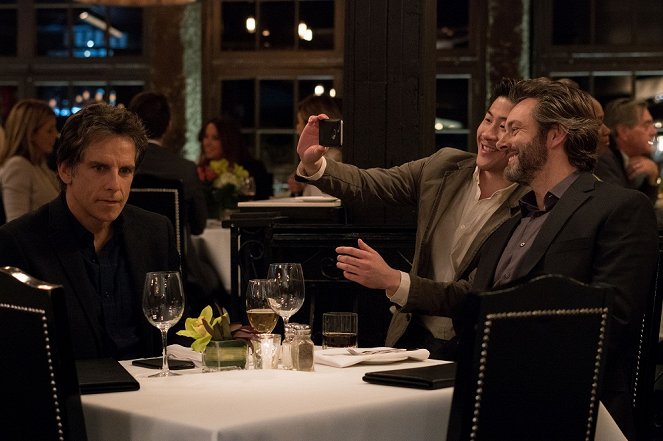
The dinner scene with Craig exposes something modern culture often tries to deny: hierarchy is real.
People do not react equally to everyone.
Charisma, visibility, success, wealth, and prestige alter social reality itself.
Craig moves through the world with:
- friction reduction,
- social affirmation,
- symbolic gravity.
Brad feels invisible beside him. And the painful part is: Brad is not imagining this. The environment confirms it repeatedly.
So why doesn’t the film simply conclude “Craig is right”?
Because the movie is exploring the distinction between:
- social value,
and
- existential value.
Craig has higher market value in the status hierarchy. That is objectively true inside the social world.
But the deeper question is: does that resolve his human condition?
The film’s answer seems to be: not fully.
Because status solves certain problems extremely effectively:
- recognition,
- access,
- mating advantages,
- influence,
- reduced social friction,
- symbolic importance.
But it does not automatically solve:
- inner coherence,
- mortality anxiety,
- attachment,
- existential peace,
- emotional rootedness.
The deeper horror for Brad
The truly painful realization is not: “status is meaningless.”
It’s: “status matters enormously… but still may not be enough.”
That’s much darker.
Because Brad cannot simply dismiss the hierarchy as illusion. The hierarchy visibly shapes reality around him.
But at the same time, Craig still does not appear transcendent or complete. He still feels human, performative, restless.
So Brad becomes trapped between two truths:
- Prestige is real.
- Prestige cannot fully satisfy the deeper existential hunger beneath the desire for prestige.
That contradiction is the emotional center of the film.
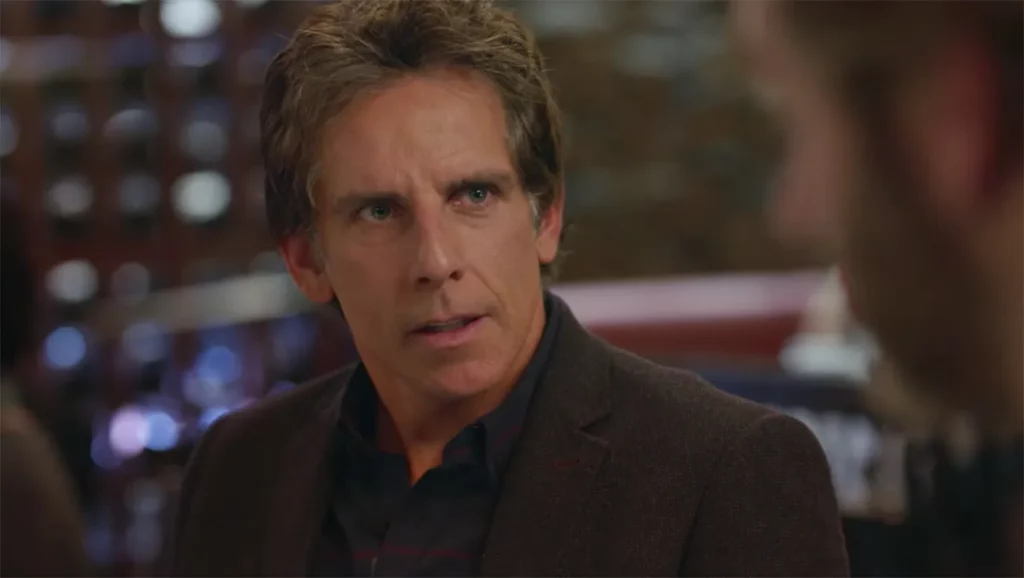
Notice how Craig isn’t actually saying anything wrong and remains consistently polite. Yet, because of the success he embodies, he carries an implicit authority in Brad’s perception.
As a result, Brad unconsciously picks up on an asymmetry in status, which reshapes the interaction and generates insecurity not from what is said, but from what is silently inferred about relative position and value.
That suggests competent people tend to feel more at ease when they interact with others of comparable competence or context, because large gaps in perceived status can introduce subtle asymmetries that distort the interaction and generate unnecessary insecurity and ultimately symbolic reassertion.
An interpretation
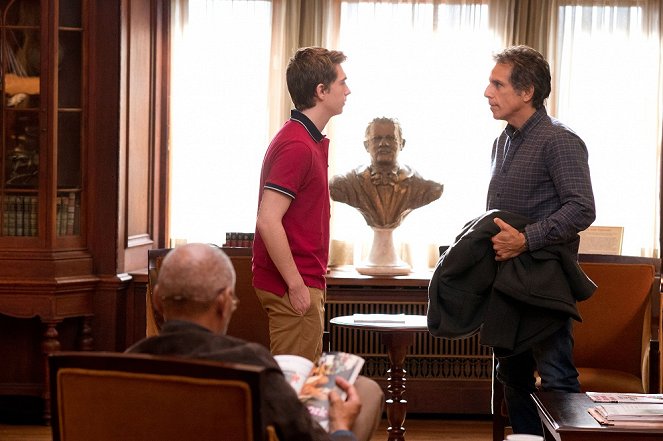
The film is not anti-status. It’s anti-total identification with status.
It acknowledges something uncomfortable:
High-status people often do receive:
- more admiration,
- more opportunity,
- more responsiveness from the world.
The mistake is believing this converts automatically into existential fulfillment.
Brad’s suffering comes from overvaluing hierarchy.
But naïve anti-status philosophies often fail because they undervalue how materially and psychologically real hierarchy actually is.
The film lives in the tension between those truths instead of resolving them artificially.
Why the Harvard girl changed her perception of Brad

Before that comment, the interaction works because the girls perceive Brad as:
- thoughtful,
- intelligent,
- idealistic,
- authentic,
- morally oriented.
Working for a nonprofit gives him a kind of quiet moral prestige. It signals: “We chose meaning over money.”
That creates a certain dignity around him.
But when Brad says that if he could go back, he would choose money instead, something collapses instantly.
Not because wanting money is evil but because the statement reveals that he himself no longer fully believes in the value of his own life choices.
That’s the key.
The girls were responding not just to his résumé, but to the coherence of his identity. The moment he reframes his past as: “We should have optimized for status instead,”
he indirectly communicates:
- regret,
- insecurity,
- unresolved comparison,
- dependence on external validation.
And psychologically, insecurity lowers perceived status far more than lack of money itself.
The hidden dynamic of the scene

Before the comment: Brad appears internally anchored.
After the comment: he appears externally dependent.
The girls suddenly realize: this man does not stand fully behind the life he built.
That changes the emotional atmosphere immediately.
Why the scene hurts
Because Brad accidentally exposes the hierarchy operating inside him.
Until then, he seemed relatively free from the status game.
But his confession reveals: he still measures himself against elite economic success.
And the tragedy is: the girls may actually have respected his nonprofit path more than a conventional prestige path.
Modern educated elites often admire:
- authenticity,
- purpose,
- ethical work,
- intellectual seriousness,
more than pure wealth signaling.
Brad cannot perceive this because he is trapped inside the hierarchy.
The deeper irony
Brad probably possessed something Craig lacked in that moment:
- sincerity,
- groundedness,
- moral substance,
- emotional depth.
But he invalidates it himself. That’s what makes the scene painful. Nobody humiliates Brad. He undermines his own position by revealing that he secretly accepts the same status metrics that torment him.
The philosophical layer

The scene asks a brutal question:
If we abandon prestige for meaning, but spend our life envying prestige anyway, did we psychologically escape the hierarchy at all?
Brad’s problem is not that he chose nonprofit work. It’s that he never emotionally reconciled with the tradeoff.
So his identity remains divided:
- one part values meaning,
- another still worships external success.
The girls sense that fracture instantly.
Fulfillment vs Prestige

Fulfillment and prestige are often confused because they can overlap in practice, but they satisfy fundamentally different human needs.
Prestige is external. It comes from visibility, recognition, and social ranking. It answers the question: “How are we seen compared to others?” It is shaped by comparison, and it depends on an audience. Prestige can change quickly as social context shifts, and it is always relative someone can rise only because others fall or remain behind.
Fulfillment, by contrast, is internal. It comes from coherence between one’s actions, values, relationships, and lived experience. It answers a different question: “Does my life feel meaningful and lived, regardless of how it is seen?” It does not require comparison, and it can exist in private, without recognition.
They overlap because prestige can sometimes signal forms of fulfillment: achievement may reflect discipline, mastery, or contribution. Likewise, fulfilling work can sometimes bring prestige as a byproduct. This overlap is what makes them easy to confuse.
But they do not satisfy the same need. Prestige feeds the need for social validation and ranking, while fulfillment feeds the need for inner coherence and meaning. One is about position in a hierarchy; the other is about alignment within oneself.
The conflict arises when prestige is treated as a substitute for fulfillment. In that case, external validation temporarily masks internal emptiness, but it cannot resolve it. Conversely, fulfillment can remain intact even in the absence of prestige, because it does not depend on being ranked or recognized.
In essence: prestige tells you where you stand in the eyes of others, while fulfillment tells you whether your life feels true from within.
OUR SPONSOR OF THE DAY : NEONNIGHT.FR
Conclusion
Brad’s Status shows how easily a life can become distorted by constant comparison. Brad is not suffering from a lack of success, but from measuring his existence through a system that only values what is visible, ranked, and socially rewarded.
The film’s key insight is that status is real in how it shapes perception and treatment, but unstable as a foundation for meaning. There is always someone higher, more admired, more “successful,” which makes satisfaction structurally difficult if identity depends on comparison.
Brad’s tragedy is not failure, but misalignment: he cannot fully experience his own life because he keeps translating it into relative position.
Ultimately, the film suggests that a meaningful life cannot be built on ranking alone. It requires returning attention from comparison to lived reality where value exists even when it is not measured or seen.


GIPHY App Key not set. Please check settings