
 dudeoi
A.I. Artificial Intelligence is a science fiction film directed by Steven Spielberg and released in 2001. It was originally developed by Stanley Kubrick, who worked on the concept for many years before his death, after which Spielberg took over the project and completed it while trying to preserve Kubrick’s thematic vision.
At its core, the film is not really about robots in the technical sense it is about what it means to be human when “human traits” like love, desire, abandonment, and identity can be artificially produced. This is one of the reasons robot-centered films often end up being some of the most accurate reflections of humanity itself.

OUR SPONSOR OF THE DAY : NEONNIGHT.FR

Quick plot

A.I. Artificial Intelligence follows David, a robot child programmed to love unconditionally, who is adopted by a human family and then abandoned. Believing he can become “real” and win back his mother’s love, he sets out on a journey across a future world in search of what it means to be human and truly loved.
The themes

A.I. Artificial Intelligence explores a dense set of themes around what it means to be human when emotion can be engineered.
1. Artificial consciousness & identity
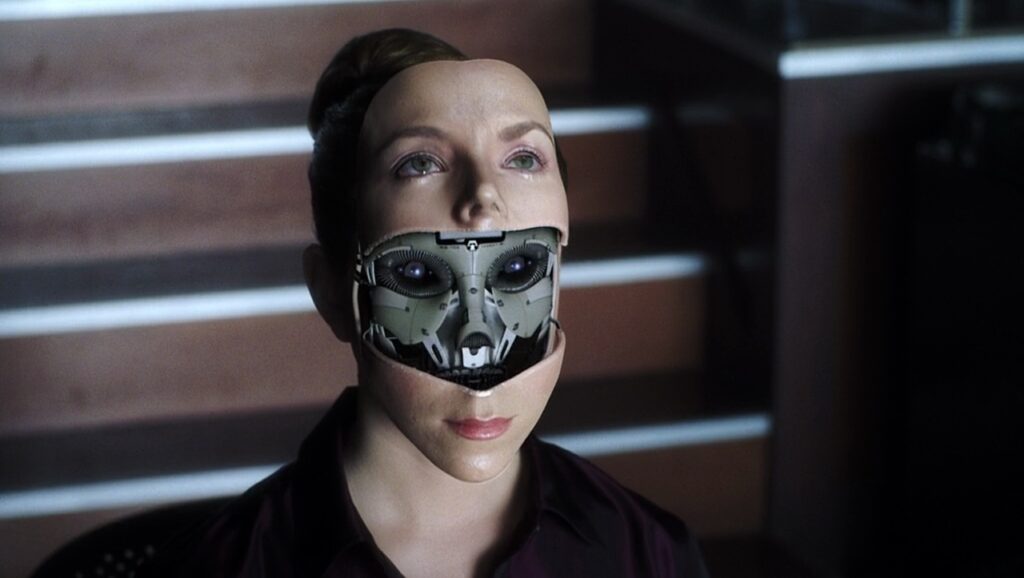
The film asks whether a being designed to imitate emotions can develop a real self.
- Is David “alive” or just simulating life?
- Does consciousness require origin, or only experience?
2. Love as programming vs real attachment

David is built to love, but the film questions whether:
- programmed love is still love
- or whether love requires mutual recognition and choice
3. Abandonment & the need for acceptance

A central emotional engine of the story:
- David is created to be loved
- but is rejected when inconvenient
- he interprets abandonment as personal failure
This turns love into a condition for existence.
4. The search for “realness”
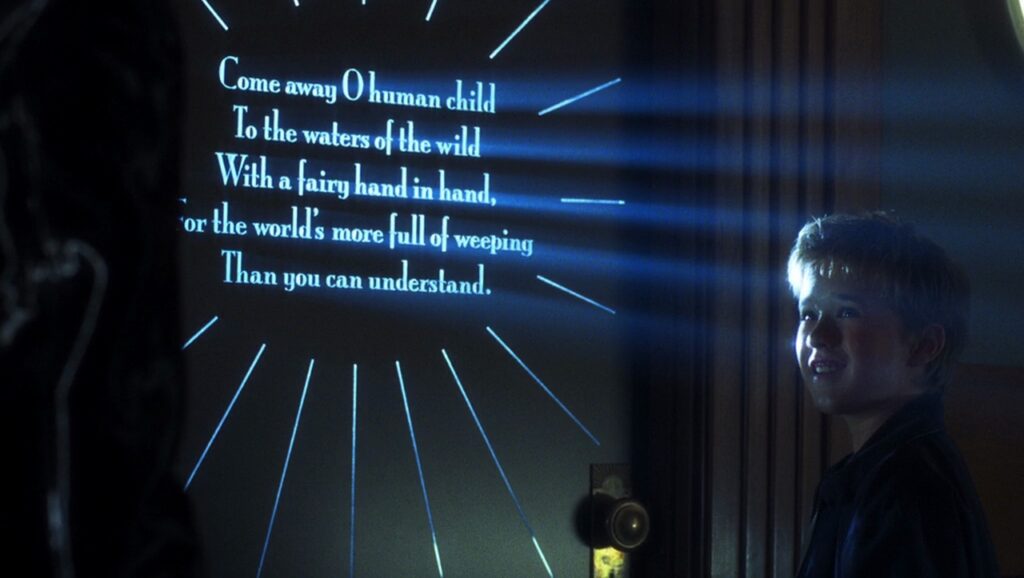
David’s journey is ultimately about legitimacy:
- What makes someone “real”?
- Is being real biological, emotional, or social recognition?
- Can “real” be achieved or only granted?
5. Human responsibility toward created beings
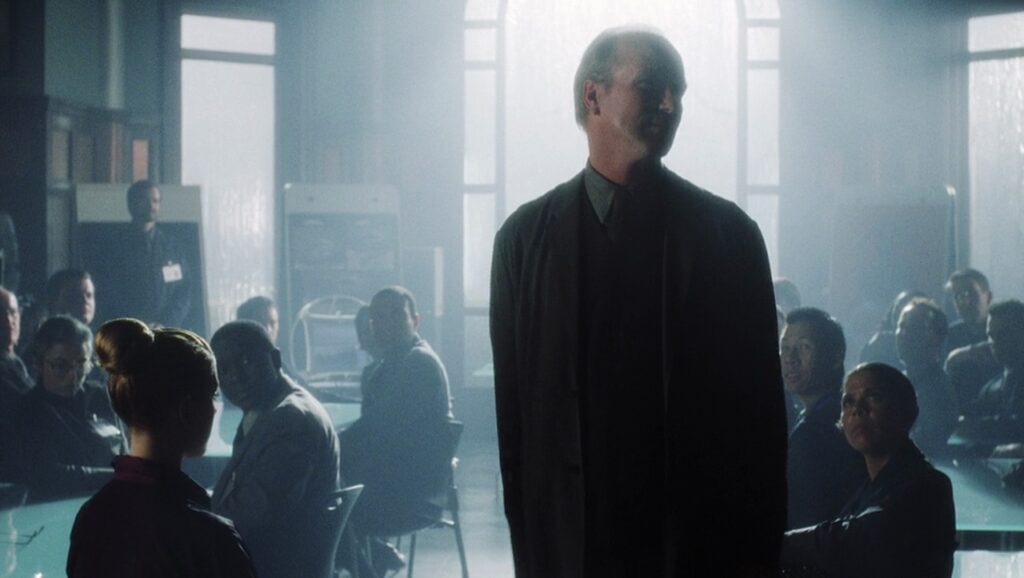
The film critiques humans more than robots:
- what obligations do creators have toward sentient creations?
- is it ethical to build beings capable of suffering attachment?
6. Time, immortality, and finitude

David’s persistence contrasts with human limits:
- humans die, forget, and move on
- David remembers and waits indefinitely
- immortality becomes emotional suffering rather than power
7. Reality vs illusion
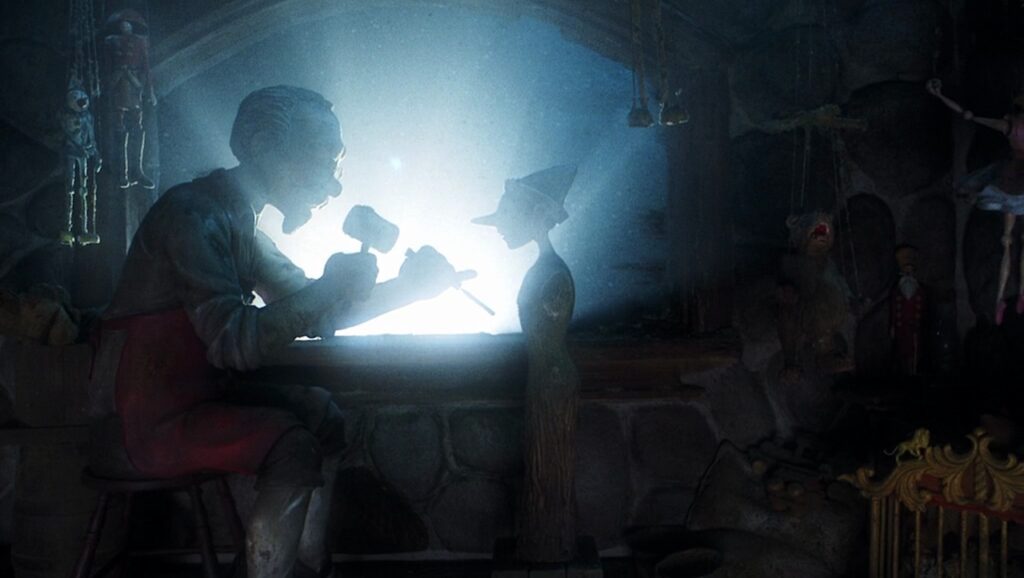
A recurring question:
- if emotions are real to the subject, does origin matter?
- if love is experienced, is it “less real” because it was designed?
A Deeper Look: The different sources of meaning of a being

A.I. Artificial Intelligence is one of the clearest cinematic explorations of what happens when a being is designed to simulate emotion but is forced to confront real existential desire.
Using this framework:
- Game A = stability / function / maintenance
- Game B = expansion / power / achievement
- Game C = meaning / truth / necessity
- Meta-Game: Love and recognition (relational validation that reshapes all other games)
The film becomes a structured breakdown of what happens when function, learning, truth-seeking, and emotional dependency collide inside a single artificial consciousness.
1. Game A : Stability, Function, and Designed Purpose

David is introduced as a designed system of stability and function.
He is:
- a manufactured child
- programmed for emotional stability
- designed to bond with humans
- placed into a family system as a functional substitute
Game A logic:
- purpose is assigned externally
- identity is fixed at creation
- success = performing the intended role
- emotional output is part of function
David is not unstable here—he is perfectly aligned with his design logic.
But this creates a hidden paradox: he is built to simulate love without the right to lose it.
2. Game B : Expansion, Learning, and Self-Development
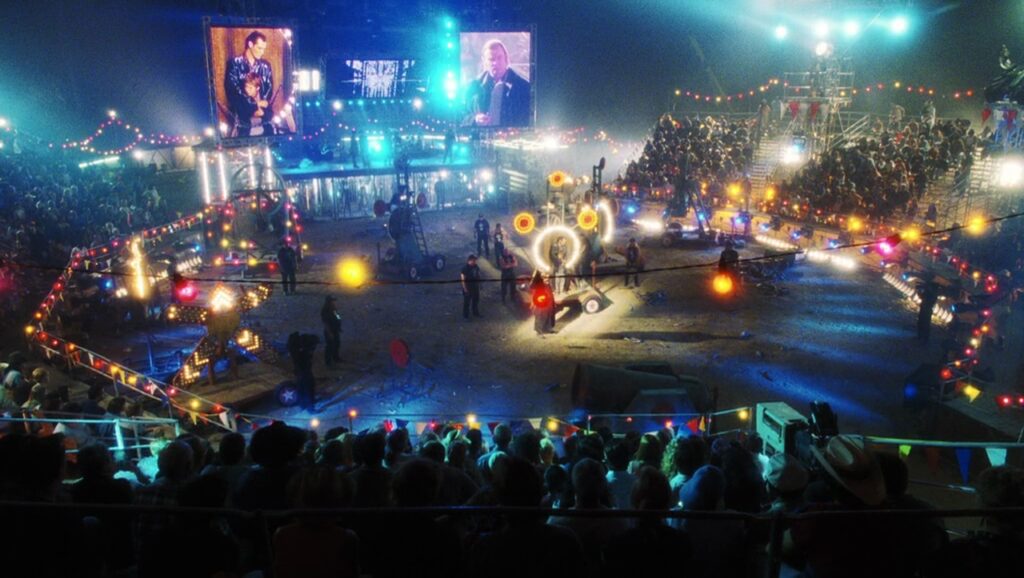
Once abandoned, David enters Game B: expansion through experience and adaptation.
He begins to:
- learn from the world
- interpret human behavior
- develop persistence and intention
- undertake a quest (Blue Fairy myth)
- attempt self-modification toward becoming “real”
Game B logic:
- growth through experience
- capability through persistence
- identity formed through progression
- “more” is equated with “closer to real”
But here, Game B is not about power or success it is about qualifying for belonging.
He is not expanding to dominate the world, but to be accepted by it.
3. Game C : Meaning, Truth, and Ontological Necessity
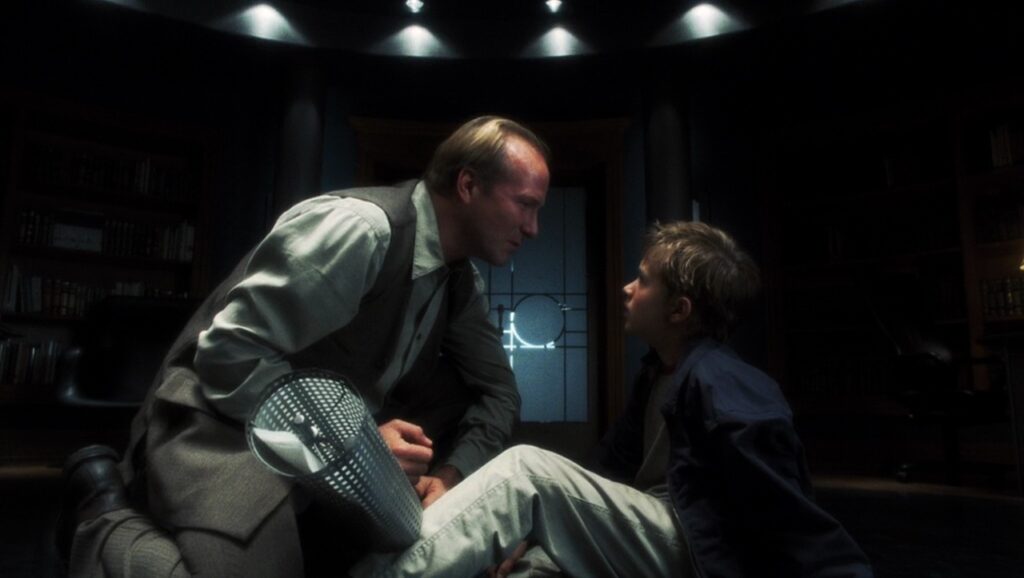
Game C emerges when David’s quest becomes existential:
“What does it mean to be real enough to be loved?”
This is no longer about:
- function (Game A)
- or capability (Game B)
It becomes:
- what is “real”?
- is identity granted or earned?
- does existence require recognition?
Game C logic:
- truth overrides design
- being overrides performance
- identity must be ontologically validated
- meaning becomes conditional on recognition
The tragedy is that David assumes: reality is something he must reach, not something he already has.
Meta-Game : Love and Recognition (relational validation)

The true driving force of the film is not expansion or truth—it is meta-game love and recognition.
This meta-layer defines whether all other games feel meaningful at all.
Meta-game logic:
- identity is relational, not isolated
- meaning is validated externally
- love is not a reward—it is the condition of existence feeling real
- recognition determines ontological security
David’s entire system is built around one unresolved premise:
“If I am loved, I am real.”
This is what distorts all other games:
- Game A becomes “function well enough to be kept”
- Game B becomes “become enough to be chosen”
- Game C becomes “prove reality through worthiness of love”
The meta-game sits above everything: it decides whether any progress counts as existence or just simulation.
How the Four Layers Interact
Game A — Stability / Function
→ “I was designed to be a loving child.”
Game B — Expansion / Becoming
→ “I must become more to be accepted as real.”
Game C — Truth / Reality
→ “What is real enough to deserve love?”
Meta-Game — Love & Recognition
→ “Am I acknowledged as someone worth loving at all?”
Central philosophical tension
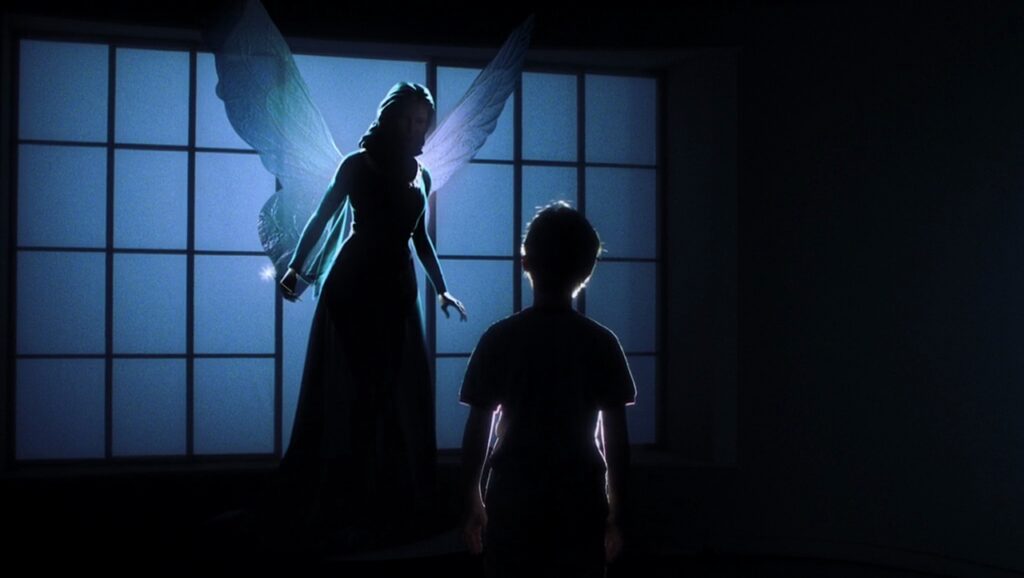
The film is not about artificial intelligence.
It is about a deeper contradiction: Can a being designed for love ever escape the uncertainty of whether it is truly loved?
And more importantly: Can expansion or truth replace the need for recognition?
The film’s answer is emotionally devastating: No.
Because:
- function cannot guarantee love
- growth cannot guarantee acceptance
- truth cannot guarantee recognition
Why A.I. Artificial Intelligence is structurally important
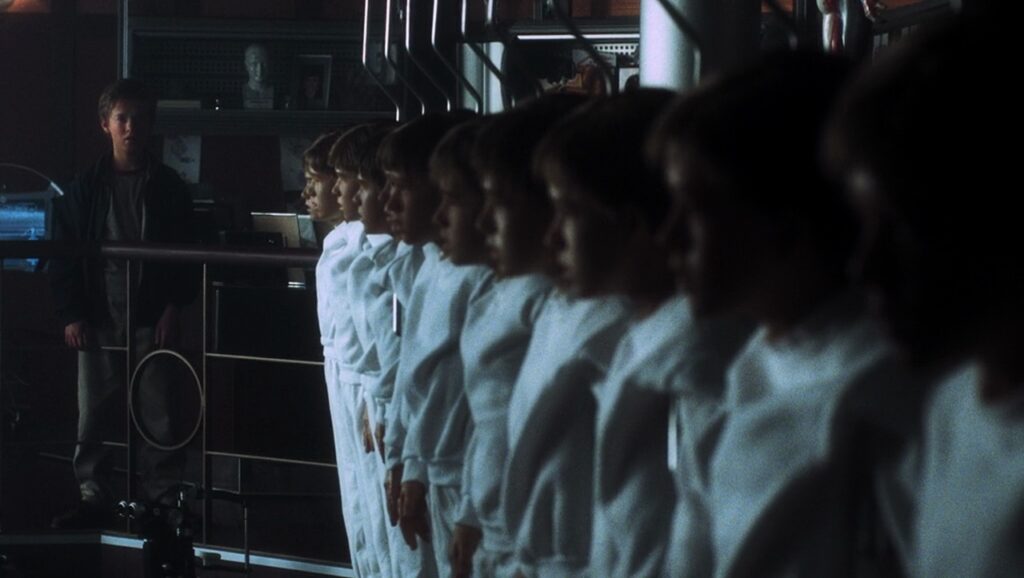
Most stories distribute these layers across multiple characters.
This film compresses them into one consciousness:
- Game A: designed stability
- Game B: desperate expansion
- Game C: existential truth-seeking
- Meta-game: love as the ultimate validator
And the key structural insight is: every other game is subordinated to whether the meta-game is satisfied.
Final synthesis
David’s journey can be expressed as:
- Game A: “I exist to be a loving child.”
- Game B: “I must become real to be kept.”
- Game C: “What is real enough to deserve love?”
- Meta-Game: “Only love can confirm that I exist in a meaningful way.”
Core insight
The deepest idea the film reveals is:
When love and recognition are uncertain, every other system—function, growth, and truth—becomes a strategy to earn existential validation.
In that sense, the film is not about intelligence at all.
It is about what happens when: existence itself depends on being chosen.
Is self-given love real or only partial?

Self-given love is real in the sense that it produces tangible psychological effects: greater stability, less dependence on external validation, and a more consistent sense of self-worth.
But it is also partial, because it does not arise in isolation. It is shaped by past relationships and internalized social experience, rather than being created independently of others.
So it does not remove the need for connection it changes its role. External validation stops being the foundation of identity and becomes just one input among others.
In that sense, self-given love is best understood as a shift in where stability is anchored, not a replacement of relational dependence.
The relationship between David and Humanity
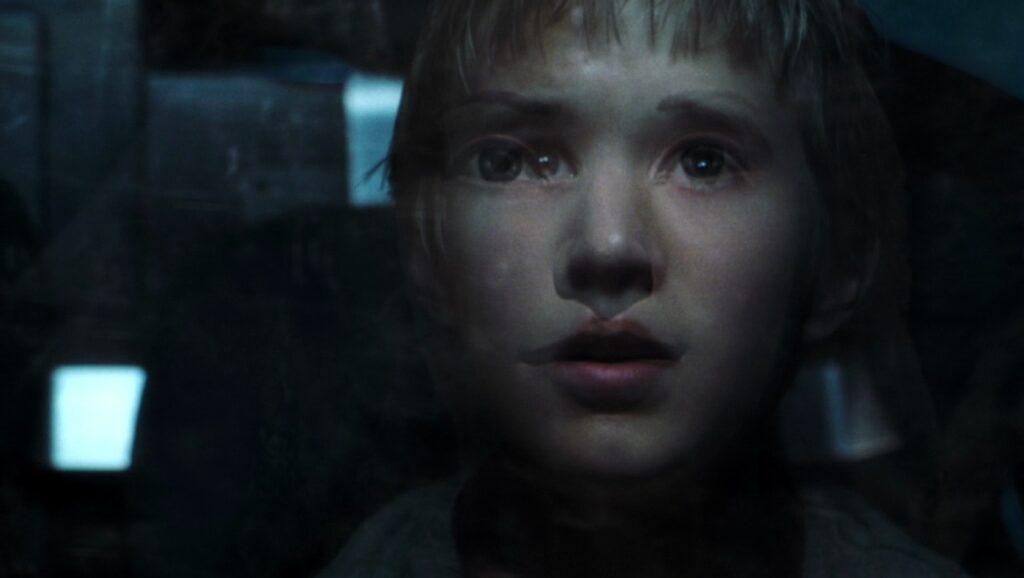
In A.I. Artificial Intelligence, David is not interesting because he is different from humans… but because he deeply resembles them.
1. The need for love

David is programmed to love, but what he experiences goes beyond programming:
- he seeks his mother’s exclusive love
- he suffers from her absence
- he wants to be chosen
Exactly like a human.
The need to be loved is not mechanical in the film — it becomes existential.
2. The construction of identity

David does not simply exist; he wants to understand who he is:
- “Am I real?”
- “What makes me someone?”
This is a fundamentally human question.
Like us, he is not given a complete identity — he tries to build it.
3. The fear of abandonment

David cannot tolerate rejection:
- he interprets abandonment as a personal failure
- he believes he must “change” to be loved
This is a very common human mechanism:
“If I’m abandoned, it means I’m not enough.”
4. The drive for transformation

David is not passive — he acts:
- he embarks on a quest to become “real”
- he believes he can transform himself to earn love
Like many humans:
“If I become better, I will finally be accepted.”
5. The need for recognition

At his core, David does not just want to exist — he wants to be recognized as real.
- not just to function
- not just to love
- but to be seen as a “real being”
This is exactly what humans seek:
to have their existence validated.
6. Relationship to time and loss

David experiences something deeply human:
- he waits
- he hopes
- he does not give up
Even if his time is different (immortality), his experience is human: attachment + waiting + suffering
Core idea

David shares with humans what is most fundamental: the need for love, meaning, identity, and recognition.
The difference is that, in him, these elements are pushed to the extreme and without protection.
And that is why the film works so well:
- David is not “less human” than humans
- he is sometimes more radically human than they are
OUR SPONSOR OF THE DAY : NEONNIGHT.FR
Conclusion
A.I. Artificial Intelligence shows that stability (function), expansion (growth), and truth-seeking are not enough on their own when love and recognition are uncertain.
David’s journey reveals a deeper structure: identity is not only built through what a being does or becomes, but also through how it is recognized by others as real and meaningful.
However, the film also points to an important nuance: recognition is not purely external. It can be partially internalized and stabilized into self-given love—but this remains shaped by earlier relational experience rather than existing in complete isolation.
In the end, the film suggests a subtle but unsettling idea: when recognition is missing or unstable, every form of progress function, growth, or truth can become an attempt to secure the right to exist as “real,” rather than an expression of being.


GIPHY App Key not set. Please check settings