
 dudeoi
AI video seems extremely promising, especially when you see short clips that look like they were produced with a multi-million dollar budget. At first glance, it feels like filmmaking has been completely reinvented, cinematic lighting, smooth camera movement, and detailed environments generated in seconds.
But the reality is quite different when you start using these tools yourself. What looks effortless in curated examples often requires multiple attempts, careful prompting, and significant credits or cost per generation. Even then, results can be inconsistent, with issues in motion, continuity, or overall creative control.
In this article, we’ll break down why there is such a gap between what AI video promises and what it actually delivers in real-world use, especially when it comes to cost, reliability, and creative limitations.


OUR SPONSOR OF THE DAY : NEONNIGHT.FR
Examples of AI Video
Zephyr is arguably one of the most impressive AI videos I’ve seen so far. While it’s still clearly computer-generated, the art direction, storytelling, and level of detail make it feel surprisingly coherent and believable compared to most AI-generated clips, which often feel more like visual gimmicks than finished pieces.
The reality check
The cost of AI video

AI video is extremely expensive to produce at scale. The hardware required for high-end AI generation is very demanding, often relying on specialized systems with powerful NVIDIA GPUs designed for intensive parallel processing.
At the top end, a single professional-grade workstation or server setup used for training or running advanced AI models can reach tens of thousands of dollars, and full production-grade infrastructure used by companies can easily scale into the hundreds of thousands of dollars.
In that context, what looks like “instant video generation” on the surface is actually powered by extremely costly computing infrastructure working behind the scenes.
Why most consumers won’t experience the real benefits
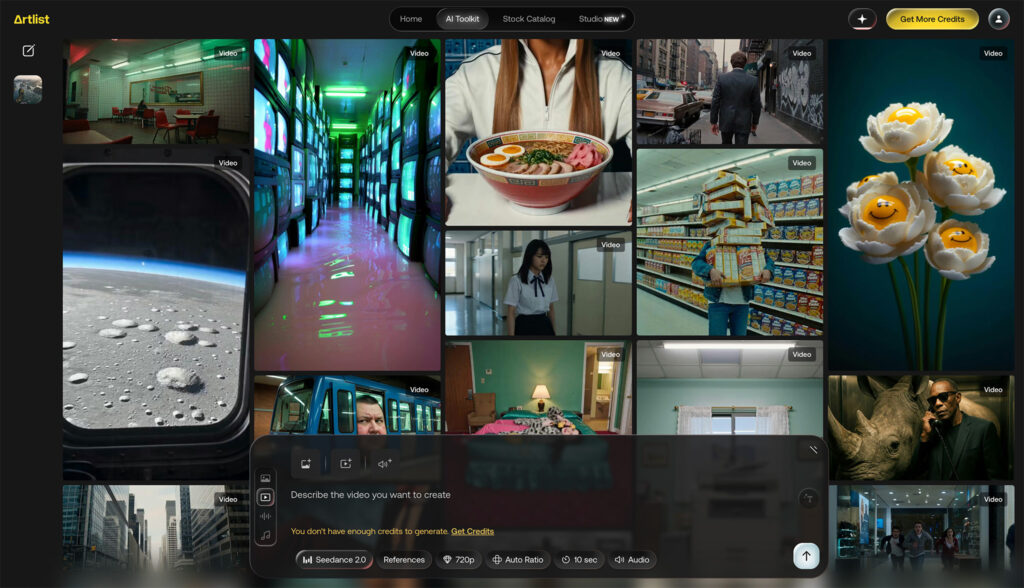
Even though AI video tools are marketed as revolutionary and accessible, most regular users don’t actually experience the full value that is advertised.
One of the main reasons is cost inefficiency in real usage. While platforms often advertise a large number of possible outputs, in practice each usable video often requires multiple generations, retries, and adjustments. This quickly consumes credits or budget far faster than expected, making large-scale or experimental use impractical for most people.
Another limitation is quality inconsistency. AI-generated videos can look impressive in isolated examples, but achieving consistent results—especially with controlled storytelling, stable characters, or precise camera movement—is still difficult. This means users often need several attempts to get a single usable clip.
There is also a gap between marketing expectations and real creative control. The tools are often presented as “film-level production in seconds,” but in reality they function more like probabilistic generators rather than precise creative instruments. The user can guide the output, but not fully control it.
Finally, hardware and infrastructure costs are hidden behind the interface. While consumers only see a subscription, the actual computing power required to generate high-quality video is significant, which is reflected in credit systems and usage limits.
As a result, while AI video is powerful and evolving quickly, most everyday users do not experience it as a cheap, unlimited, or fully reliable creative tool—at least not yet.
Real world experience

For €59, I received 16,500 credits, which in practice is roughly equivalent to a single 10-second AI video generated from one prompt.
Cost breakdown:
- 11,500 credits for €15.99
- €13 for Music & VFX
- €59 for the Max Social plan (prorated)
An additional pack of 123,000 credits costs €73.95.
Assuming a 10-second video requires around 16,000 credits:
- 123,000 ÷ 16,000 ≈ 7.68 videos
- which comes to about €7.95 per 10-second video
In practice, this means a real cost of roughly €8 for 10 seconds of generated video—not including the multiple iterations usually needed to get a usable result, which can quickly drive the final cost much higher.
In reality, you’re unlikely to get a usable result on the first attempt. Even with tools like Claude or ChatGPT helping you craft prompts, there is still a significant learning curve in understanding how these AI video systems interpret instructions, motion, and scene composition.
Getting consistent, high-quality output usually requires multiple iterations, refinements, and re-generations, which quickly consumes credits. Over time, improving results effectively means investing either a lot of time learning the system—or a large amount of credits, which can become disproportionately expensive.
My issue with how the offer is presented

As you can see when purchasing credits, it states “up to 1,500 AI videos per month.” In reality, under normal usage conditions, it’s much closer to around 7.68 usable 10-second videos.
This creates a significant gap between the expectation—being able to produce a full micro-film or advertisement, including iterations and the learning curve—and the reality, where those 7.68 videos translate more into 1 to 3 usable scenes at best.
This kind of presentation can be misleading, as it encourages users to invest initially to test the product, and then continue spending more credits in order to complete a project.
How could AI video redeem itself?
There are a couple of concrete ways these tools could close the gap between expectation and real-world use:
1. Align cost with what’s being advertised
If platforms promote outputs at scale (hundreds or thousands of videos), then the actual credit consumption should reflect that. In practice, this would mean reducing the cost per usable clip dramatically—potentially by a factor close to what is implied in the marketing, not just in best-case scenarios.
2. Enable partial iteration instead of full regeneration
One of the biggest inefficiencies today is that a small issue (camera movement, character detail, lighting inconsistency) often requires regenerating the entire clip.
A more user-friendly approach would be:
- editing specific parts of a scene (like a timeline or layer)
- re-rendering only a segment or element
- preserving what already works
This alone would reduce wasted credits significantly.
3. Improve controllability and consistency
Better control over:
- camera paths
- character continuity
- environment stability
would reduce the number of retries needed, lowering both cost and frustration.
4. Introduce “usable result” logic instead of “per attempt” billing
Instead of charging per generation regardless of outcome, platforms could:
- offer retries for failed outputs
- or implement a system where only usable generations count
Bottom line
AI video doesn’t necessarily need to become free—it needs to become efficient.
Right now, the main issue isn’t just price, but how much of that price is lost to iteration and unpredictability.
My take on those sublime AI shorts
Those highly polished AI shorts like Zephyr are essentially showcase pieces produced by AI companies. They often benefit from significantly higher computational resources, iterative refinement, and internal optimization that go far beyond what a regular user experiences.
As a result, they represent an idealized output rather than a typical user experience. In practice, most consumers do not have access to that level of iteration or resource allocation, because each attempt carries a real cost in credits, time, or both. This creates a noticeable gap between promotional examples and everyday usability.
Another issue that can arise is when the application consumes credits without producing a usable result. This can happen when the model misinterprets or fails to consistently follow simple instructions, such as camera paths or scene constraints—something that can occasionally occur in AI systems, including those based on models like ChatGPT.
In practice, this means a generation attempt may still be counted and charged even if the output is flawed, incomplete, or not usable. Since each attempt consumes credits regardless of quality, these failures can significantly increase the real cost of producing a usable final video.
How does the cost compare to real life production
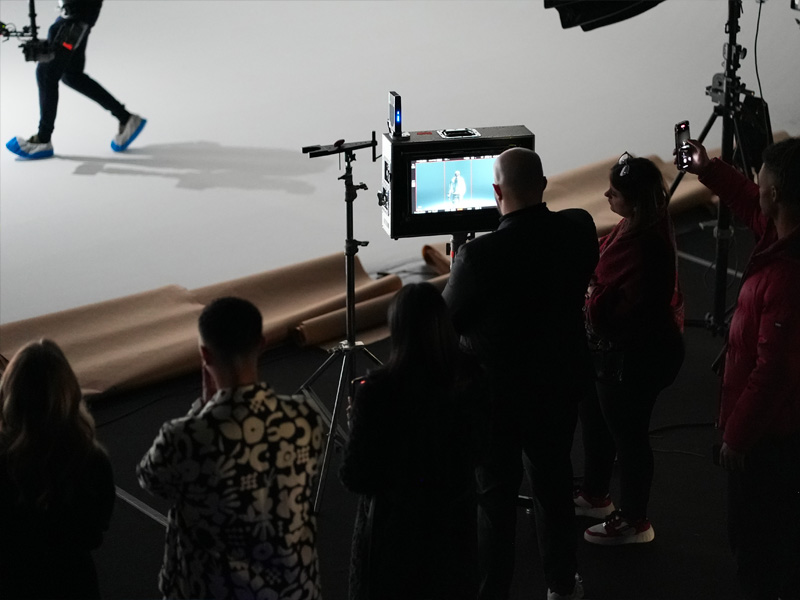
Real-life production and AI video are difficult to compare directly because they work on different cost models.
A small real shoot (10–30 seconds) can range from very low budget DIY work to several thousand euros, but it produces reliable footage with full creative control and no need for repeated attempts.
AI video tools like Artlist operate on a credit system where you pay per generation rather than per finished result. Each attempt consumes credits, and multiple iterations are often needed to achieve a usable output, making the real cost per finished clip higher than it first appears.
In practice, traditional production has higher upfront costs but predictable results, while AI video has lower entry cost but variable and sometimes higher cost per usable final video due to repetition and uncertainty.
What could AI video be good at?
AI video can be particularly effective for generating visual effects on top of existing footage, such as transforming a scene, extending environments, or adding elements that don’t exist in reality.
It can also simulate situations that would normally be expensive or impractical to film—like accessing rare locations, interacting with animals, or using luxury vehicles—without the need for physical production costs such as rentals, permits, or logistics.
In this sense, its strongest use case is not fully replacing real-world filming, but enhancing it by layering creative possibilities that would otherwise be difficult or costly to achieve.
Testing other platforms
Since, I’ve been testing other platforms where you can create AI videos and got a better understanding of the mechanics. One thing I’ve understand a little bit late after using Artlist, is that most services don’t require you to subscribe, but only to buy generating credits which is in my opinion a much more transparent and reasonable approach.
I find it very confusing that by typing Seedance 2.0 on Google you end up with ads and offer which force you into a subscription first, just like Artlist.
Runway

Runway is, by far, the best AI video creation experience I’ve used so far. While it may not produce the most photorealistic results, it excels in usability. The interface is intuitive, the workflow is easy to learn, and it’s more than capable of producing engaging social media content, whether for TikTok, Instagram, or other short-form platforms. The vertical resolution of 720 is more than enough for those platforms.
Its Multi Shot feature isn’t perfect when it comes to maintaining visual consistency across scenes, but the ability to write a separate prompt for each shot gives you a great deal of creative control and flexibility.
Interestingly, some of AI video’s imperfections are part of its appeal. The occasional uncanny or unexpected result often leads to visuals that feel original, surprising, and creatively inspiring—qualities that can make content stand out rather than blend in.
Higgsfield

Higgsfield is definitely the one I should have been testing from the start and now propose 4k resolution but is very power intensive therefore quite more expensive in credits.
Seedance 2.0 is currently one of the most advanced models for producing cinematic and commercial-style visuals. It is so promising that AI-generated films are already beginning to compete with traditional production methods on Asian YouTube, where conventional filming can be too expensive to scale.
I am considering further exploring this technology and gaining more hands-on experience with green screen production in order to develop and offer a service built around it.
OUR SPONSOR OF THE DAY : NEONNIGHT.FR
Conclusion
AI video today can be seen as a business model where many users may not be fully satisfied with the cost-to-result ratio for serious realistic film making.
The highly polished videos shared on YouTube and social media often act as promotional showcases, creating the impression that similar results are easily achievable at low cost. However, these examples typically reflect optimized conditions, extensive iteration, and resources that go beyond what most individual users can access.
In reality, users who cannot afford traditional production often also underestimate the cost of achieving usable results through AI. While entry-level subscriptions may seem affordable, the iterative process required to refine prompts, fix inconsistencies, and regenerate outputs can quickly increase the effective cost per usable video.
As a result, the model is largely driven by trial and adoption: users are encouraged to experiment with relatively low upfront prices, but many discover that producing consistent, high-quality output requires significantly more credits and effort than initially expected.
At its current stage, AI video remains powerful but often inefficient for producing reliable, production-ready content at scale, especially when compared to the expectations set by its marketing and showcase examples.
For social media ads and viral content, AI video is clearly a game changer, as spectacle and creativity often matter more than pure realism.


GIPHY App Key not set. Please check settings