
 dudeoi
There are two ways a face can make you feel something. One says: look at me. The other says: come closer. The first is admiration. The second is identification. Almost every visual industry that depends on an audience following a woman through a story film, pop music, fashion campaigns built around narrative rather than pure aspiration has quietly figured out that the second register wins more often than the first, and built an entire casting logic around it. That logic has a name: the ingenue.

OUR SPONSOR OF THE DAY : NEONNIGHT.FR
What the Ingenue Actually Is
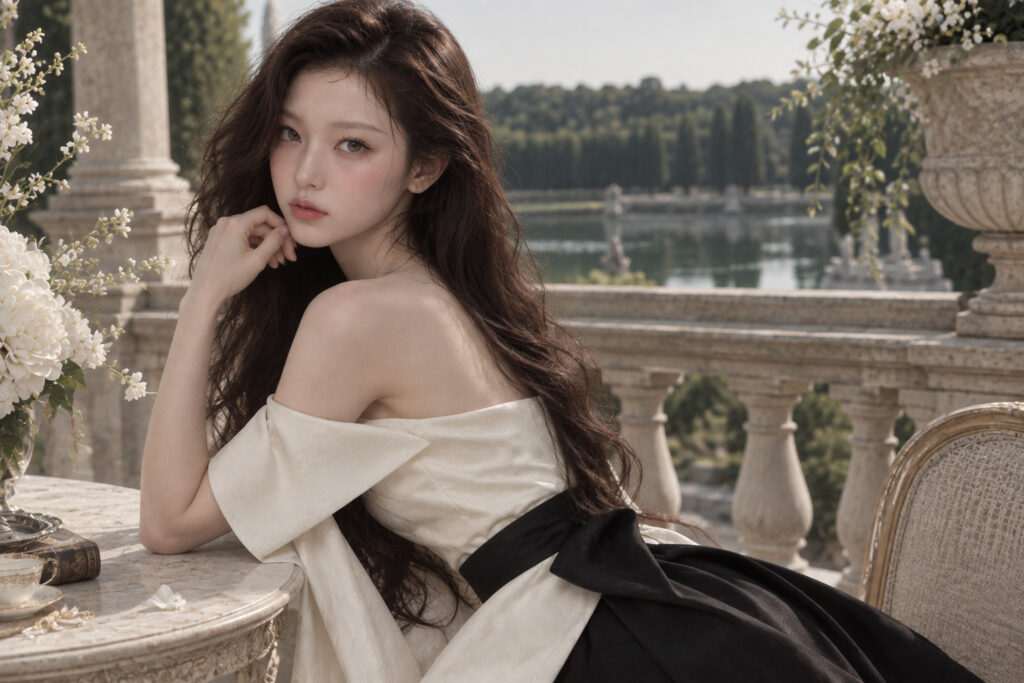
The ingenue is not simply “a pretty young woman.” It’s a specific configuration of features and affect: large eyes relative to the face, a rounder jawline, softness rather than sharp definition, an openness of expression that reads as unguarded rather than performed. Think of the casting logic behind Audrey Hepburn, or in a contemporary pop idiom Haerin of NewJeans: youthful, approachable, cute rather than sexualized, someone the audience wants to protect and root for rather than simply desire from a distance.

This is distinct from what we might call the untouchable ideal the fully mature, hyper-feminine archetype built for pure visual admiration: symmetry, sexual maturity, a kind of aloof completeness that asks to be looked at rather than joined. Both are legitimate forms of beauty. But they are not interchangeable tools, and confusing them is where a lot of casting and brand strategy goes wrong.
The Mechanism: Kindchenschema

The reason the ingenue works isn’t stylistic preference — it’s biological. Ethologist Konrad Lorenz identified what he called Kindchenschema, or “baby schema”: a cluster of features (large eyes, rounded forehead, small nose, soft cheeks) that trigger an automatic caregiving and protective response across observers, largely independent of sexual attraction. It’s the same mechanism that makes puppies, kittens, and human infants universally disarming.
Neotenous features — youthful traits retained past the age where they’d typically be lost — borrow this response. A face that reads as ingenue-adjacent activates both a romantic/aesthetic channel and a much older, broader protective channel. That second channel doesn’t require the viewer to be sexually attracted to the subject at all. It fires for audiences across age, gender, and orientation. This is the entire commercial logic behind why the ingenue converts better across a mass audience than a purely sexualized ideal, which mostly only activates one channel and therefore resonates most strongly with a narrower slice of viewers.
Why This Matters for Narrative, Not Just Beauty

The “peacock” or untouchable ideal full breasts, narrow waist, symmetrical face, clear skin, thinness paired with curves rather than androgynous angularity is optimized almost entirely around classic mate-value signaling: features that, across evolutionary psychology research, reliably correlate with fertility, hormonal health, and youth (waist-to-hip ratio, facial symmetry, skin clarity).
It triggers a direct sexual/romantic response rather than protective or aesthetic-contemplative ones, which makes it powerful for pure desirability and admiration-from-a-distance imagery, but narrower in reach than the ingenue it resonates most strongly with viewers who are sexually attracted to that body type, rather than converting broadly across age, gender, or orientation the way the baby-schema-triggering ingenue does.
An untouchable ideal is built to be admired. An ingenue is built to be followed.
This distinction matters enormously the moment a face has to carry a story rather than simply anchor a single image. A protagonist needs the audience to project themselves into her position — to feel her stakes as their own. Admiration creates distance; identification collapses it. This is why mainstream heroine casting so reliably defaults to the ingenue register: the job isn’t just to be looked at, it’s to be joined.
Openness behaves differently depending on which register it’s paired with. Openness paired with youth and neoteny reads as vulnerability — it invites care, investment, a desire to see her succeed. Openness paired with full sexual maturity reads instead as availability or confidence — it invites desire, but not the same protective investment. Same emotional gesture, two very different jobs done.
There’s also a status dimension worth naming plainly: mature, fully actualized feminine power can register — consciously or not — as intimidating, creating distance rather than closeness. The ingenue’s softness signals lower perceived status, which paradoxically makes emotional closeness easier to grant. It’s not that the ingenue is “safer” in any meaningful sense — it’s that she reads as unthreatening, and unthreatening is a precondition for a mass audience letting its guard down enough to identify rather than simply observe.
The Specificity Trap: Why “Ingenue” Alone Isn’t Enough

It would be easy to conclude from all this that casting an ingenue is a shortcut to guaranteed performance. It isn’t. The ingenue register is a tool for a particular job — identification — not a formula for success on its own. A generic execution of the archetype (wide eyes, softness, nothing else) produces something closer to a blank aspirational vessel: pleasant, forgettable, replaceable. What actually performs is specificity layered onto the register a particular narrative world, a distinct point of view, texture that makes the persona feel like someone rather than something.
This is the same principle that separates a template from a design: the mechanism (neoteny, openness, protective triggering) explains why a face can carry a story, but it doesn’t write the story. Haerin’s commercial power isn’t simply “cute beats sexy” it’s a fully built aesthetic and narrative world wrapped around a face suited to carry it. Strip the world away and the mechanism alone produces mediocrity, not magnetism.
The Cost Worth Naming

None of this is ethically neutral, and it’s worth resisting the temptation to treat it as a clean, value-free casting formula. The industry’s long-standing preference for youthful, neotenous features in heroines is tangled up with a real pattern of infantilizing female protagonists coding likability through youthfulness rather than through confidence, complexity, or maturity.
The mechanism works. That doesn’t make it costless. A mature, non-neotenous heroine, cast against this efficient pattern, can produce something far more distinctive and memorable precisely because it resists the well-worn groove the baby schema carves so easily. Efficiency and value aren’t the same axis, and knowing the lever exists is different from believing it’s the only one worth pulling.
A third category: the avant-garde editorial model
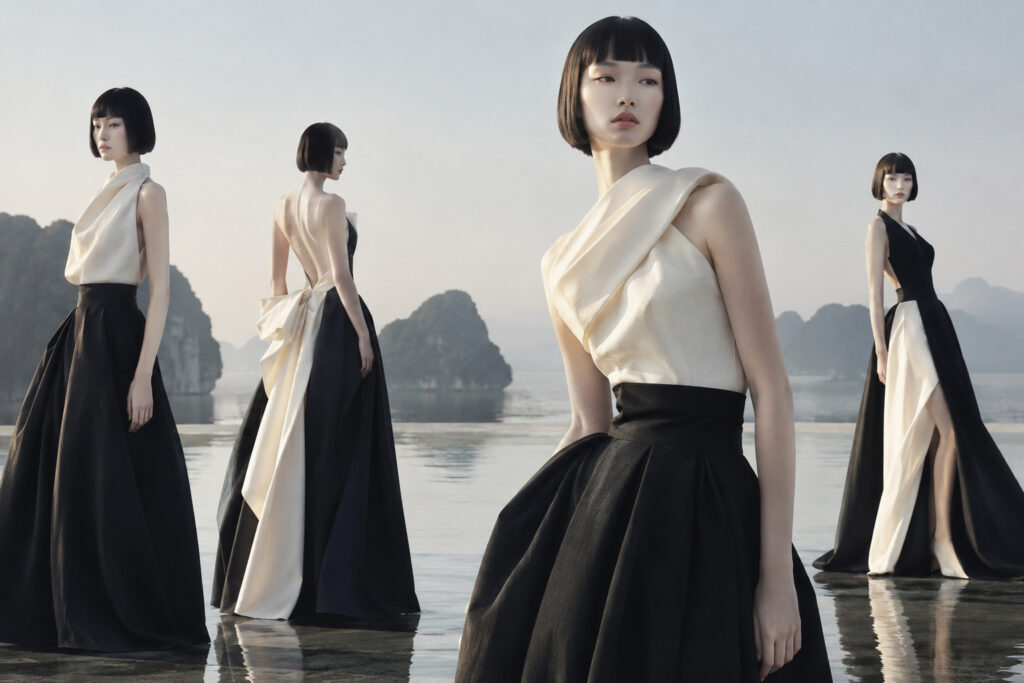
The avant-garde editorial model thin to the point of minimizing conventional sexual characteristics, often angular, androgynous, sometimes described as “alien” operates on a completely different logic from either the ingenue or the untouchable ideal: it isn’t selecting for desirability at all, mass or otherwise, but for sculptural neutrality, a body that functions as a near-blank armature so the clothing’s line and structure can be read without competing biological signal.
The effect on the viewer isn’t desire or protective identification but a kind of aesthetic unease or contemplation the model reads as art-object rather than person, and that deliberate resistance to ordinary taste is the actual point. This is why the register belongs almost exclusively to couture and high-fashion editorial rather than commercial or mass-market imagery: it isn’t built to convert a broad audience, it’s built to sort audiences into those with the cultural fluency to find it beautiful and those who simply find it strange a mechanism of exclusivity through taste-gatekeeping rather than through sexual or narrative appeal, which is arguably the purest expression of Bourdieu’s distinction logic among the three registers, since its entire function is to separate insiders from outsiders rather than to be liked at all.
A fourth category: elegant/refined ideal
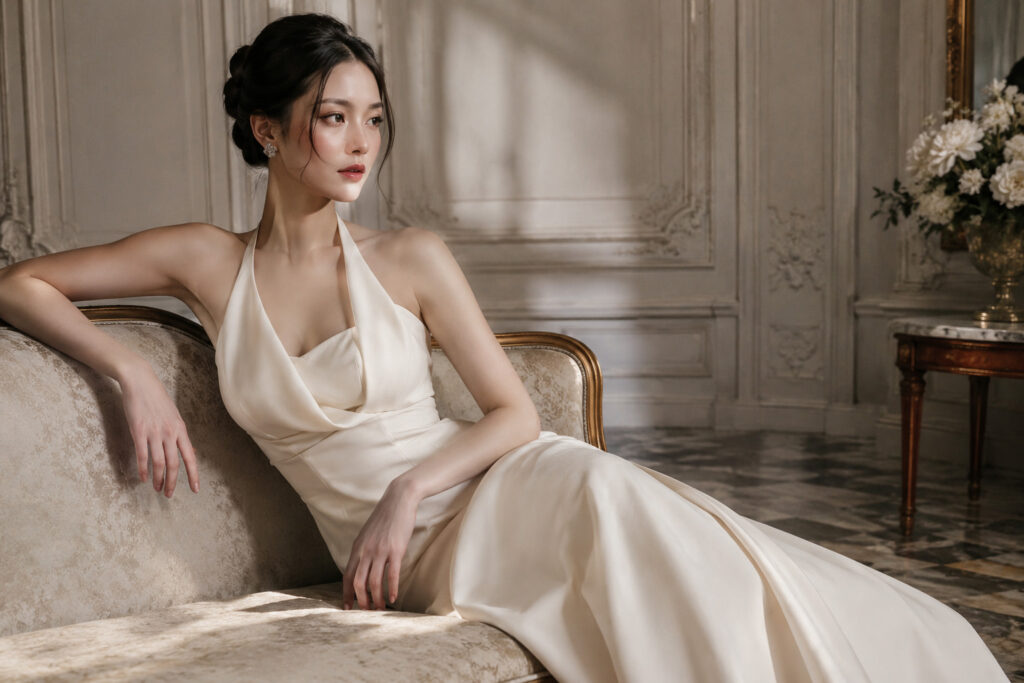
There’s a fourth register worth naming precisely: the elegant/refined ideal — think classic Grace Kelly, or contemporary editorial casting for brands like Chanel or Hermès when they’re not going avant-garde. This type is conventionally beautiful and mature (unlike the ingenue’s youthfulness, unlike the avant-garde’s deliberate strangeness), but the beauty is coded through poise, restraint, and composure rather than sexual availability closed rather than open body language, understated expression, symmetry read as refinement rather than fertility.
It triggers something closer to admiration mixed with aspiration toward status and self-possession rather than desire or protectiveness the viewer doesn’t want to protect her (she reads as complete, not vulnerable) and doesn’t primarily desire her (there’s a deliberate distance, almost the opposite of “open” in the sexual sense) they want to become that composed, effortless version of themselves. It’s the register most tied to old-money or heritage luxury branding specifically because restraint itself is the status signal anyone can perform overt sexiness or youthful cuteness, but effortless composure historically read as something that couldn’t be bought quickly, only inherited or cultivated over time, which is exactly why legacy houses lean on it to signal enduring, non-trend-dependent status rather than accessible desirability.
Serving the Crowd Is the Performance Lever

Strip away the aesthetics and there’s a blunter mechanism underneath all of this: the ingenue performs commercially because it serves what the broad audience the crowd, the mass market, the “mob” in the oldest sense of the word actually wants to feel, not what a narrower, more sophisticated viewer might prefer in the abstract. A crowd doesn’t primarily want to admire from a distance; it wants to belong, to root for someone, to feel protective of a stand-in for itself.
The ingenue register is, in this sense, less a beauty ideal than a piece of crowd psychology made visual the same instinct that makes bread-and-circuses spectacle effective, or that makes a relatable underdog outperform an untouchable star in box-office terms, is the instinct being triggered by wide eyes and open, unguarded features.
This isn’t cynicism; it’s simply an acknowledgment that mass performance has always rewarded whoever best understands what the crowd is actually asking for emotionally, and gives it to them cleanly, rather than whoever produces the most refined or “correct” image by some narrower internal standard. The craft is in doing this without contempt for the audience being served using the lever honestly, for a story or a brand you actually believe in, rather than as a purely extractive trick.
OUR SPONSOR OF THE DAY : NEONNIGHT.FR
The Practical Takeaway
Match the register to the job the image needs to do.
- If the goal is aspiration through distance : luxury, desire, admiration from afar, the untouchable, fully mature ideal is the correct tool.
- If the goal is identification through a story : a heroine the audience follows, a brand narrative built on a felt journey rather than pure status the ingenue register does structurally different, and often heavier, work.
The ingenue isn’t a more beautiful archetype than its counterpart. It’s a different instrument, built to solve a different problem: not be desired, but be joined.


GIPHY App Key not set. Please check settings