
 dudeoi
Moneyball is one of my favorite films, directed by Bennett Miller and starring Brad Pitt. It tells the story of GM Billy Beane and the Oakland A’s unbelievable winning streak, achieved despite having one of the smallest budgets in the league.
The core lesson is clear: you can’t win by following the same rules as everyone else. Especially when the odds are stacked against you.
In this article, we’ll explore why, in any field, extraordinary and sometimes even moderate success tends to follow the same underlying pattern.


OUR SPONSOR OF THE DAY : NEONNIGHT.FR
A few words on the Movie

Although the movie revolves around baseball, its core theme is the necessity for under-resourced teams to think differently from those with greater means.
The same applies to individuals. Most of us aren’t born with the privilege of having both time and resources (money, mentor) to pursue our unique aspirations from a young age. Instead, we’re often pushed to work simply to support ourselves — usually in fields that don’t feel especially meaningful to us.
This is where understanding how the game truly works can give us a significant edge — or at the very least, greatly improve our chances of winning big and hitting a home run in our own lives.
Perhaps a more extreme point, aiming only for home runs may be the single strategy that truly allows you to win big.
Defining success
Success is ultimately subjective, but for the purpose of this article, we’ll define it as creating a significant positive impact. Money and fame are secondary—they are often the natural byproducts of that impact.
The different models of distribution
Here’s a concise, clear description of the three major distribution models that govern the universe — Normal, Log-normal, and Power law.
1. Normal Distribution (Bell Curve)
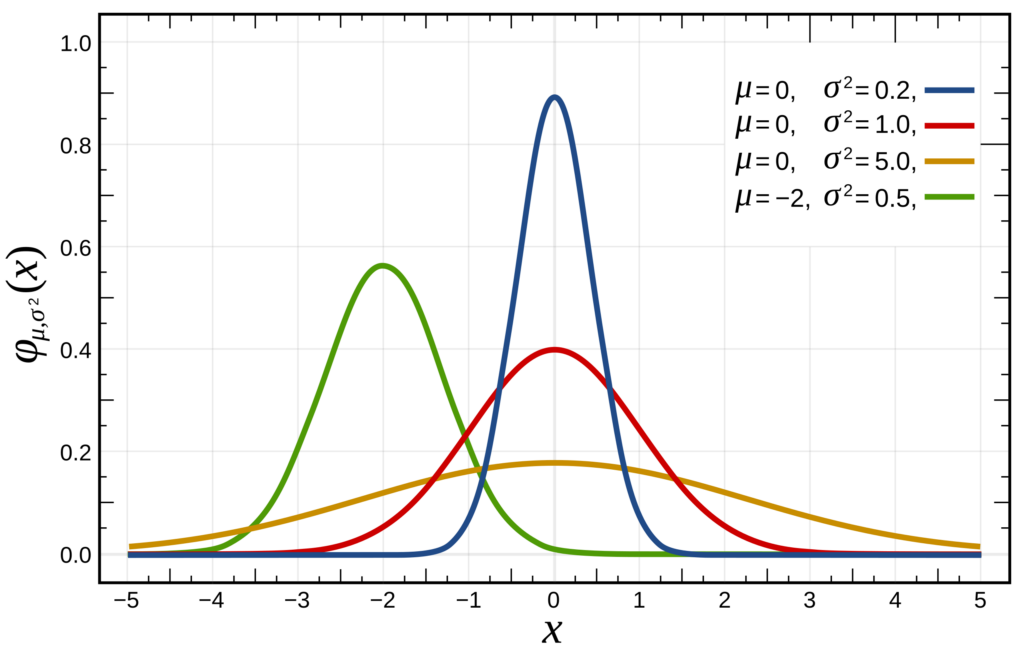
- Shape: Symmetrical, bell-shaped.
- Key idea: Most values cluster around the average, and extremes are very rare.
- Examples:
- Human height
- Measurement errors
- Implication: Playing average works. The middle dominates. Extremes are highly improbable.
Most of us assume that in any field, outcomes are distributed evenly—for instance, being an average or slightly above-average photographer should naturally place you around the median in attracting interesting clients, but this is not how the market really works.
Education and school primarily aim for the average, bringing everyone to a central level considered ‘acceptable’ or ‘adequate.’ They focus on consistency and balance rather than excellence or originality, favoring conformity to standards over the expression of individual uniqueness.
The problem is that being merely ‘acceptable’ in saturated markets generates almost no value.
2. Log-Normal Distribution
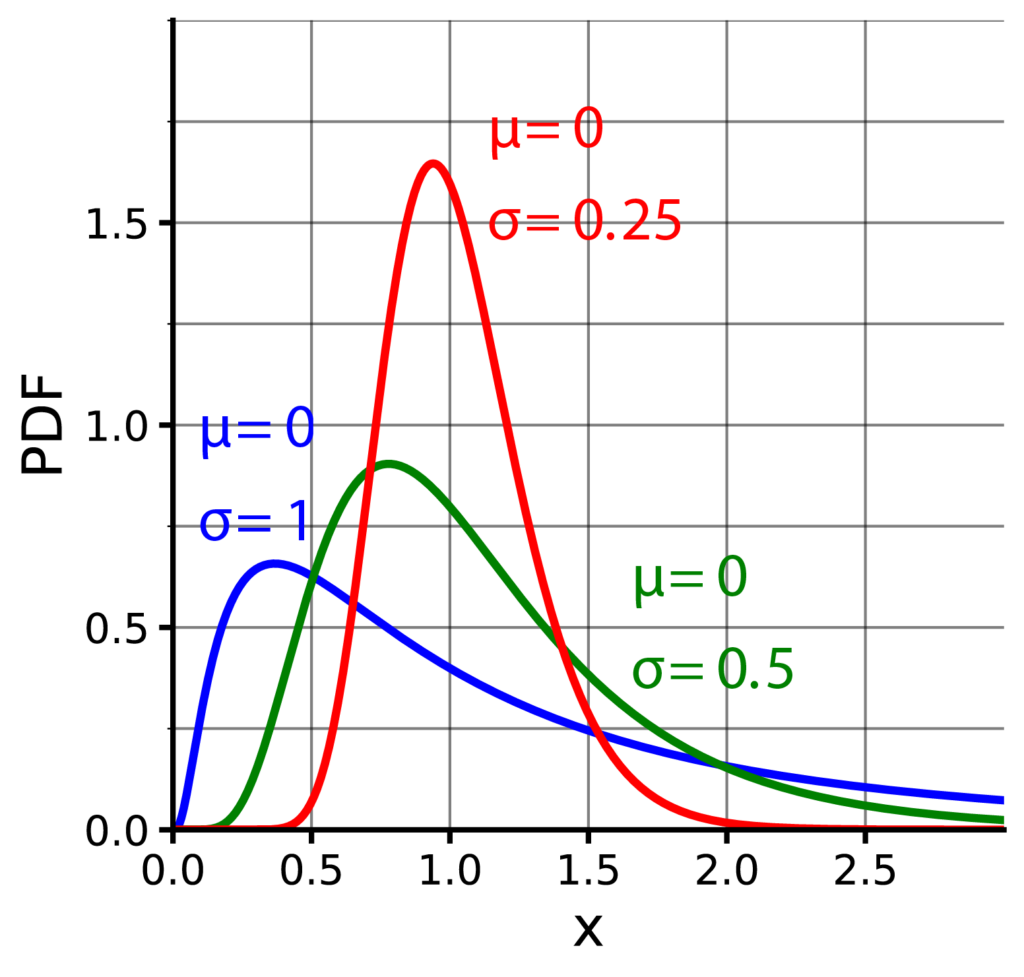
- Shape: Skewed to the right (long tail).
- Key idea: Values grow multiplicatively, not additively.
- A log-normal arises when many small percentage changes compound over time.
- Examples:
- Income distribution
- Website traffic
- Time to complete certain tasks
- Implication:
- Most outcomes are small, but big wins exist more often than in a normal distribution.
- Still, true extremes remain somewhat constrained compared to power laws.
In reality, outcomes often follow a log-normal distribution rather than a normal one. Using the same example: most photographers may indeed attract a modest number of clients, but a few photographers—through skill, style, or unique positioning—can attract an exponentially larger number of high-value clients. This creates a long right tail: while the majority cluster near the median, the rare top performers dominate the field, unlike the symmetric bell curve of a normal distribution where extremes are extremely rare.
3. Power Law Distribution (Pareto / Heavy Tail)

- Shape: Extremely skewed with a very long tail.
- Key idea: A small number of outcomes account for a massive share of total impact.
- “The top 1% captures 90%.”
- Examples:
- Blockbuster movies
- Viral songs
- Wealth concentration
- Startups (1 unicorn pays for 100 failures)
- Artistic careers
- Implication:
- Averages are meaningless.
- Extremes dominate the entire system.
- To succeed, you can’t optimize for the middle — you must aim for outsized, rare, high-impact results.
For power law, the effect is even more extreme. In photography, most photographers will get a small, modest number of clients, but a few “superstars”(Leibovitz, Lindbergh, Avedon) capture disproportionately huge attention, opportunities and income—far beyond what a log-normal curve would predict. In other words, the top photographers don’t just earn slightly more than the median; they dominate the entire market. The distribution is highly skewed, with a long tail where the few at the top hold most of the value, illustrating why aiming for uniqueness and extreme excellence matters if you want to reach the top.
One-sentence summary
- Normal distribution: Most outcomes are average.
- Log-normal: Most outcomes are small, some are surprisingly big.
- Power law: A tiny minority dominates everything — the game is won at the extreme.
How to play the right game (Power Law)

1. Understand the Playing Field
Most people assume that effort and talent translate linearly into results. They expect moderate effort to bring moderate reward. But in domains governed by power law distributions, this is not the case. The vast majority of participants will cluster at the low end—getting modest clients, modest attention, or modest income—while a small minority capture the majority of opportunities and rewards. Understanding this reality is the first step: you aren’t competing for “average success,” you’re competing for the top-tier opportunities.
2. Focus on Extreme Value
If outcomes are power-law distributed, aiming for incremental improvement or “being slightly better than average” rarely leads to extraordinary results. Instead, you must aim for the extremes—the rare, high-value projects or clients, the distinctive personal style, or the unique approach that makes your work stand out. Just like Billy Beane in Moneyball, this often requires breaking conventional rules and focusing on strategies that others dismiss or overlook.
3. Leverage Multiplicative Effects
In a power law system, small advantages can compound dramatically. Building a unique skill, cultivating rare connections, or producing work that is inherently shareable can create exponential gains over time. One breakthrough can attract far more attention than a hundred average efforts. The key is positioning yourself for multiplicative big wins rather than uniform incremental gains.
4. Be Prepared for Risk and Variability
Playing for extremes comes with an extreme uncertainty: most attempts will fail, and rewards are highly uneven. You must be comfortable with the fact that most of your efforts won’t produce large outcomes. Persistence is essential, but so is focus: identify the high-leverage opportunities worth taking risks on, and don’t spread yourself thin over low-impact projects.
5. Combine Mastery with Strategic Exposure
Finally, extreme skill alone is rarely enough. Power law success also depends on visibility and reach. Your exceptional work must be seen by the right people, in the right context, at the right time. This means pairing deep mastery with strategic self-promotion, networking, or channels that amplify your impact—ensuring that when you hit the top of the curve, it compounds fully.
The example of photographers

Richard Avedon, Peter Lindbergh, and Annie Leibovitz are all technically exceptional photographers. They understand light, composition, and timing with a mastery that very few ever reach. But technique alone doesn’t explain why they shaped the visual culture of an entire century. Their true advantage lies in the unique lens through which each of them sees the world — a lens no one else can replicate.
Annie Leibovitz — Symbolism
Leibovitz builds theatrical worlds where every object, color, and gesture carries meaning. Her portraits are not just photographs; they are visual myths. She elevates her subjects by embedding them in symbolic narratives that reveal their cultural weight.
Peter Lindbergh — Truth
Lindbergh strips away the artificial. His power comes from honesty: raw faces, minimal makeup, real emotion. He captures the human being behind the icon. In a world obsessed with perfection, his truth felt revolutionary — and still does.
Richard Avedon — Essence
Avedon’s genius lies in his ability to expose the psychological core of a person. He wasn’t chasing beauty or symbols; he was hunting for the invisible. His stark portraits confront you with the subject’s inner world — their tension, fragility, ego, fear, ambition. Avedon didn’t just photograph faces; he revealed essence.
This is why his images linger: they show people as they are when the mask falls. We’re talking here about emotional resonance.
This doesn’t mean every shoot needs a huge budget, a celebrity subject or some complexity. What matters is that the craftsmanship is unmistakable — and above all, that the subject and emotional resonance are bold, meaningful, and memorable.
Creating a piece around a subject that genuinely matters to you (and to a few others) is a true example of doing something real — instead of chasing what you think might work or what happens to be trendy. It needs to matter to you before it can matter to anyone else.
Why the universe of startups illustrates this idea perfectly?

This is exactly what the startup game teaches us. In the world of entrepreneurship, success is not linear and average effort rarely pays off. Most startups fail, but a tiny fraction achieve massive returns—think of companies like Airbnb, Stripe, or SpaceX. Just like in a power law, one “home run” can completely outweigh hundreds of small wins.
The startup game forces founders to focus on extreme differentiation, leverage, and scalability. Incremental improvements or playing it safe often lead to mediocre outcomes. Those who succeed learn to take calculated risks, pivot strategically, and double down on ideas with the potential for outsized impact.
Ultimately, the startup ecosystem is a live demonstration of the principles we see in power law distributions: a few rare successes dominate, and understanding the rules of the game gives you the best chance to hit a home run rather than settle for average. It’s a system where aiming for extremes isn’t just a gamble—it’s the most rational path to winning.
In essence, it’s wiser to focus on developing one idea until it gains traction and achieves product-market fit, rather than endlessly refining something that will never really take off. It’s also important to recognize that moderate, steady success can be sufficient—sometimes a sustainable, balanced outcome is just as valuable to keep you in the right track to chase a home run.
When you go fishing you can catch a lot of fish, or you can catch a big fish. You ever walk into a guy’s den and see a picture of him standing next to fourteen trout? – Sean Parker in The Social Network
Unconventional wisdom is where the gold is

The reason is tied to risk and reward in a skewed system. In a landscape governed by power-law dynamics, most ideas—even “good” or safe ones—will only yield average outcomes. They don’t have the potential to break the mold or create massive impact.
The ideas that seem “bad” or counterintuitive are usually the ones that challenge conventional wisdom. If they succeed, the upside is enormous, because few people are pursuing them and the market is largely untapped. In other words, high-risk, unconventional ideas are the only ones capable of producing home-run outcomes; safe ideas can give small wins, but they almost never dominate the field.
It’s not that all risky ideas will succeed—they mostly fail—but the few that do are the ones that can truly change everything. That’s why the focus in startups, art, or even personal projects is often on “bad” ideas with huge potential rather than safe ones with limited upside.
Real success is impossible within the conventional paths

In a system governed by power-law dynamics, success is inherently skewed, and the average cannot produce the extremes. By definition, the “average” outcome sits near the median—it might be comfortable, predictable, or stable, but it cannot generate the outsized success that dominates a field.
Think of it this way: if everyone plays it safe, following conventional paths, most results cluster in the middle. True breakthroughs—whether in startups, art, or science—come from actions that lie far outside the average. The system ensures that only those willing to explore unconventional, high-leverage paths have a chance at monumental success.
This doesn’t mean the average is worthless; it’s just structurally incapable of producing a home run. The very nature of extreme success is that it’s rare, concentrated, and visible—by definition, most people will never reach it if they stay in the median.
Your Unique Path Is Your Greatest Bet

There’s only one you—a singular blend of skills, instincts, experiences, trauma, pain, and hard-won wisdom that no one else carries. Your perspective, shaped by every challenge and every insight, is irreproducible. No one else sees the world through your eyes, feels what you feel, or makes the connections only you can make.
In a power-law world, this uniqueness is your ultimate leverage. Playing it safe with generic ideas, conventional work, or copying what everyone else does keeps you in the median—comfortable, but far from extraordinary. True upside comes from embracing the totality of who you are, including the scars and lessons that make your vision distinct.
The only way to maximize your potential is to bet on yourself, fully inhabit your singular perspective, and take the risks others shy away from. Your life’s experiences—every setback, every triumph, every moment of clarity—are the rare asset no one else possesses. Nurtured and applied, they can create outsized impact.
OUR SPONSOR OF THE DAY : NEONNIGHT.FR
This isn’t recklessness. It’s the intelligent investment in the one resource that is truly irreplaceable: you.
Through his own failures as a highly touted baseball prospect, Billy Beane realized that much of the conventional wisdom in scouting and team management was flawed. That’s where he found his unconventional wisdom. By fixing the source of his pain.
Success is found in extremes but peace is found in balance

Success and peace often lie at opposite ends of the spectrum. To achieve extraordinary success, one must embrace extremes—take risks, push boundaries, and pursue goals that few dare to chase.
This kind of pursuit demands intensity, focus, and sometimes discomfort. Peace, on the other hand, emerges from balance: accepting limits, finding harmony in daily life, and cultivating contentment in what already exists.
While extremes drive achievement and visibility, balance nurtures well-being and clarity. Understanding when to lean into intensity and when to step back into equilibrium is the key to a life that is both impactful and deeply fulfilling.
Extreme doesn’t refer to turning things to 11, but to go where most people think there is no value. To give you an example, on Instagram, most images are heavily stylized—oversaturated colors, extreme lighting, busy compositions, or over-the-top edits. They scream for attention, which works to “stop the scroll,” but they rarely feel balanced or timeless.
The few that do achieve balance—subtle color palettes, restrained composition, natural lighting, a sense of space and a deep message—often leave a deeper impression. They convey confidence and intention without shouting. It’s the restraint that makes them sophisticated, even if they don’t grab you instantly.
It’s like comparing a flashy billboard to a quietly powerful photograph: one demands attention, the other earns respect. Instagram trends favor the former, but the latter is often more resonant and memorable.
So why trying at all?
It’s reasonable to wonder: if the odds of achieving real, outsized success are so slim, why even try? Why not simply choose the safer path — the middle of the bell curve, a stable job, a predictable life?
Because humans aren’t built for mere safety. We are wired for transformation and transcendence. It’s an evolutionary drive, an existential need. And beyond that, every “safe” game is ultimately symbolic — a way of avoiding the deeper potential we carry.
Conclusion

In a world governed by power law distributions, playing it safe and aiming for “average” will rarely lead to extraordinary results.
True success requires thinking differently, taking calculated risks, and aiming for extremes—whether it’s through mastering a rare skill, pursuing bold projects, or seizing opportunities others overlook. Small advantages can compound, and one breakthrough can far outweigh countless average efforts.
Understanding the structure of the game is not just a theoretical exercise; it’s a roadmap for strategic action, persistence, and positioning yourself to capture the outsized rewards that most people miss. Ultimately, winning the game means embracing the uncommon path and daring to play where the payoff is disproportionately large.


GIPHY App Key not set. Please check settings