
 dudeoi
Wim Wenders’ Perfect Days seems deceptively simple at first, but the longer you watch, the more its quiet psychological depth emerges.
It delves into complex themes—ambition, routine, agency, and the nature of personal sovereignty. In this article, we’ll unpack and explore some of these ideas.

OUR SPONSOR OF THE DAY : NEONNIGHT.FR

The plot

It follows Hirayama, a Tokyo toilet cleaner, whose life is built on repetition: waking early, working diligently, listening to music on cassette tapes, reading, observing light through trees, and returning to rest. Nothing dramatic happens—and yet everything does.
The themes
At its core, the film is an exploration of how a life can be meaningful without being “successful” in the conventional sense. It challenges the modern assumption that fulfillment must come from progress, ambition, or social recognition. Hirayama’s life has none of these markers. And yet, it is not empty.
What makes the film compelling is that it refuses to romanticize or condemn his existence outright. Instead, it places the viewer in a state of tension.
The beauty

On one side, there is undeniable beauty in his routine. The film elevates small, often overlooked moments: the sound of a cassette clicking into place, sunlight flickering through leaves, the quiet satisfaction of a task done with care.
In this sense, Perfect Days becomes almost meditative. It suggests that meaning is not something you chase, but something you notice.
The avoidance

But on the other side, there is an underlying unease. His life is controlled, contained, and deliberately limited. His interactions with others are brief and surface-level.
He avoids emotional entanglement, especially with women or deeper relationships. This raises a question the film never answers directly: is this peace, or is it withdrawal?
The ambiguity

Hirayama appears free—but his freedom is internal. He has removed himself from the pressures of society, but also from its possibilities. There is no visible ambition, no attempt to expand his world. His life is stable, but also static.
For some viewers, this reads as enlightenment: a man who has freed himself from unnecessary desire. For others, it feels like resignation: a man who has quietly accepted a reduced version of life.
The ending

The tension becomes most visible in the film’s final scene. As Hirayama drives, his face shifts subtly—between a smile and the verge of tears. It is one of the most emotionally revealing moments in the film, precisely because nothing is explained.
In that expression, the film reveals its truth: his life is not purely serene. It is a balance—carefully maintained—between contentment and quiet grief.
Every life comes with trade-off

What emerges is a deeper theme: every life, no matter how well chosen, comes with exclusions. Hirayama has found dignity, presence, and calm.
But he has also, consciously or not, stepped away from connection, unpredictability, and growth. The film doesn’t judge this trade-off. It simply lets us feel it.
Internal Peace vs External Success
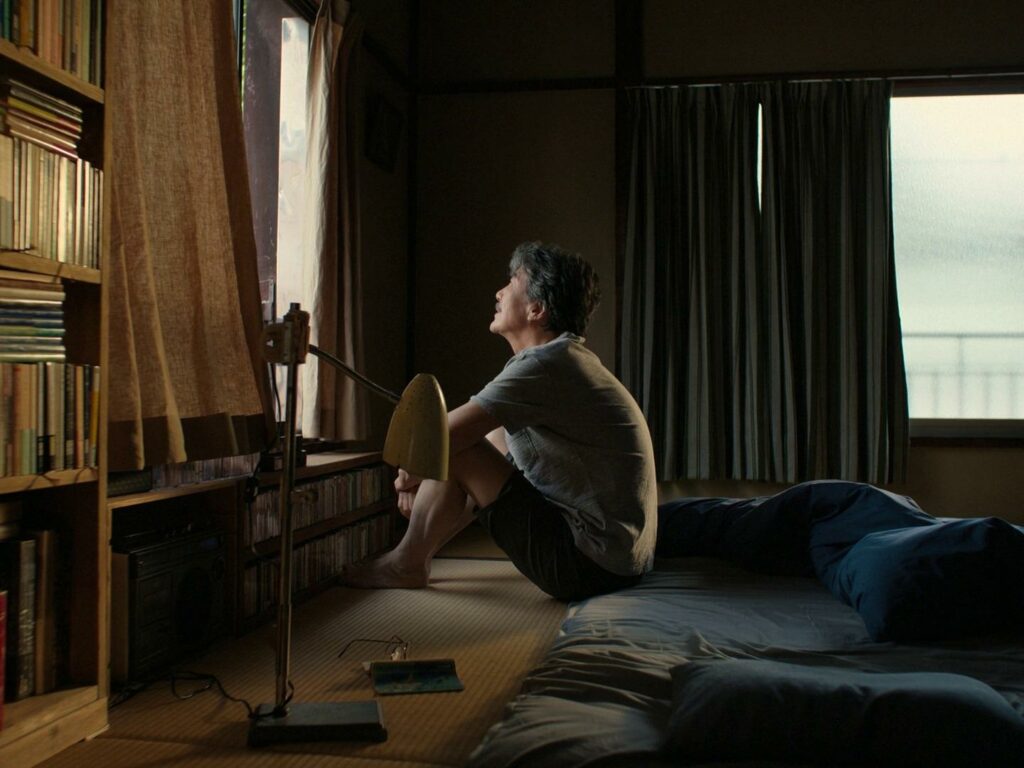
This is why Perfect Days resonates so strongly with modern audiences. It mirrors a conflict many people experience internally: the tension between external success and internal peace. Between a life that looks impressive and one that feels livable.
The film does not offer a solution. It does not tell you to abandon ambition or to embrace simplicity. Instead, it asks a more uncomfortable question:
Is this enough for a whole life—or just a refuge from something else?
So in a way, the film does something similar to what we were describing in the previous article:
it shows a life that feels deeply “real”… but might also be, at least partly, a response to constraints rather than pure freedom.
If you watch it critically, it’s less a celebration of simplicity and more a portrait of a man who has chosen (or accepted) a very narrow version of life—and made peace with it.
Whether that’s wisdom or resignation… the film leaves that to you.
The Paradox of Humble Jobs
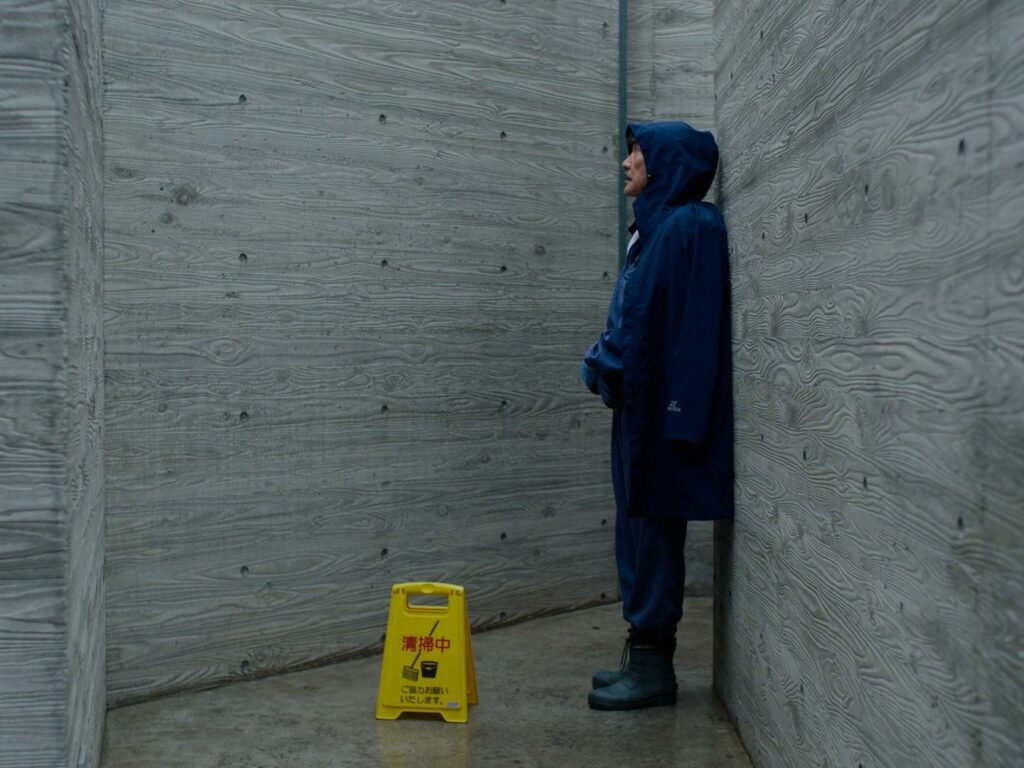
Hirayama’s work—cleaning public toilets—is humble, repetitive, and largely invisible. Yet Wenders treats it with care, showing that even modest labor can carry meaning when approached mindfully.
The paradox lies in how we perceive such work:
- We intellectually recognize its necessity and value.
- Social conditioning, however, makes it hard to accept as a legitimate source of fulfillment.
- Society often measures worth through status, prestige, and recognition.
Hirayama embodies this tension:
- He performs his tasks with pride and attention.
- Yet he remains socially marginal, his efforts largely unseen.
Perfect Days challenges viewers to reconsider these assumptions:
- Can dignity exist independently of societal status?
- Can fulfillment be found in lives and jobs that are overlooked by the world?
For example agriculture sustains humanity, but the farmers who do the work often face hardship and struggle.
OUR SPONSOR OF THE DAY : NEONNIGHT.FR
Conclusion

What are you willing to give up to live the life you choose—and can you accept that fully?
In the end, Perfect Days is not about a perfect life. It is about a life that has been narrowed, shaped, and accepted. Its quiet power comes from showing that even in stillness, there is complexity—and even in peace, there can be a trace of sadness.
And perhaps that is the most honest thing it offers: not an ideal to follow, but a mirror to reflect on.


GIPHY App Key not set. Please check settings