
 dudeoi
Bugonia, directed by Yorgos Lanthimos, stands as a compelling example of how cinematic form can fully embody and reinforce a film’s thematic core.
Through its twist, the film illustrates how easily we can be misled by appearances, echoing a broader tendency in real life to favor perception over truth.
⚠️ Spoiler Warning: The following discussion contains major plot details. Watch Bugonia first to experience the story unspoiled.


OUR SPONSOR OF THE DAY : NEONNIGHT.FR
The plot

Bugonia follows two men who abduct a powerful woman, firmly convinced that she is hiding her true nature as an alien and her purpose on earth.
The themes
How perception and social success determines credibility

Ted, compellingly portrayed by Jesse Plemons, and Don are two men who might easily be perceived as socially marginal figures. Actually those characters almost have nothing going for them.
This is where Yorgos Lanthimos, and perhaps the original Korean screenplay Save the Green Planet! subtly challenges our instinct to judge. We tend to evaluate individuals less by what they say, or truth they embody and more by how they appear within familiar social frameworks.
In contemporary Western societies, these judgments are often shaped by visible markers such as financial success, professional status, social validation, material possessions, physical attractiveness, and perceived social desirability.
Psychological adaptation as a defense mechanism

People often rely on facts and social proof because of a deeper, less visible mechanism: truth itself can become flexible when it serves to protect one’s identity.
When someone shifts from plan A to plan B, it is rarely experienced as failure. Instead of “I wanted A but couldn’t achieve it,” the narrative becomes “A was never meant for me.” which is tricky cause it can sometimes be true and sometimes be psychological adaptation. Most of the time, this quiet reframing helps preserve self-worth, preventing feelings of humiliation or a loss of confidence and identity.
Within this framework, Ted and Don can be seen as constructing a narrative in which they cast themselves as protagonists, if not heroes allowing them to reinterpret their place in the world and shield themselves from a harsher social reality of being socially undesirable.
Morality and Justification
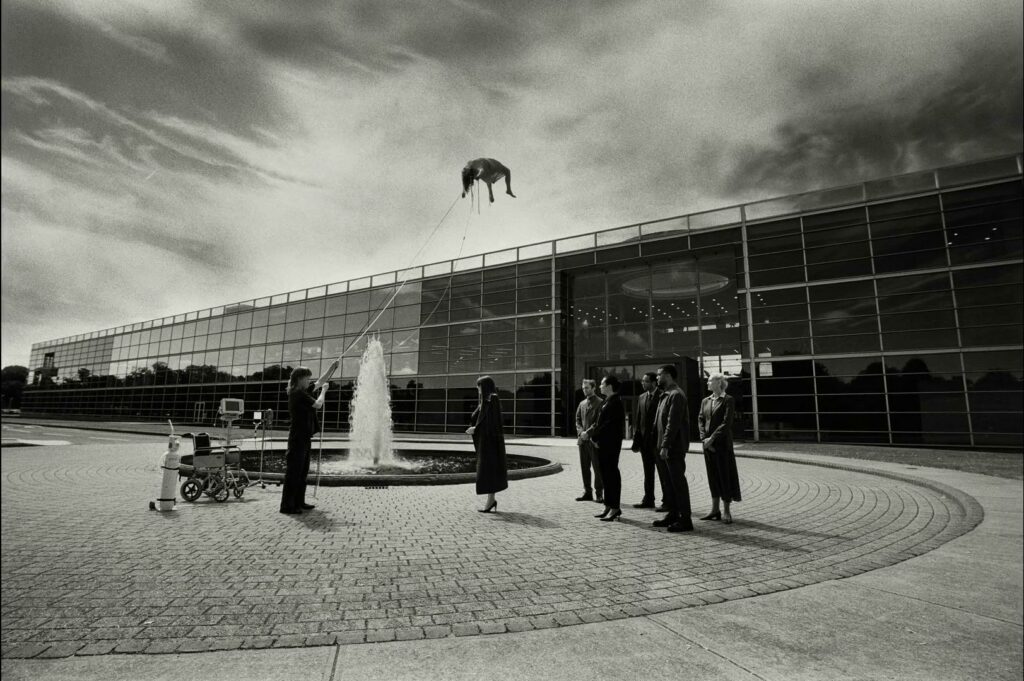
This is precisely where morality often becomes a tool to cope with feelings of inadequacy and ineffectiveness. By framing their actions in moral terms, individuals can preserve self-esteem, justify shortcomings, and create a sense of control in situations where they might otherwise feel powerless.
In this way, moral reasoning can function less as an ethical compass and more as a psychological shield, protecting the ego from failure and social judgment.
Perception vs. Reality
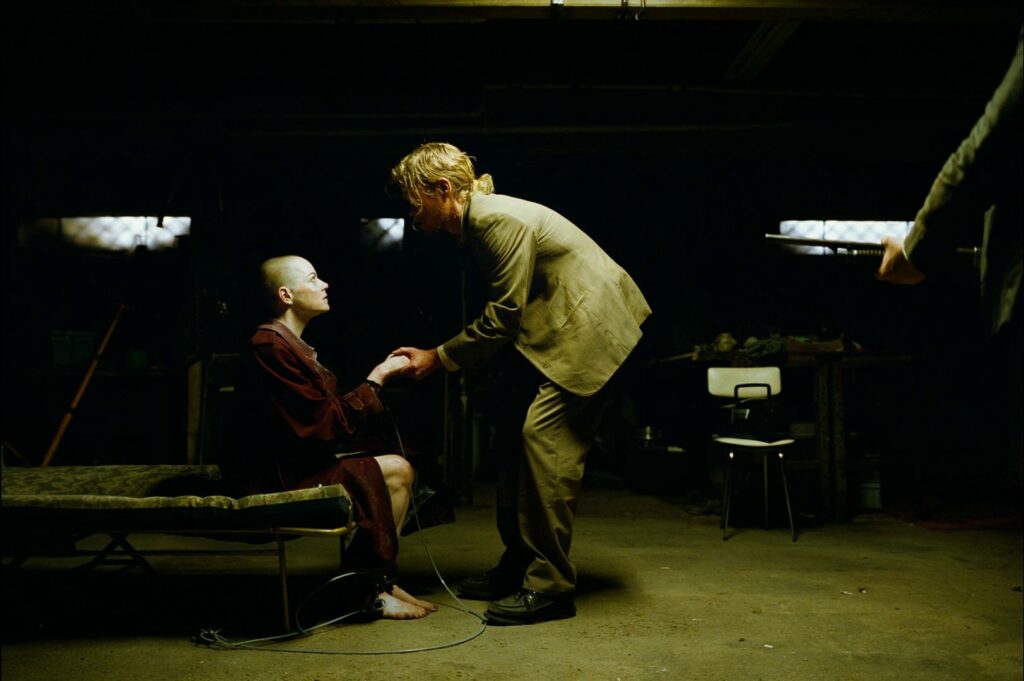
Psychological adaptation is essential for preserving self-confidence and maintaining a coherent sense of identity, but it often comes at the cost of personal growth.
When perception diverges from reality, it’s like relying on a faulty GPS—constantly leading you in the wrong direction or, worse, into hidden pitfalls.
But even then, there are exceptions. For instance, after a traumatic event, it can sometimes be more helpful to remain temporarily anchored in an illusion, allowing ourselves to gradually return to reality.
For example a boxer who finds excuses for his loss can both protect is confidence and prevent himself from growth at the same time and it’s impossible to say which one is better in every situation.
In the long run, the consensus is that it is better to align our perception as closely as possible with reality. As films like Bugonia suggest, reality can initially be chaotic, indifferent, unequal, and often difficult to face—but confronting it is necessary to achieve true understanding and personal growth. However, there are always exceptions to the rule, as the film’s uncanny ending suggests.
The Nature of Truth

Truth is, by its very nature, shaped by perception and inherently subjective. It depends on the frameworks and contexts we inhabit, and there are always exceptions that challenge rigid definitions.
For example, in mathematics, 1 + 1 = 2, but in reproductive terms, 1 + 1 can result in 2, 3, or even 100, depending on context and perspective. Similarly, wealth is generally seen as positive, yet giving a fortune to a drug addict may accelerate their decline. Another example: when money comes at the cost of time and health, what seems like an advantage can quickly turn into a disadvantage. Everything depends on circumstances and interpretation; in the human world, no truth is ever absolute.
The problem arises when truth becomes subjective: the beliefs of the majority often come to define what is “real,” even when those beliefs are mistaken or shaped by larger forces, such as profit or power taking precedence over human well-being.
Because this collective consensus is widely accepted as the norm, it pressures individuals to follow the prescribed script even when doing so may harm others or even themselves.
When society values social performance over authentic human connection, it sets in motion a quiet yet inexorable decline, eroding the very foundations of empathy and meaning.
This is precisely why, since the dawn of time, artists and truth-seekers have reflected reality not as answers, but as questions—inviting us to explore rather than instruct. They challenge and humble our beliefs.
Why Bugonia Amplifies These Principles

Where Bugonia hits hardest with its plot twist is in its treatment of the abductors: the characters are presented almost as archetypal weak men seeking for revenge, and the story frames them in a way that makes it difficult for the viewer to dismiss them as anything else than mere resentful or insignificant figures.
Ted is overtly seeking validation, displaying manipulative, narcissistic, and even psychopathic tendencies, while Don struggles with forming genuine, non-manipulative connections and reveals a fragile psychological constitution.
Especially when contrasted with Emma Stone’s character, who is competent, sharp, and unafraid to fight where it truly matters.
In a sense, these two groups reflect Nietzsche’s concept of slave and master moralities, each embodying contrasting approaches to power, values, and agency. Those who can, and those who cannot destroying the ideal that could answer their own unassumed needs (ex: to have influence in the real world).
Power influence and control
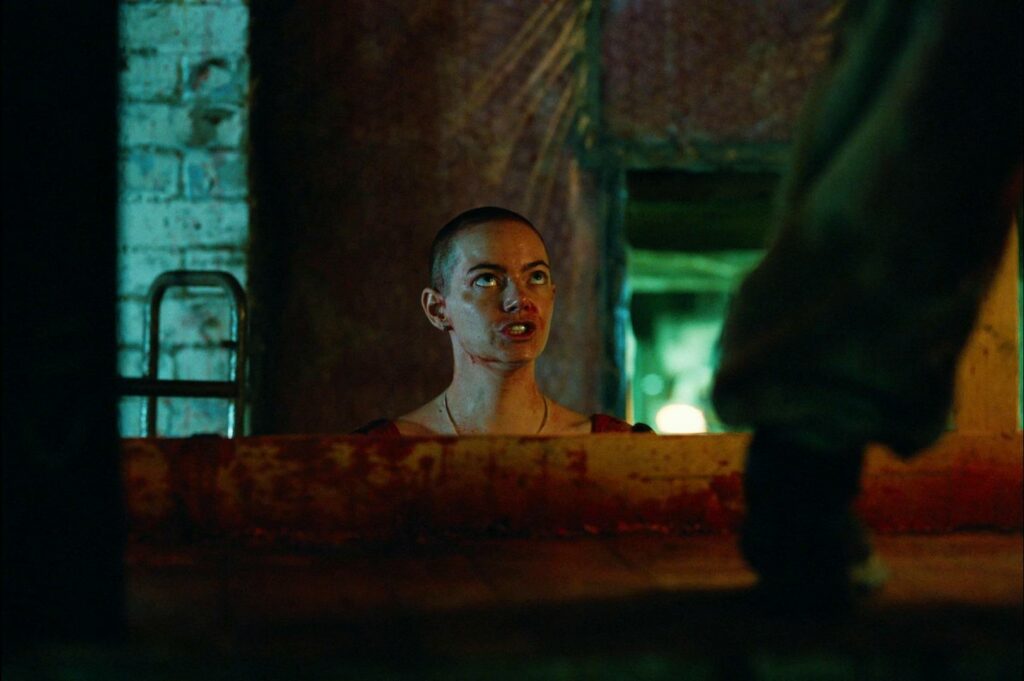
Ultimately, because truth cannot be defined objectively, the real struggle becomes one of perception—over who can shape reality by presenting their version of truth as the accepted consensus.
This tension fuels the constant negotiations and dialogues among the three characters. That’s why Michelle continuously tries to keep the dialogue open, while Ted constantly refuses to engage. When Michelle is left alone with Don which is forbidden to speak to her by Ted, she skillfully asserts her perspective, subtly guiding him to accept her version of reality.
Perhaps humans are inherently driven to grow, expand and control, whether with wisdom and consideration for others or without. Even this drive, however, remains subjective and ultimately impossible to fully grasp.
Isolation and Alienation

Humans naturally assert their visions and exercise power, and collectively they tend to enforce conformity, creating a general consensus that allows for social harmony—much like agreeing on the rules of a game before playing.
The problem is that every culture and social group has blind spots—sometimes severe enough to lead to collapse or failure.
In this context, isolation can be both a privilege and a curse: being removed from the group can foster independent thought and therefore a personal alignment with one’s value, yet it also carries risks.
For example, the abductors’ detachment from broader society highlights the dangers of echo chambers, showing how living entirely within one’s own beliefs can distort perception and judgment (complot theory, etc).
The Real Question Behind Bugonia?

The deeper question at the heart of Bugonia and its shocking twist is this: have we, as a society, lost our grasp on truth because of social consensus?
And if so, how can we pause to reflect, recalibrate our values, and learn to distinguish genuine insight from mere resentment or self-interest?
The film challenges us to examine not just what we accept as real, but why we accept it, and what that reveals about our collective morality.
OUR SPONSOR OF THE DAY : NEONNIGHT.FR
Conclusion

Bugonia is more than a thriller—it’s a mirror held up to human perception, morality, and the stories we tell ourselves.
Lanthimos shows how truth is never absolute, how social consensus can distort reality, and how our need to protect identity shapes judgment.
The film forces us to ask: are we seeing the world as it is, or only as we’ve constructed it? In its tension between perception and reality, Bugonia reminds us that understanding—of others and ourselves—requires courage, reflection, and a willingness to confront the uncomfortable truths we often ignore. And even by doing so, it is highly likely that our reality will remain subjective.


GIPHY App Key not set. Please check settings