
 dudeoi
Claire Denis’s Beau Travail is often described as a film about discipline, masculinity, and desire. Beneath its austere surface, however, lies a quieter, more unsettling subject: repression as a slow, corrosive source of resentment. In the rigid world of the French Foreign Legion, emotion is not forbidden outright—it is simply never given a language.
Bodies are trained, gestures perfected, and routines repeated until individuality dissolves into form. What cannot be expressed does not disappear; it is displaced.
Beau Travail is not about explosive rebellion, but about the invisible accumulation of resentment that forms when desire, jealousy, and vulnerability are systematically denied. The film suggests that repression does not create order—it creates a silence heavy enough to rot from within.


OUR SPONSOR OF THE DAY : NEONNIGHT.FR
The Plot
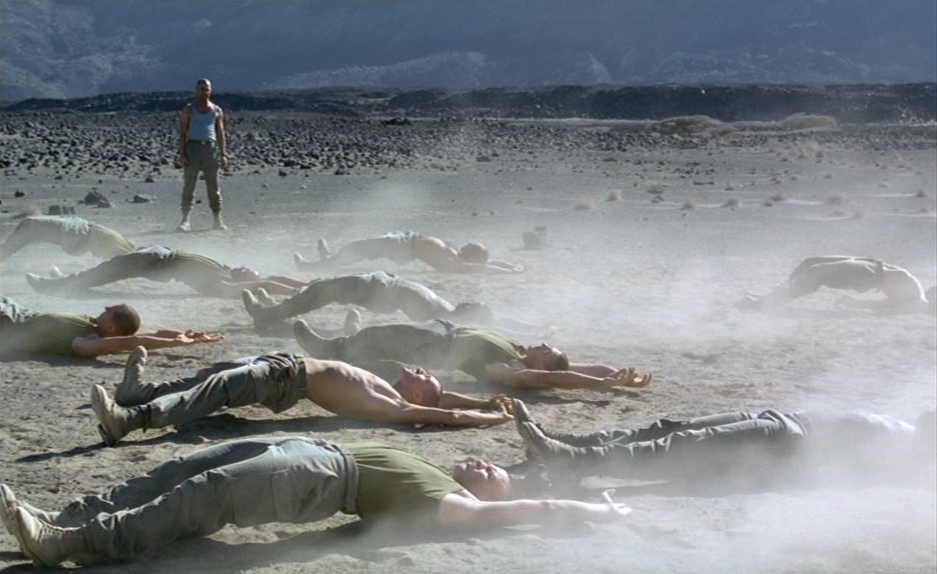
Beau Travail follows Galoup, a non-commissioned officer stationed in Djibouti, whose rigid discipline masks deep inner conflict.
When the admired and effortlessly charismatic recruit Sentain arrives, Galoup’s unspoken jealousy and desire begin to erode his control.
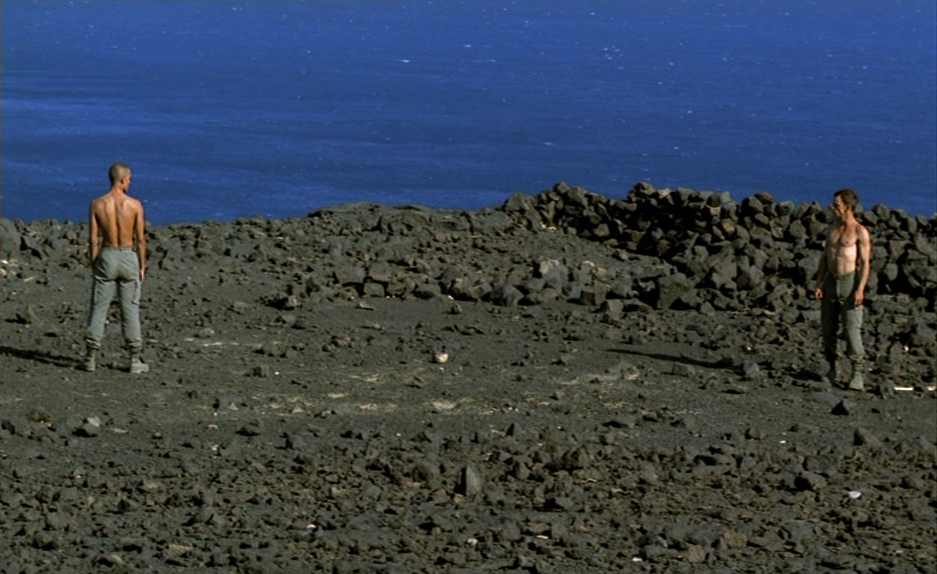
Unable to confront these emotions, he engages in quiet acts of sabotage that ultimately lead to his own downfall.
The film traces how repression, rather than preserving order, gradually transforms discipline into resentment and self-destruction.
The Characters
In the story, the two main characters appear as fully separate individuals, it is important to emphasize that, on a psychological level, Sentain and Galoup can be interpreted as the two poles of human potential present within every individual, rather than as two distinct people.
Galoup
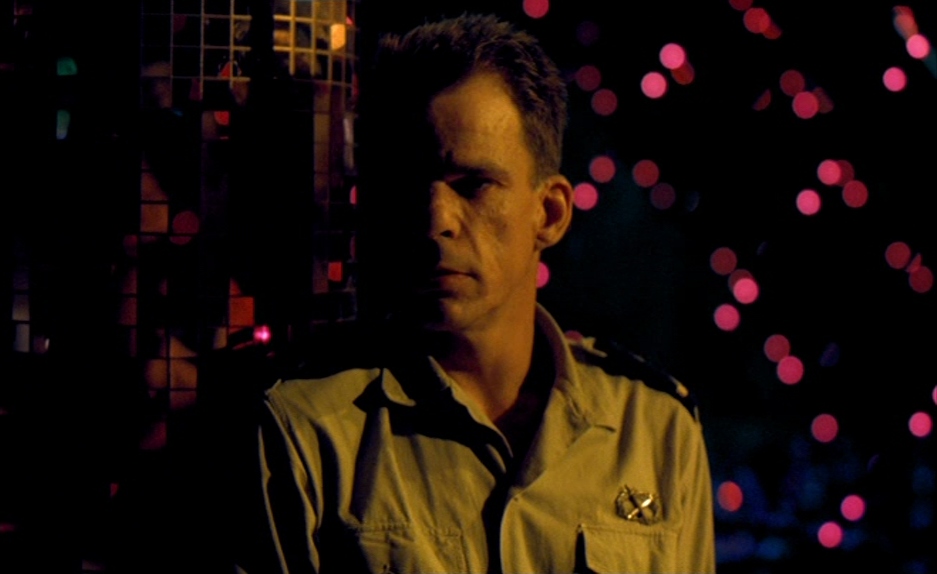
Galoup is a legionnaire in his fifties, holding the rank of adjudant-chef and leading a section of younger men. Compact and weathered, his body reflects years of service rather than distinction. He fits the image of a seasoned legionnaire: disciplined, reserved, and outwardly stable, even maintaining a relationship with a local woman. Having spent most of his adult life in the Legion, Galoup openly admits he is unfit for civilian life. His identity is closely tied to his rank, role, and function within the institution, and his pride comes from obedience, efficiency, and mastery of structure rather than individuality.
Why Galoup Hates Sentain

Galoup’s hostility toward Sentain stems not from insubordination, but from comparison. Sentain embodies ease, moral clarity, and dignity that Galoup has long suppressed. Where Galoup has built his worth through discipline and control, Sentain achieves respect effortlessly.
His presence exposes the cost of Galoup’s lifelong repression: the sacrifice of spontaneity, generosity, and inner freedom. Galoup does not hate Sentain for what he does, but for what he represents—a reminder of what Galoup has denied in himself.
The film contains subtle homoerotic undertones and suppressed desire, especially in Galoup’s feelings toward Sentain
Sentain

Sentain is a young recruit, an orphan, who quickly integrates into the group. Physically athletic and composed, with an angel face, he performs competently and adapts to the Legion’s demands without visible strain. Guided by an innate sense of morality and courage, Sentain earns the respect of his peers independent of rank or authority.
In a way, Sentain represents a form of ideal that Galoup has gave up long ago.
Why Sentain Threatens Galoup
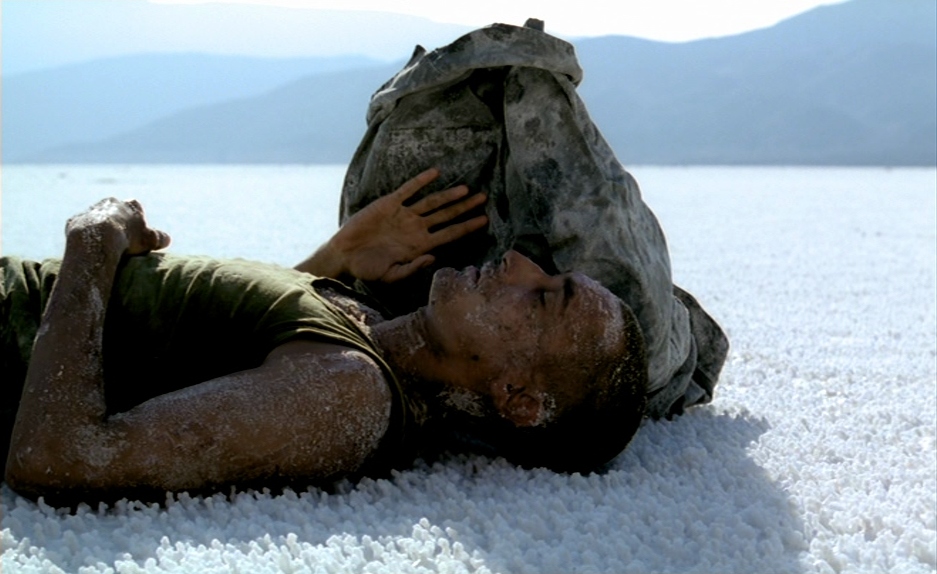
Sentain’s authority is informal and unspoken. Unlike Galoup, he does not rely on hierarchy or fear to command respect. His natural confidence and integrity destabilize a system built on repression. For Galoup, Sentain is an unintentional provocation: proof that one can exist within the same structure without sacrificing inner freedom. Essentially, Sentain embodies everything Galoup is not—and perhaps everything he has renounced in himself.
The Final Scene
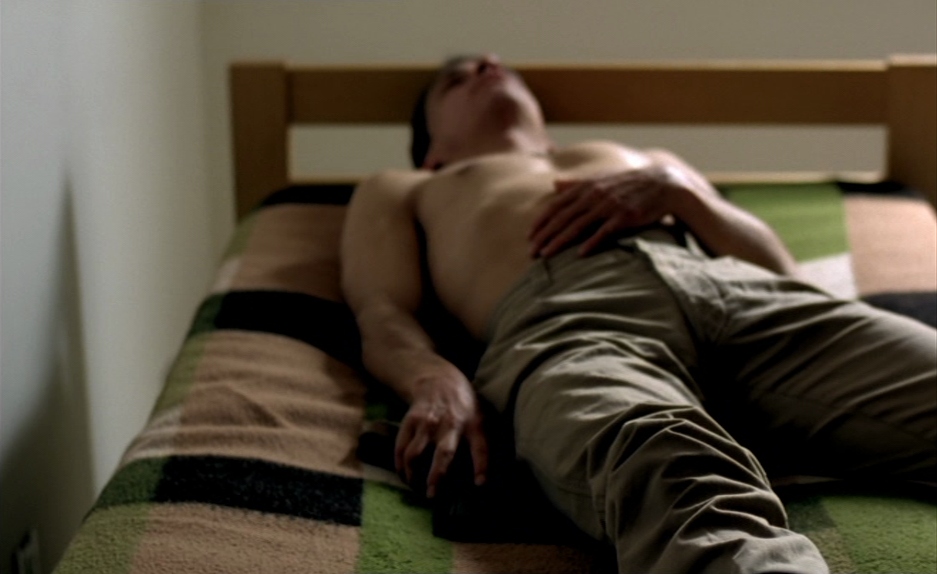
Before the nightclub sequence, Galoup meticulously makes his bed with military precision, a ritualized repetition of discipline. He then prepares his gun, strongly suggesting an intention to commit the irreparable. These gestures frame the final dance not as freedom, but as something that may precede death.
When the film cuts to Galoup dancing alone to “The Rhythm of the Night,” the contrast is striking. The rigid order of the barracks gives way to uncontrolled movement. His trained body moves without command, not in celebration but as a desperate release.
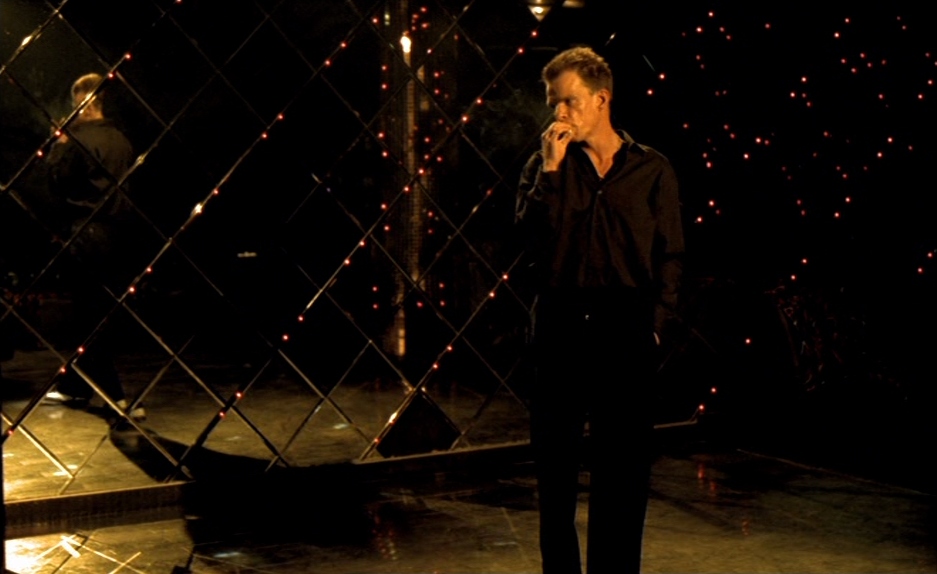
This scene may represent an imagined or final eruption of suppressed desire and resentment. Claire Denis deliberately leaves the outcome ambiguous, emphasizing exposure rather than resolution—a life with no space for inner conflict finally disintegrates into pure gesture.
This ending is tragic, because it only allows us to glimpse—indirectly—what a life lived through an authentic identity might have been, imagined only in those final moments. It thus highlights that Galoup never truly lived as a whole individual, but always within external expectations.
The Meaning
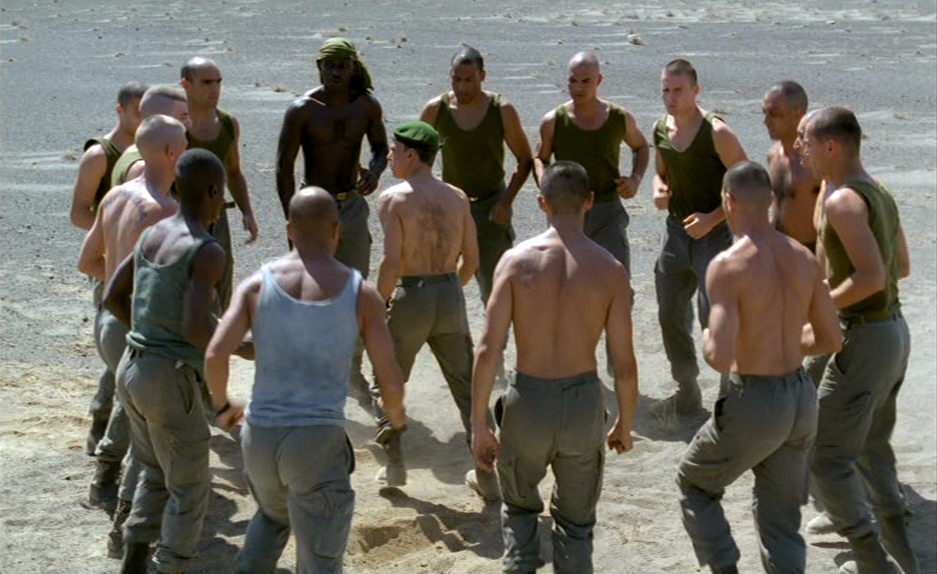
The French Foreign Legion functions in Beau Travail as a highly stylized microcosm: extreme hierarchy, rigid discipline, and ritualized behavior. On the surface, it appears as a uniquely military environment, yet the film extends far beyond soldiers in Djibouti—it speaks to any social system that demands conformity and suppresses inner life.
Repression emerges whenever a constructed system privileges specific behaviors, tastes, or ways of thinking over others. Many people, driven by the need for validation or safety, adapt their actions, preferences, or expressions to align with the expectations of a particular group—whether childhood friends, colleagues, or the elite within a professional or social domain. In such systems, conformity is rewarded, while authenticity is overlooked.
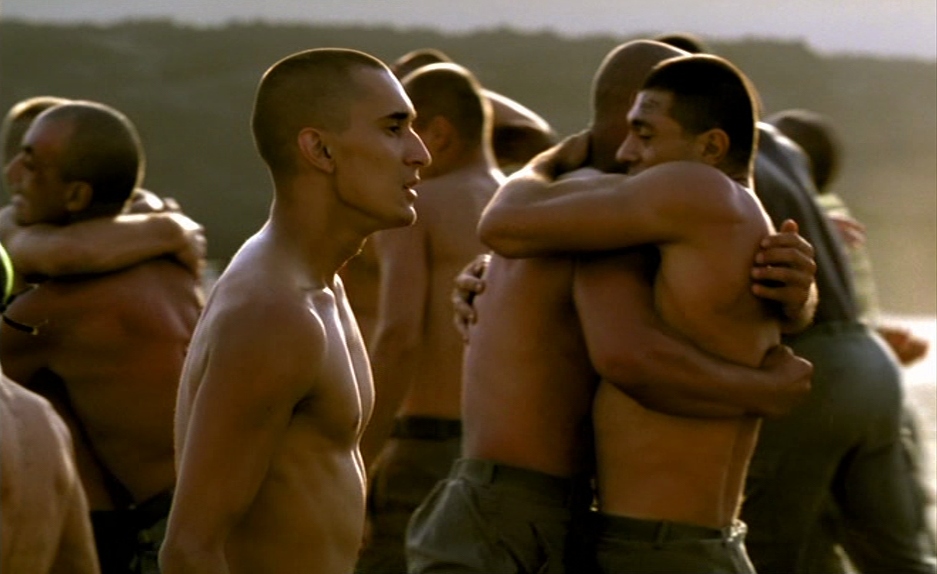
As with Galoup, adhering to these external standards can bring tangible benefits—promotion, recognition, or social approval—but at a hidden cost. Over time, this conformity produces subtle psychological dissonance, eroding the individual’s connection to personal desires, values, and sense of self. The system encourages outward compliance while quietly undermining inner freedom.
Ultimately, as Galoup comes to understand, genuine admiration—and, more importantly, self-respect—arises not from conformity, but from embracing one’s true identity and living with authentic freedom. The film’s final scene drives this point home: true presence and existence can only be realized through authenticity, not by adhering to a structure’s prescribed vision of success.
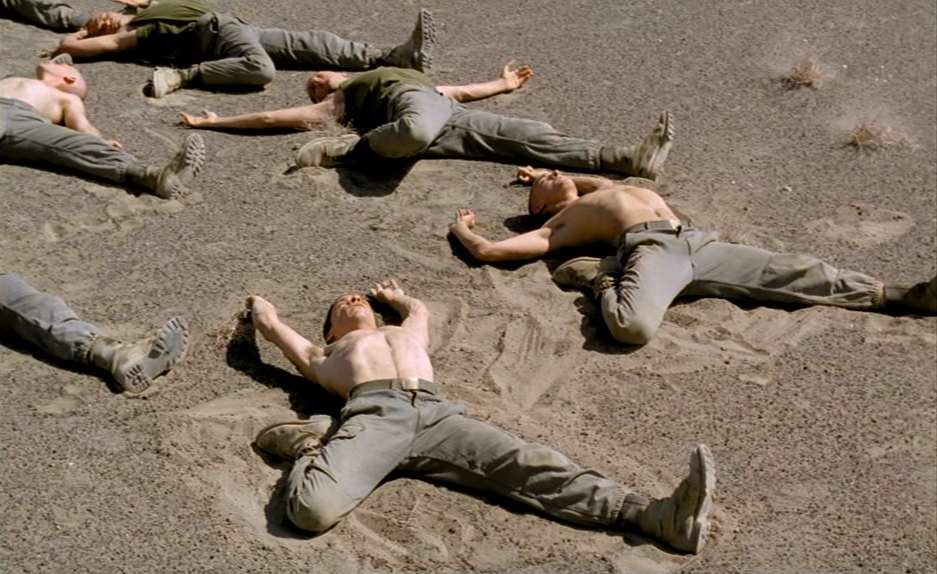
Because Galoup never had the chance to experience or embody his own identity, he comes to represent not himself, but the collective ideal—the image of the Foreign Legion as it was constructed for a bygone era. In this way, the film reveals the psychological cost of systems that prioritize form over individuality and shows how repression, while superficially orderly, ultimately diminishes the self.
Why Resisting the Dominant View Is So Difficult
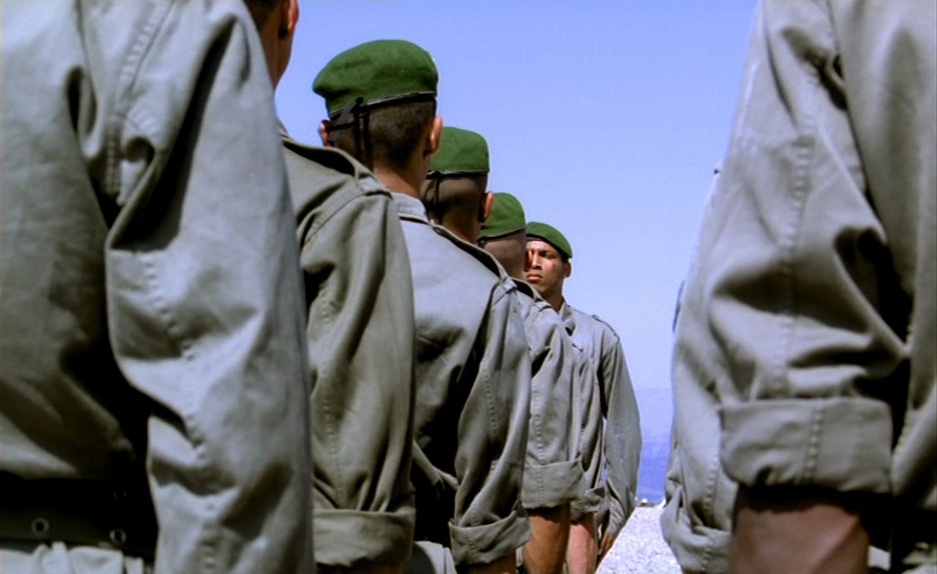
Homogeneity is what allows society to function smoothly: shared values, norms, and expectations create a predictable environment where people can rely on each other. When most members act according to similar rules and standards, coordination becomes easier, trust emerges, and collective projects can succeed.
Without a baseline of similarity—whether in behavior, communication, or basic ethics—cooperation becomes fragile, misunderstandings multiply, and social bonds weaken.
It is important to acknowledge how difficult it is, in practice, to resist dominant values and expectations. Human beings are deeply social creatures, and approval, belonging, and recognition are not luxuries—they are psychological needs.
Most social and professional systems reward alignment far more consistently than authenticity. To deviate often means risking exclusion, instability, or invisibility. In this sense, conformity is not simply a lack of courage, but a response to real pressures.
Understanding this makes repression less a personal failure than a structural condition—one that many navigate quietly, through compromise rather than choice.
OUR SPONSOR OF THE DAY : NEONNIGHT.FR
Conclusion
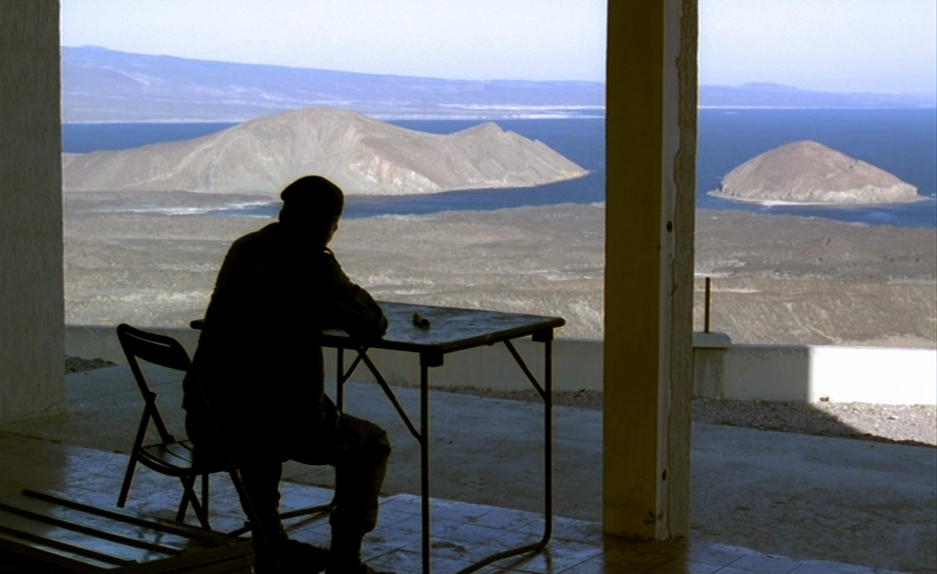
Beau Travail offers no catharsis, only the trace of long-contained feelings breaking through. Galoup’s resentment is not born of cruelty but of a life spent denying what moves him. The tragedy of repression, Denis suggests, is not that it eliminates desire, but that it renders it inexpressible—until it emerges as hostility, sabotage, or self-destruction.
This is not a story confined to the Foreign Legion; it mirrors broader social conditions, where conformity is mistaken for strength and emotional restraint for virtue. In that silence, resentment grows unnoticed—not as an outburst, but as a posture. Beau Travail reminds us that what is not lived consciously will still be lived—only sideways, and often at a cost we refuse to see.


GIPHY App Key not set. Please check settings