
 dudeoi
Isao Takahata’s Grave of the Fireflies (1988) is often described as one of cinema’s great anti-war films. That description is true, but incomplete.
The film’s devastation does not come simply from showing that war kills civilians. It comes from showing what war does to the moral conditions of ordinary life: how hunger narrows compassion, how pride becomes dangerous, and how even profound love can be powerless without a community capable of sustaining it.

OUR SPONSOR OF THE DAY : NEONNIGHT.FR

War and the Destruction of Ordinary Life
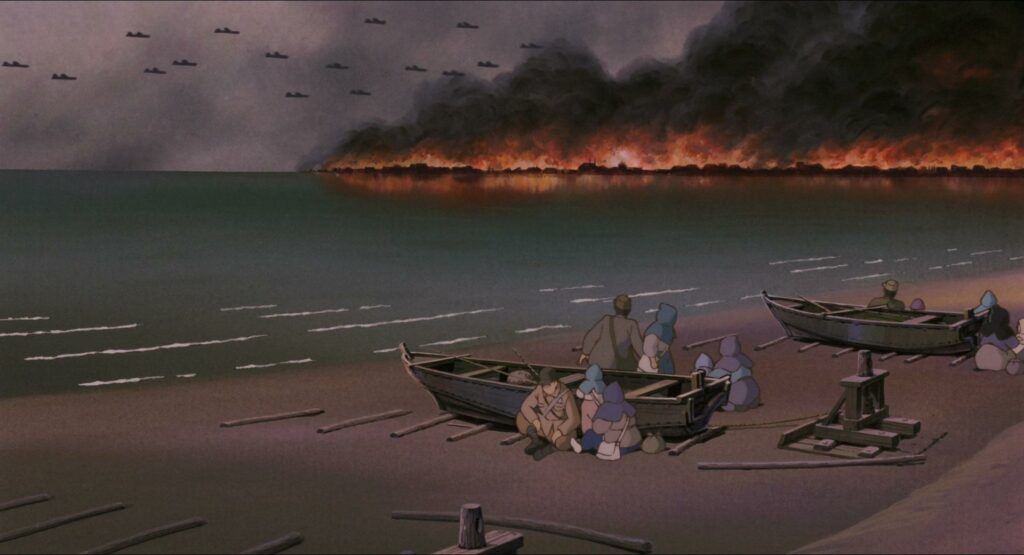
Set during the final months of the Second World War, the film follows Seita, a teenage boy, and his younger sister Setsuko after the firebombing of Kobe kills their mother and destroys their home.
Takahata largely keeps battles, strategy, and soldiers at the edges of the frame. War is experienced instead through its aftermath: empty kitchens, burned homes, illness, queues, displacement, and the humiliating need to depend on others. The film’s subject is not military conflict so much as the destruction of the everyday structures that make human decency possible.
The Aunt and the Failure of Community
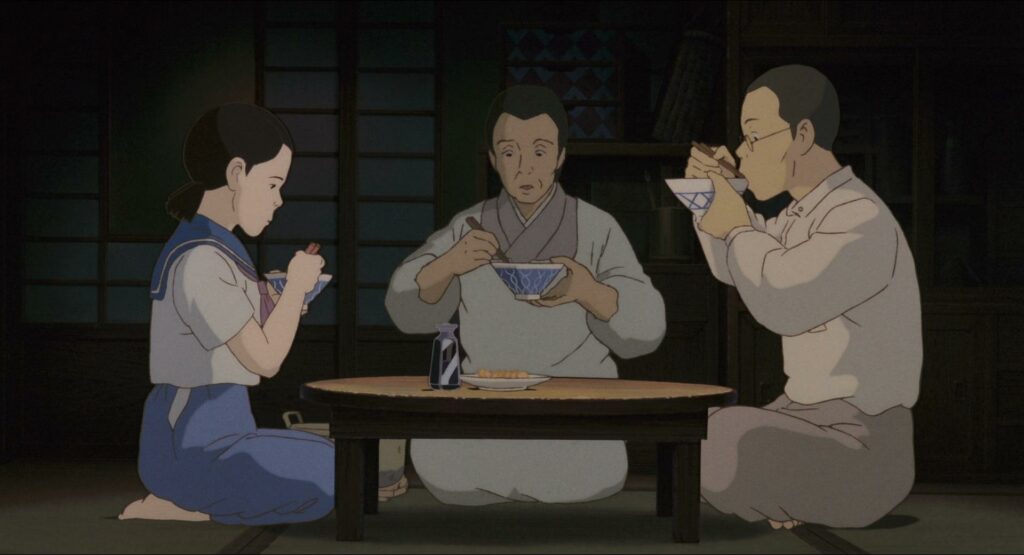
The aunt is one of the film’s most crucial and uncomfortable figures. It would be easier if she were simply cruel. Instead, she is living through scarcity herself, trying to feed her own children, and increasingly resentful of two additional mouths to feed.
Her treatment of Seita and Setsuko is harsh and often callous, but the film does not permit the audience to make her its sole villain. In a world where food is scarce, generosity becomes costly. Family, which should offer unconditional protection, becomes a negotiation over resources and contribution.
Seita’s Pride and the Illusion of Independence
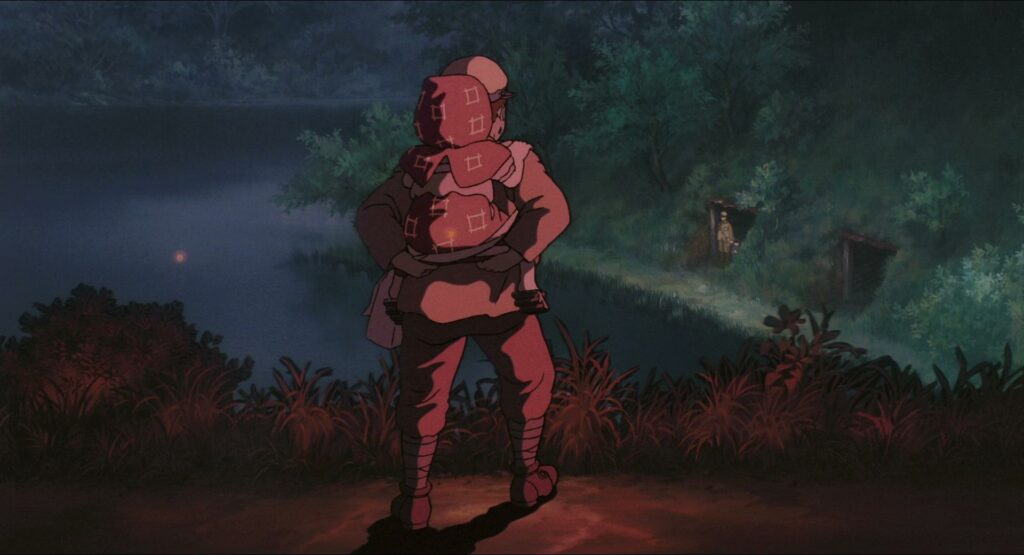
Seita’s response is to leave. Humiliated and angry, he takes Setsuko to an abandoned shelter and tries to build a private world for the two of them.
At first, it appears almost idyllic: there are no adults to shame him, no rules imposed by others, and moments of play, light, and intimacy. But this apparent freedom is also an illusion. Seita mistakes independence for safety. He has love and determination, but neither food, knowledge, social standing, nor the maturity required to protect a child in a collapsing society.
Responsibility Without Simple Blame
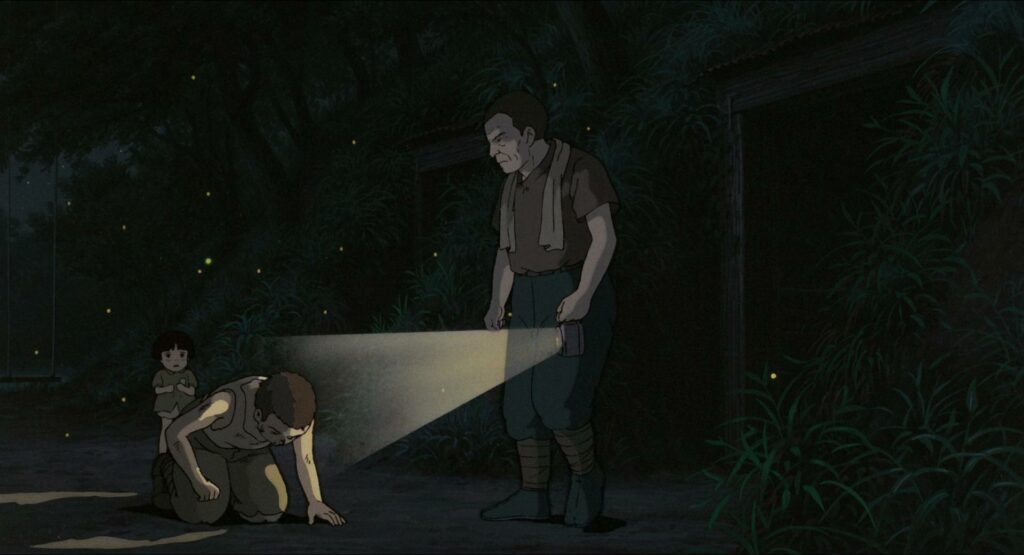
This is the film’s most painful moral tension. Seita is not merely a passive victim, nor is he responsible for the catastrophe surrounding him. His pride contributes to the tragedy, but it does so within conditions no teenager should ever have to navigate.
He must choose between returning to a household where he feels degraded and remaining free while starving. Neither option is dignified; neither is truly survivable. Takahata refuses the comforting simplicity of assigning blame to one person, one relative, or even one historical event. The bombing matters. Poverty matters. Social indifference matters. Seita’s pride matters. All are true at once.
Love Is Not Always Enough
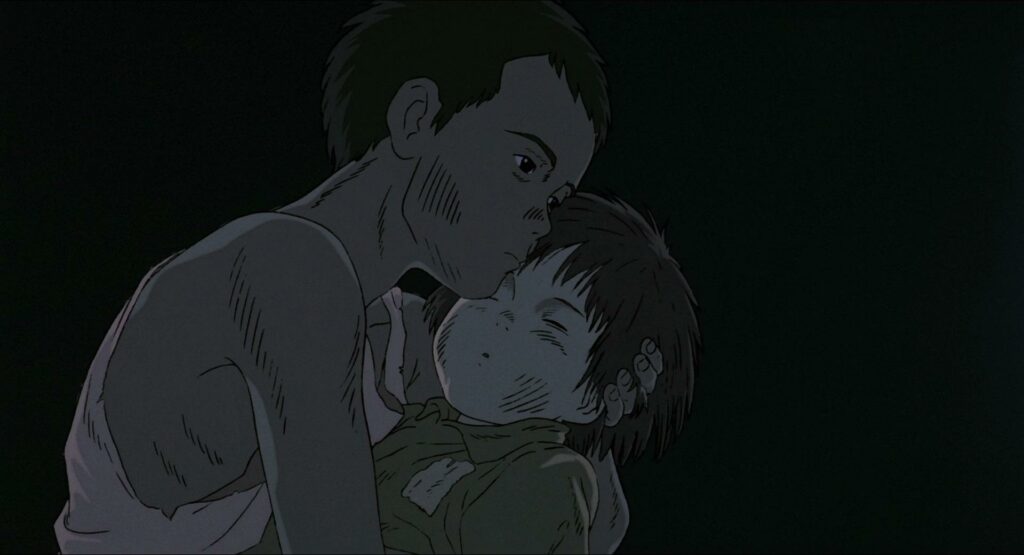
At the center of this tragedy is Setsuko. She represents innocence not as sentimentality, but as a moral fact: she has done nothing to deserve what happens to her.
Seita loves her completely. Their bond is tender, attentive, and real. Yet the film makes an unbearable distinction between loving someone and being able to save them. Love may be necessary, but it is not sufficient. It cannot replace food, medicine, adult judgment, or collective responsibility.
The Meaning of the Fireflies
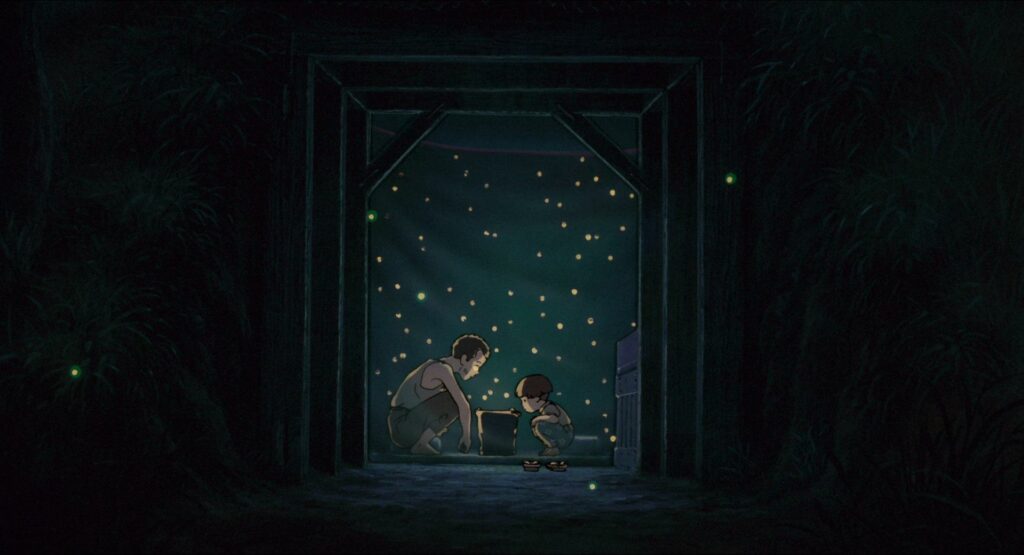
The fireflies give this idea its visual form. They briefly transform the shelter into a place of wonder, a fragile imitation of a home. But they die almost immediately.
Setsuko’s grief for them foreshadows the larger grief of the film: beauty is present, but it cannot be preserved. The fireflies evoke childhood, the dead, and the fleeting happiness the siblings create together. Their light is most moving because it is already disappearing.
A Story Already Lost
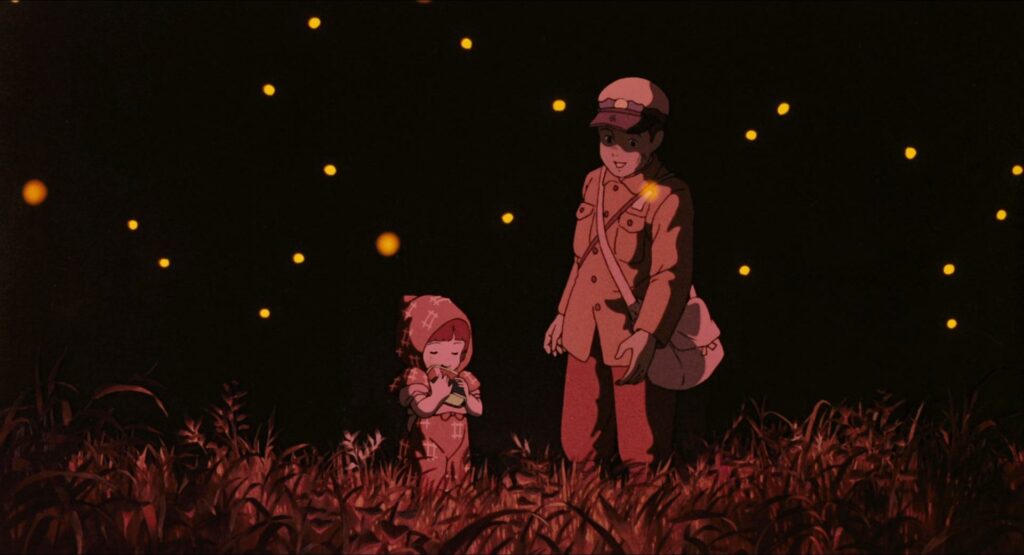
Takahata announces the outcome from the beginning. We know that Seita and Setsuko are dead before the story truly starts. This choice transforms the film from a narrative of suspense into an elegy.
We do not watch wondering whether they will be saved; we watch understanding, with growing horror, why they were not. Every moment of joy is shadowed by its impermanence.
The Film’s Lasting Devastation
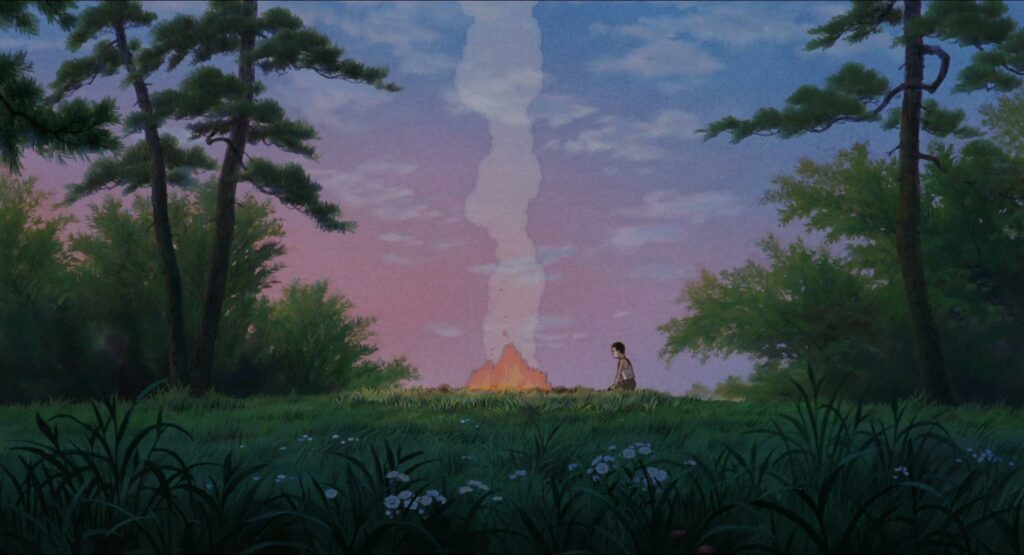
That is what makes Grave of the Fireflies more disturbing than a simple condemnation of war. It does condemn war, but not as an abstract evil detached from human behavior. It examines the social world left behind when war has made care difficult, dependence shameful, and survival a private competition.
Its tragedy is not that Seita and Setsuko are extraordinary heroes or failures. It is that they are ordinary children, loved deeply but insufficiently protected, in a world that has lost the capacity to care for them.
The film leaves us with no easy moral lesson—only a devastating recognition: a society is measured not by the strength of its survivors, but by whether it can keep its most vulnerable people from being abandoned.
Between the World They Imagined and the World That Destroyed Them
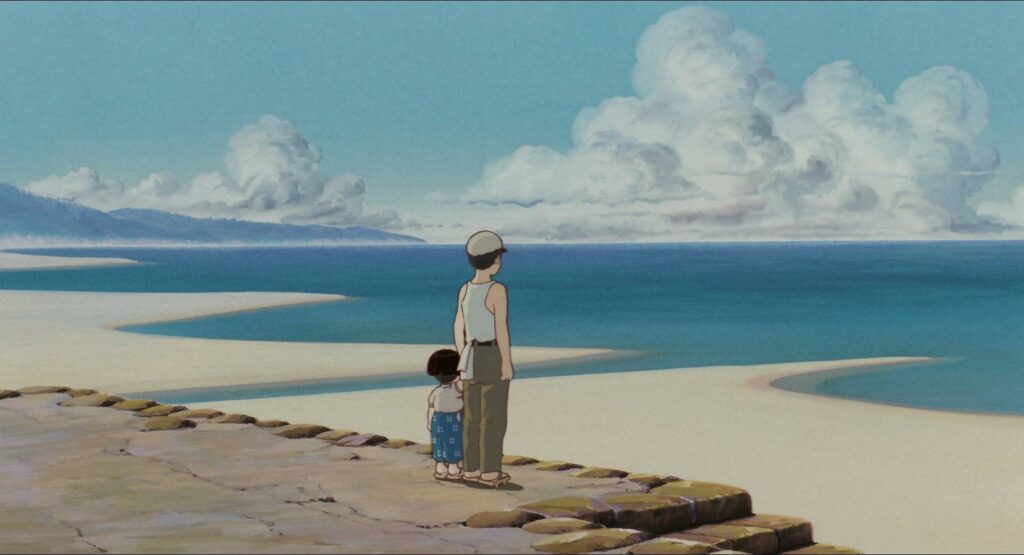
In Grave of the Fireflies, the contrast between external reality and inner reality is central to the film’s emotional power. Externally, Seita and Setsuko live in a world of bombing, hunger, disease, and abandonment; their shelter is not a home but evidence of their isolation. Internally, however, they try to preserve a small world of childhood wonder through candy, games, fireflies, and their devotion to one another.
These moments do not deny the violence around them—they make it more painful. The siblings’ inner world gives them temporary comfort and dignity, but it cannot change the material reality of war. Takahata shows that imagination and love can help people endure suffering, yet they cannot fully protect them from a world that has stopped protecting its children.
The Measure of a Humane Society
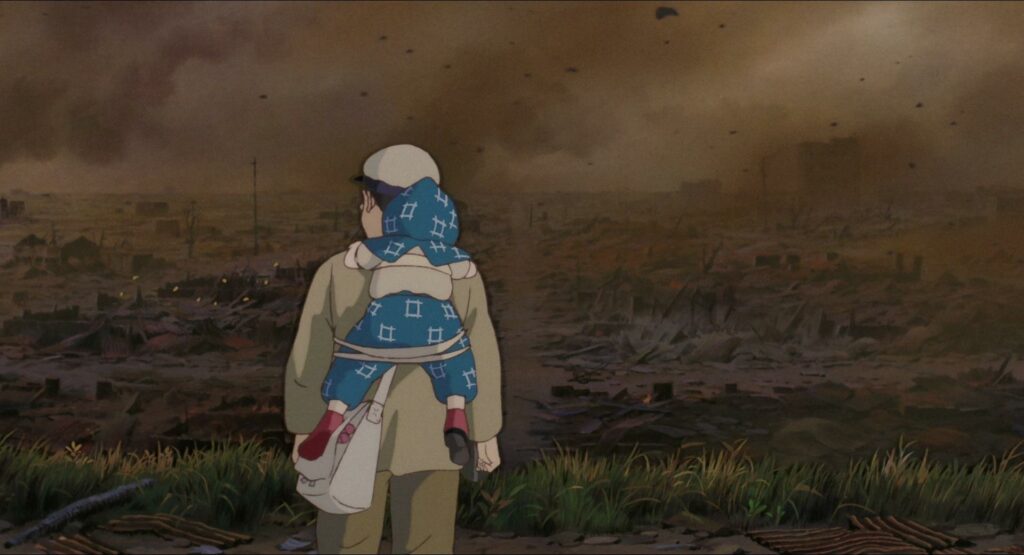
Humans and society need to protect children because children are completely dependent on the world we build. They cannot choose the economy, laws, wars, family circumstances, or institutions they’re born into—but they live with the consequences.
More deeply, caring for them is a test of whether a society believes people have value beyond usefulness, wealth, strength, or status. If we protect those with the least power, we preserve empathy, trust, and the possibility of a future that is less cruel than the past.
A society that fails children eventually damages everyone: trauma carries forward, trust disappears, and people learn early that care is conditional. Protecting innocence is not sentimentality—it is the foundation of a humane world.
OUR SPONSOR OF THE DAY : NEONNIGHT.FR
Conclusion
Grave of the Fireflies endures because it refuses to make tragedy simple. War is the force that destroys Seita and Setsuko’s world, but their deaths also emerge from pride, scarcity, social isolation, and the failure of ordinary people to protect those who need them most.
Takahata’s film does not ask us merely to pity its characters or condemn war from a distance. It asks us to recognize how quickly compassion can disappear when survival becomes uncertain—and how fragile innocence becomes when a community abandons its responsibility to care. Its final sorrow is that Seita’s love for Setsuko is absolute, yet still not enough to save her.


GIPHY App Key not set. Please check settings