
 dudeoi
Scott Cooper’s Out of the Furnace is easy to describe as a revenge movie. A working-class man loses his brother to a violent criminal and eventually hunts down the man responsible.
But that’s almost the least interesting thing about it.
The deeper film is about fate, dignity, economic decline, masculinity, violence, family, and the terrifying possibility that a good person can do everything he is supposed to do and still lose everything.


OUR SPONSOR OF THE DAY : NEONNIGHT.FR
A city built on a promise
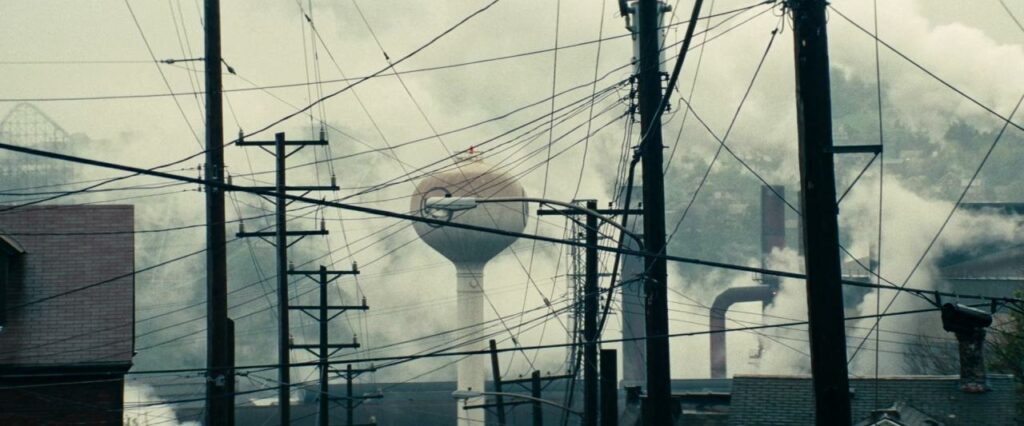
Before Out of the Furnace becomes a story about two brothers, violence and revenge, it introduces us to something even more important: the place where these men live. Braddock, Pennsylvania, is not simply the setting of the film. It is the foundation upon which the entire story is built.
Braddock was once a prosperous steel town outside Pittsburgh, part of the enormous industrial world that made the American working class what it was throughout much of the twentieth century. Steel wasn’t simply a job. It was a social structure. It gave people wages, houses, families, friendships, identity and, perhaps most importantly, a sense of continuity. A man could work at the mill for decades, raise his children, and believe that they would inherit a version of the same stable life.
That world began to disappear as American steel declined. The great furnaces that had powered the region’s prosperity were shut down, jobs vanished and people left. Braddock lost more than 80 percent of its population from its mid-century peak. By the time Scott Cooper came across the town, much of what remained was the physical evidence of an economic system that had collapsed: abandoned buildings, empty streets and an industrial landscape that seemed to belong to another era. Cooper was fascinated not only by the decay, but by the people who had stayed, whom he saw as possessing an extraordinary resilience and courage. He eventually wrote Out of the Furnace specifically for this environment, describing it as a portrait of a “vanishing way of life.”
This is why the film’s atmosphere feels so oppressive. Braddock isn’t simply poor; it has lost its sense of a future. The important thing that has disappeared is not only money or employment, but the belief that the traditional path still leads somewhere.
The death of the American working-class promise
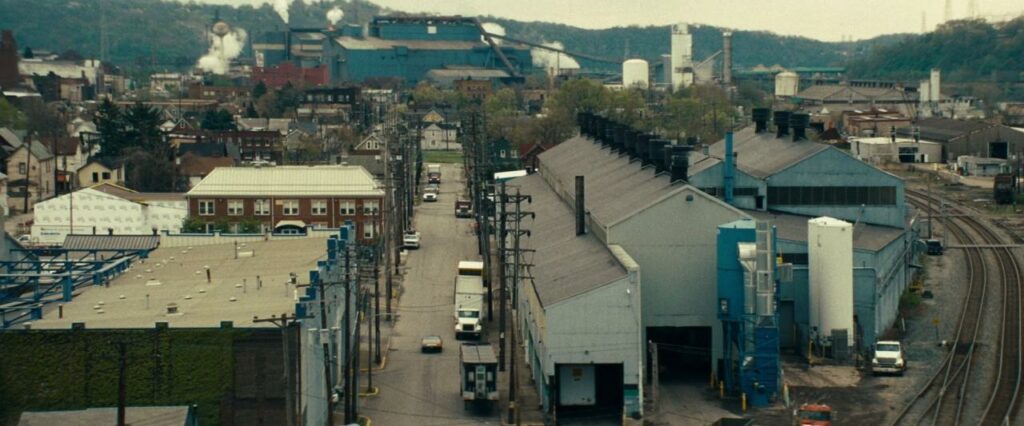
The film takes place in the aftermath of a particular kind of American dream. It is not the glamorous dream of becoming rich or famous, but something much more modest: work hard, behave responsibly, raise a family and have a decent life.
Russell Baze embodies that philosophy almost perfectly. He works at the mill, takes care of his father, loves Lena and worries about his younger brother Rodney. He isn’t looking for an extraordinary existence. He wants a stable one. He accepts the rules of the world he was born into because he believes that those rules, imperfect as they are, will provide some degree of protection.
But Out of the Furnace takes place precisely at the moment when that promise is becoming unreliable. Russell still believes in the old bargain, but the economic structure that made the bargain possible is disappearing around him. His work no longer represents security in the way it once did, and the town itself can no longer guarantee that the next generation will have the same opportunities.
That is what makes Russell’s story so painful. He isn’t rebelling against a world he hates. He is trying to remain loyal to a world that is disappearing.
Russell: the man who stays
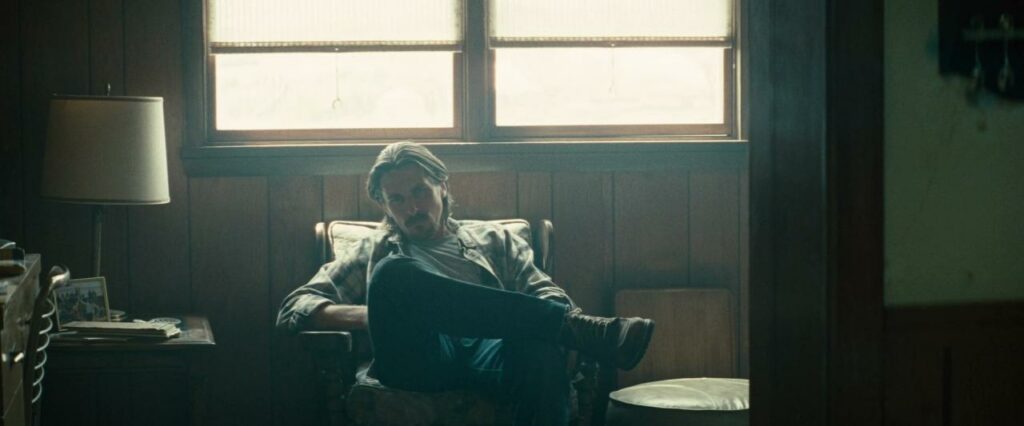
Christian Bale’s Russell is therefore much more interesting than a conventional working-class hero. He isn’t ambitious in the modern sense, and he isn’t particularly interested in escaping. His attachment to Braddock isn’t simply a refusal to recognize that the town is declining. It is an attachment to everything the place represents: his childhood, his father, his brother, his relationship, his work and his sense of belonging.
From the outside, the obvious solution might seem to be to leave. Why stay somewhere where the economy is collapsing? Why not move to another city, find another job and start again? But Cooper understands that people don’t experience their homes as economic calculations. A place can be objectively deteriorating while remaining deeply meaningful to the person who belongs there.
Russell’s decision to stay is therefore both admirable and tragic. The same loyalty that gives his life meaning also makes escape increasingly difficult.
He believes in endurance. If something goes wrong, you work through it. If life becomes difficult, you carry on. If your family needs you, you stay. There is something almost old-fashioned about his morality, and the film treats that morality with genuine respect.
But then it asks a devastating question: What happens when endurance is no longer enough?
Rodney: the man who refuses to accept the life available to him
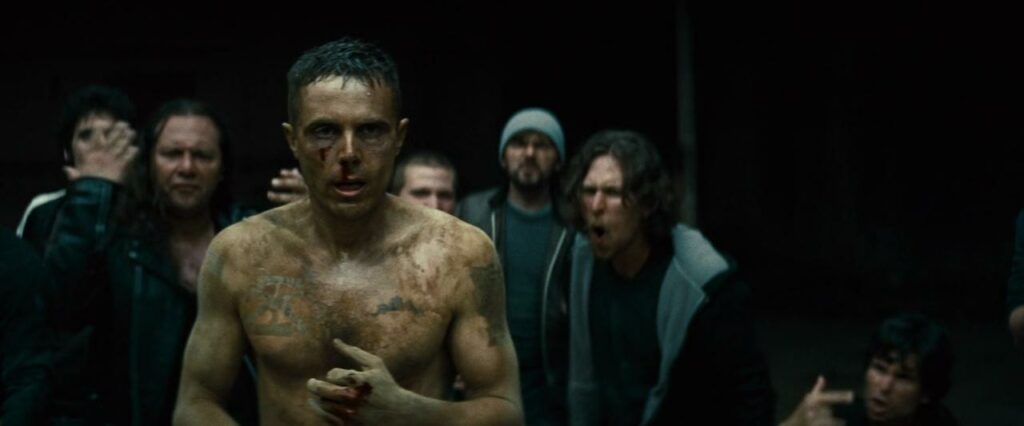
Rodney sees Braddock completely differently. Where Russell sees home, Rodney sees a dead end. He has returned from multiple tours in Iraq and finds himself back in a town whose economic future is disappearing. Cooper deliberately incorporated the experiences of returning veterans into the film, particularly the difficulty of returning to civilian life when the environment you come back to offers little opportunity or purpose.
Rodney therefore becomes desperate to escape the identity that has been prepared for him. He doesn’t want to spend his life working in the mill. He doesn’t want to simply inherit his brother’s life. He wants something more intense, more dangerous and, above all, something that feels like it belongs to him.
This is why the underground fighting is so important. It gives Rodney something that the legitimate economy doesn’t: agency. In the ring, his body has value, his aggression has a purpose and the outcome appears to depend on his own will.
Which makes the demand that he take a dive so significant. Rodney is offered money to deliberately lose, but he refuses. At that point the fight stops being about money. It becomes about whether he is willing to surrender control over himself.
Rodney would rather risk his life than willingly submit.
That stubbornness is both his dignity and his tragedy. He refuses to bend himself to a world he already feels has taken too much from him, but the world he is fighting is far more powerful than he realizes.
DeGroat: the man who embraces the rot
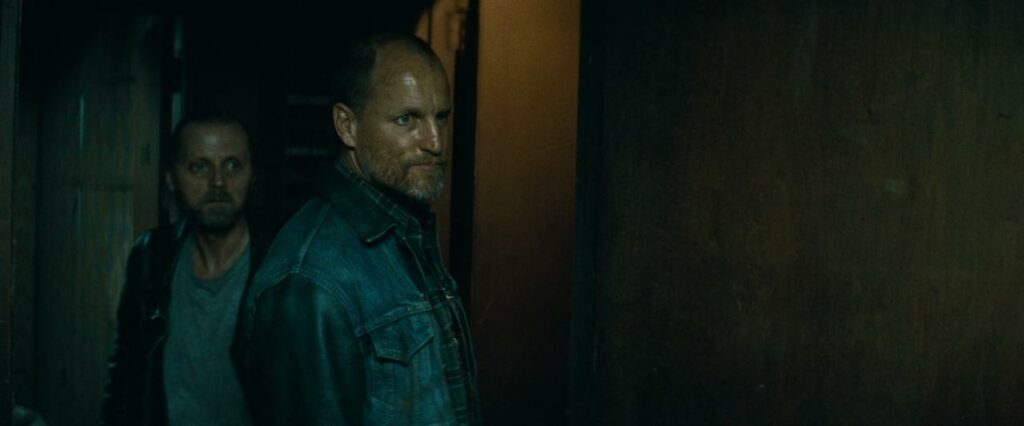
DeGroat is the opposite of Russell. Russell tries to live by rules—work, family, responsibility—while DeGroat seems to have abandoned the idea that rules matter at all. He doesn’t want to leave Braddock or build a better life. He has found a way to feed off its decay.
He makes money through violence, controls people through fear and treats other human beings as things he can use. There is no real ideal behind him, no desire for freedom or dignity like Rodney’s. He simply wants power.
That’s what makes him so disturbing. He isn’t trapped by the violence of this world in the same way Russell and Rodney are. He has adapted to it, and he benefits from it. He understands that people are desperate, and he exploits that desperation.
DeGroat isn’t a man trying to survive the rot of Braddock. He is part of the rot.
Three ways of responding to a dying world
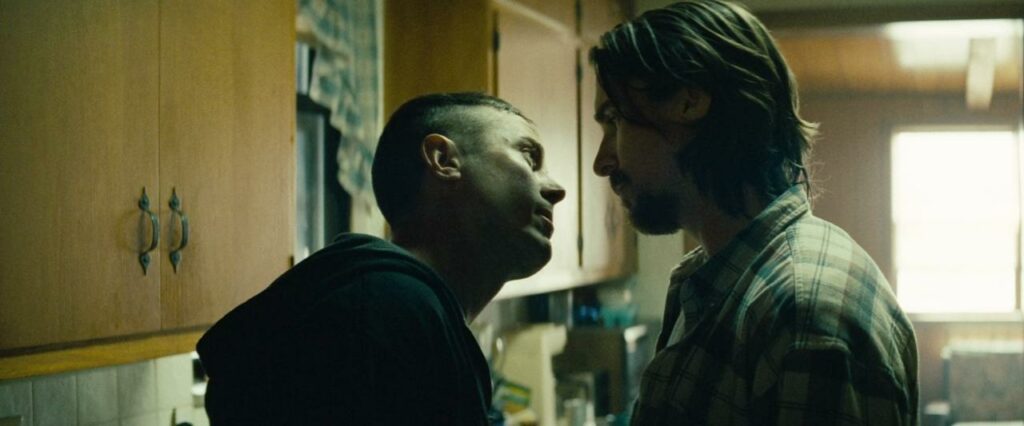
The three central men can almost be understood as three different responses to the same environment. Russell chooses endurance. Rodney chooses resistance. DeGroat chooses domination.
- Russell believes that you survive by accepting responsibility and remaining loyal to your people.
- Rodney believes that you survive by refusing to accept the limitations placed upon you.
- DeGroat has abandoned the idea that the world should be fair altogether; instead, he simply tries to become powerful enough to impose his own rules upon everyone around him.
What makes the film interesting is that Cooper doesn’t give us an easy answer about which response is correct. Russell’s decency does not save him. Rodney’s rebellion destroys him. DeGroat’s violence gives him power, at least temporarily.
The film isn’t really asking which man is right. It is asking what kind of person each strategy eventually turns you into.
The frightening idea that doing everything right isn’t enough
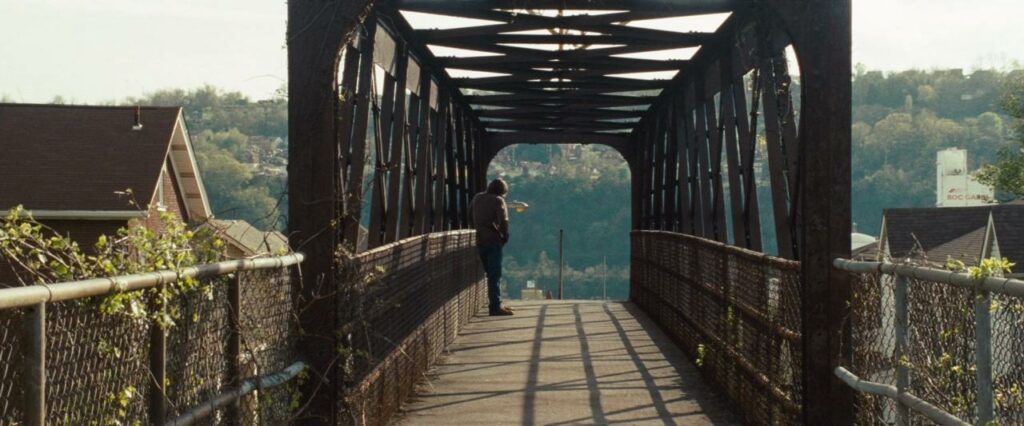
This is where Out of the Furnace becomes much more universal than its particular setting. Russell is almost exactly the kind of person society tells us to be. He works, stays out of trouble, takes responsibility and tries to protect his family. There is an implicit promise behind that behavior: if you live correctly, life will at least give you a reasonable chance.
But the film systematically destroys that assumption.
Russell’s father dies. Russell goes to prison after a terrible accident. Lena leaves him. Rodney becomes trapped in the underground fighting world. Rodney is eventually murdered. And none of these events can be reduced to a simple moral lesson about Russell’s choices.
Cooper has described Russell as a fundamentally good man overwhelmed by circumstances and relentless fate. That distinction is crucial. The film isn’t saying that Russell’s suffering is the inevitable consequence of something bad he did. Much of what destroys him simply happens to him.
And that is far more frightening.
If someone destroys his own life through terrible decisions, we can reassure ourselves that the same thing won’t happen to us. We can tell ourselves to make better choices. But Out of the Furnace asks us to confront something much less comfortable: you can make good choices and still encounter terrible circumstances.
Virtue is not insurance against tragedy.
When the institutions stop protecting you
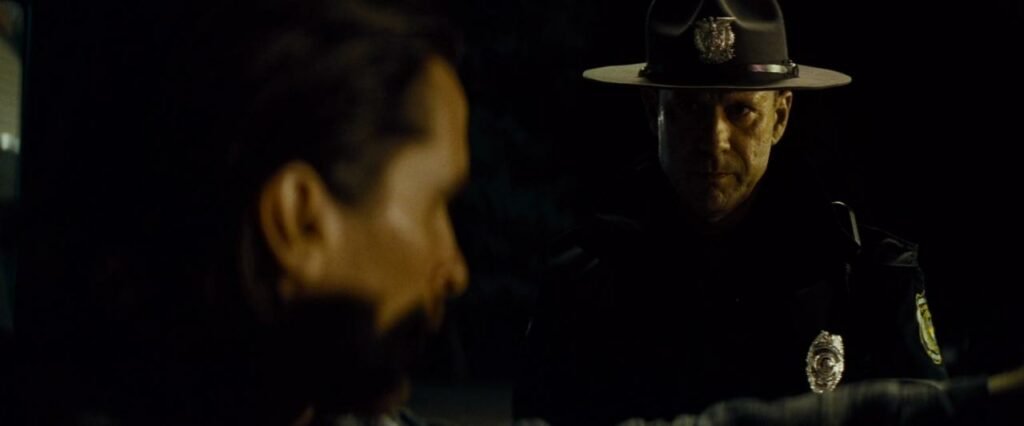
The economic collapse of Braddock creates another problem: the legitimate structures that are supposed to give people stability seem increasingly powerless. The mill is disappearing. Opportunity is disappearing. And when Rodney becomes involved with DeGroat, the criminal world begins to provide the opportunities that the legitimate world no longer can.
DeGroat’s underground fighting operation therefore feels like a dark mirror of the old industrial economy. There are still rules, there is still money and there is still a hierarchy, but everything is now enforced through violence.
When Rodney is killed, Russell discovers the ultimate failure of this world: the institutions that are supposed to deliver justice cannot give him what he wants.
So he takes matters into his own hands.
This is the point where the film changes from a story about a decent man enduring a difficult world into a story about what happens when that man’s faith in restraint finally breaks.
Russell’s revenge is not justice
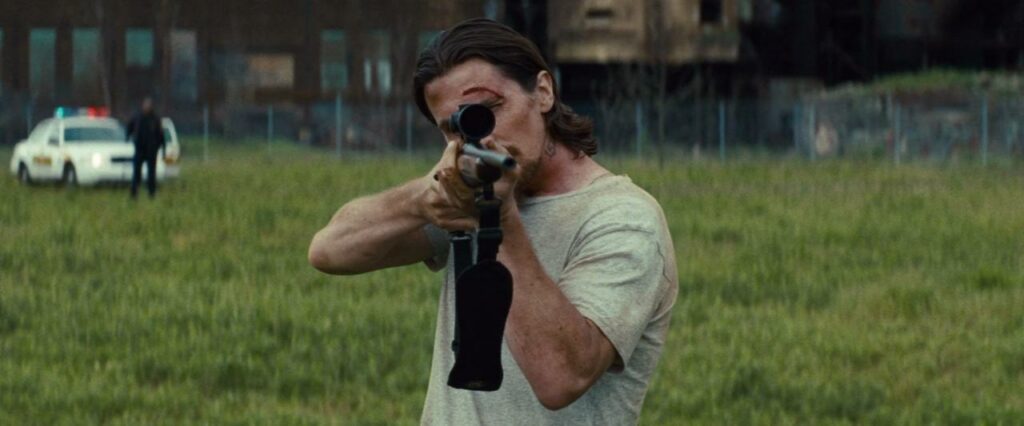
Russell kills DeGroat, but the film refuses to make the moment feel like a conventional victory.
He has achieved revenge, but nothing has actually been restored. Rodney remains dead. His father remains dead. Lena is gone. The life Russell wanted is gone.
This distinction between revenge and justice is essential. Justice would somehow repair the damage. Revenge only adds another death to the pile.
And Russell has changed in the process. The man who spent most of his life trying to remain outside the violence has now deliberately entered it. He has become capable of doing something that earlier versions of himself would have found unimaginable.
This doesn’t mean Russell was secretly violent all along. The tragedy is precisely that he wasn’t.
He is changed by what happens to him.
The final scene: a man who survived but has nowhere to go
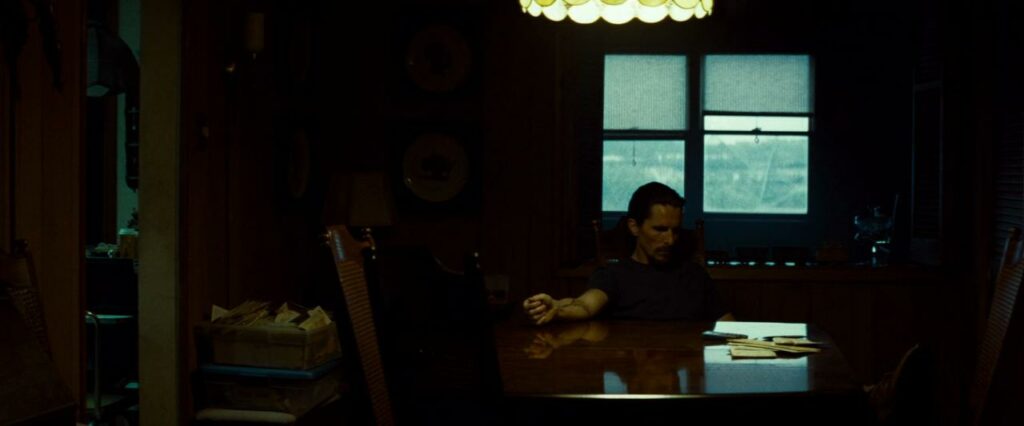
The final image of Russell sitting alone at the dining table is devastating because it reduces the entire film to one simple image of absence. This is the same kind of domestic space that once represented family, stability and belonging. Now Russell is sitting there alone.
Cooper has explained that he sees Russell as essentially imprisoned for the rest of his life by what he has experienced and by the violence he has committed.
And suddenly the ending is no longer about whether Russell successfully killed DeGroat.
He did.
The question is what that victory has actually given him.
The answer is almost nothing.
He has survived, but survival isn’t the same thing as winning.
He is technically free, but psychologically trapped in the past. He has removed the man responsible for Rodney’s death, but he cannot remove the memory of Rodney. He has escaped the immediate threat, but he cannot escape himself.
The revenge has ended. The consequences haven’t.
The furnace
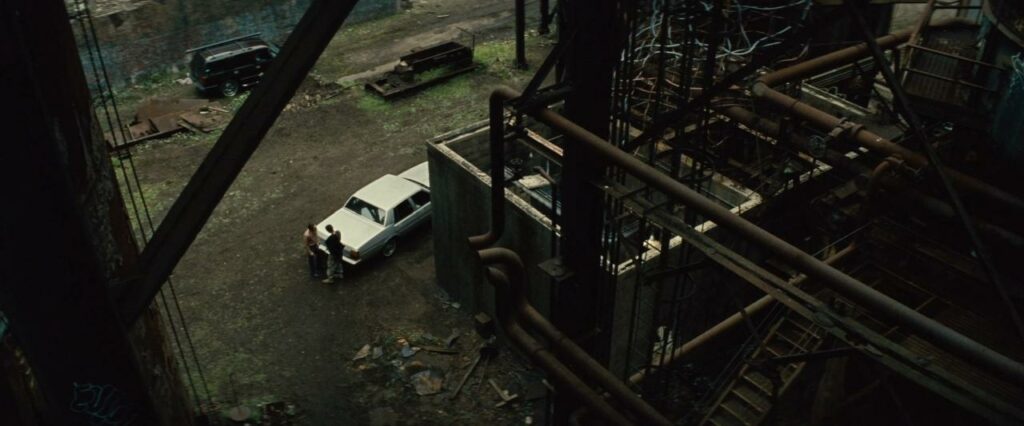
The title Out of the Furnace becomes increasingly meaningful when the film is viewed this way. The furnace is obviously the steel mill, but it is also a metaphor for the entire environment in which these people live.
It is the collapsing economy, the war, the loss of purpose, masculinity, poverty, family, violence and grief. All of these forces apply pressure to the characters. They enter that environment as one kind of person and gradually emerge as something else.
- Rodney enters the furnace looking for freedom and emerges dead.
- DeGroat has adapted to the furnace by becoming violent himself.
- Russell tries to remain decent inside it, but eventually he is transformed too.
The film isn’t therefore simply asking whether people are good or bad. It is asking what prolonged pressure does to a human being.
A world that doesn’t deliberately destroy you
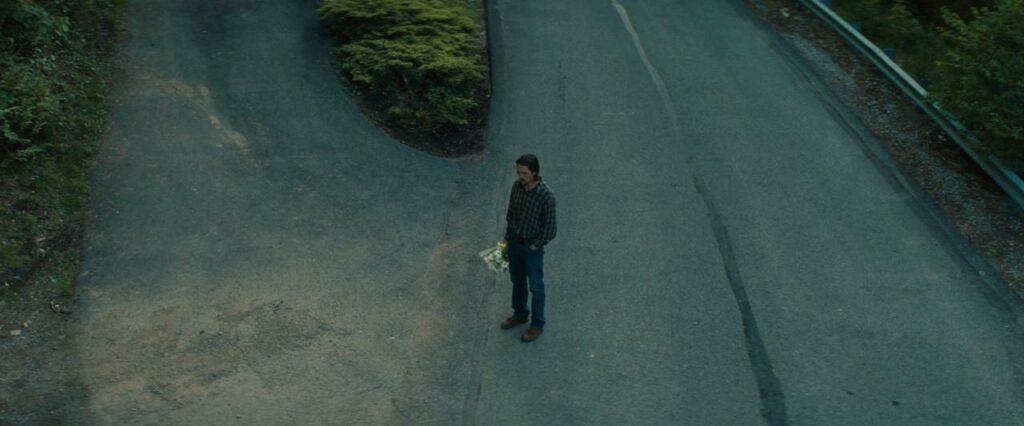
What makes Out of the Furnace particularly interesting is that Cooper doesn’t present society as a single villain. Nobody is sitting somewhere designing Russell’s downfall. There is no conspiracy against him.
Instead, a series of systems and circumstances simply interact: an industry collapses, a town loses its economic foundation, a veteran comes home without a clear future, a criminal economy emerges, a family begins to fall apart, violence enters the picture and eventually one tragedy produces another.
Nobody has to consciously decide to destroy Russell.
And yet, piece by piece, his life is destroyed anyway.
That is perhaps a more realistic and frightening conception of social failure. Sometimes people aren’t crushed because someone decided to crush them. They’re crushed because the structures around them stop working.
The tragedy of staying
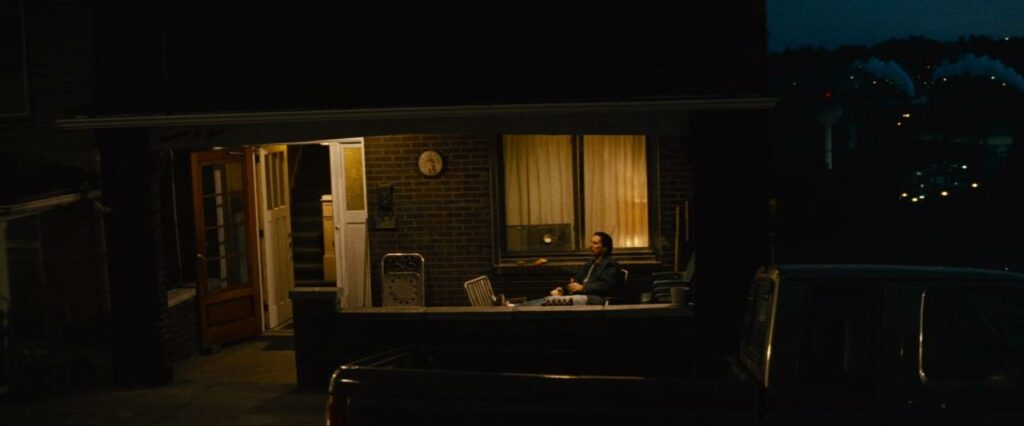
This also makes the question of why Russell doesn’t simply leave much more interesting.
- Maybe he should have.
- Maybe Rodney should have walked away from the fighting.
- Maybe Russell should have abandoned Braddock.
- Maybe someone could have made one different decision and prevented the tragedy.
But the film understands that human beings don’t live their lives with the clarity of hindsight. We make decisions based on the relationships, loyalties and identities we have at the time.
- Russell stays because Braddock is his home.
- Rodney fights because fighting makes him feel alive.
- And DeGroat remains because violence has become the only world in which he knows how to operate.
- Everyone is trapped in a different way.
What Scott Cooper is really saying
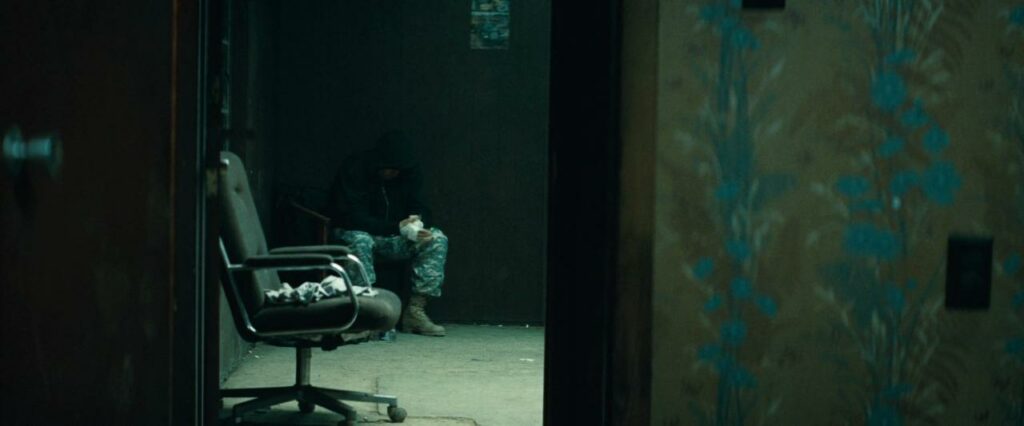
Cooper has resisted reducing Out of the Furnace to a straightforward “issues movie.” He wanted the economic decline, returning veterans and violence to exist inside the lives of real people rather than turning those people into political symbols. He wanted what he called “real, flesh-and-blood humans.”
That is why the film works.
It isn’t simply saying that America is broken, or that working-class people should rebel, or that everyone should leave dying industrial towns.
It is asking something more uncomfortable:
What happens when a person’s character encounters circumstances larger than his ability to control them?
And Cooper’s answer is tragic.
- Sometimes character isn’t enough.
- Sometimes doing the right thing doesn’t save you.
- Sometimes endurance doesn’t save you.
- Sometimes rebellion doesn’t save you either.
- And sometimes the person who survives is not necessarily the person who wins.
OUR SPONSOR OF THE DAY : NEONNIGHT.FR
When the furnace changes you
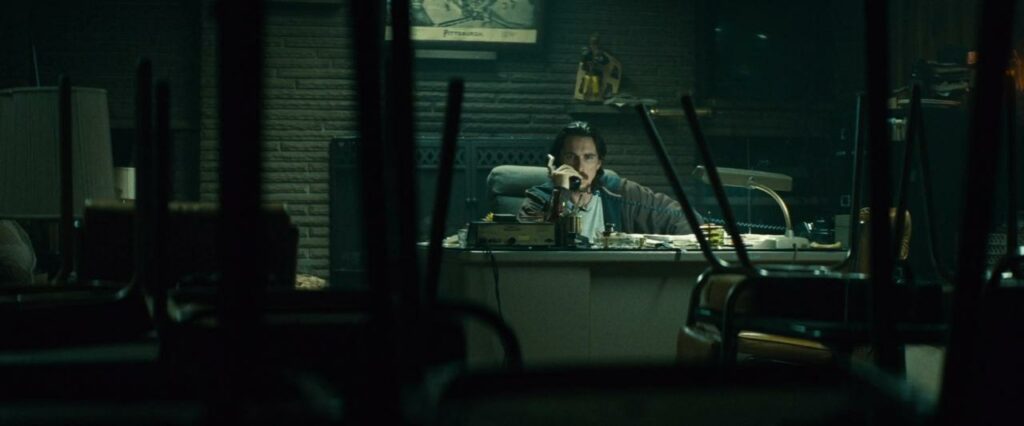
Russell begins the film believing in responsibility. He believes that if he works, loves his family and stays out of trouble, he can build a meaningful life.
By the end, he has lost almost everything.
But the deepest tragedy isn’t that Russell loses.
It is that he becomes someone he never wanted to be in the process of surviving.
- The man who spent his life avoiding violence eventually commits it.
- The man who believed in the rules eventually breaks them.
- The man who wanted a quiet life ends up sitting alone with the consequences of revenge.
And this is why Out of the Furnace feels so frighteningly universal.
Its question isn’t simply: What happens when you make the wrong choices?
It is: What happens when you make the right choices, and life still goes terribly wrong?
The film doesn’t give us a comforting answer.
It doesn’t promise that hard work will protect you, that loyalty will save you, or that justice will always arrive.
What it gives us instead is something much more honest: the recognition that we control our choices, but we do not control the circumstances into which those choices are made.
- Russell walks into the furnace as a decent man.
- He comes out alive.
- But he doesn’t come out unchanged.
The town lost its future. Russell lost his. And the tragedy is that neither of them was destroyed because they stopped trying. They were destroyed because trying was not enough.


GIPHY App Key not set. Please check settings