
 dudeoi
Having lived in the United States, France, and Vietnam, I want to share — with full honesty — how I perceive the strengths and limitations of each country. This reflects a personal perspective: subjective, but transparent.
Every advantage comes with a cost. A perfect country doesn’t exist — only different trade-offs, depending on what you choose to prioritize.
Before you read : keep this in mind, no country is objectively better than another. Choosing the “best” is a false question; what matters is alignment with your values, goals, and stage of life.

This article is written from a specific viewpoint — that of a Vietkieu, the child of Vietnamese immigrants born in France — which naturally shapes the lens through which these observations are made.
France
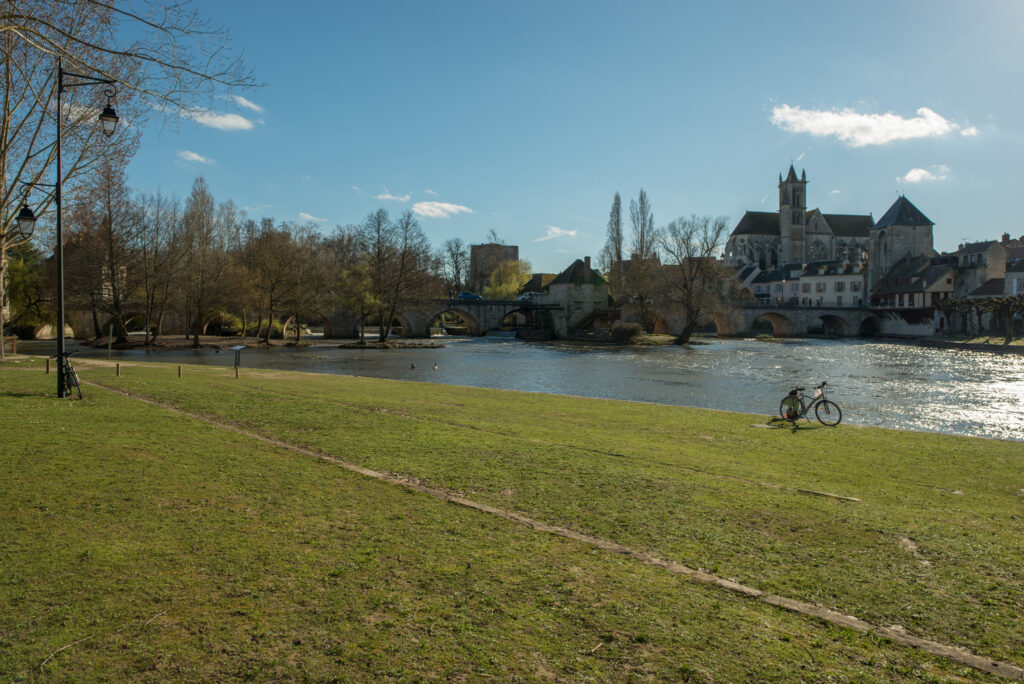
Pros
- A nation that values logic and critical thinking
- A culture that encourages the exchange of ideas
- Ambiguity in ethics is accepted
- Value on paper divergence
- Freedom of expression
- More inclined toward sincere and meaningful relationships
- Extreme sense of culture and refinement
- Delicious and refined food
- Robust social support
- Relatively easy to enter the middle class and enjoy a comfortable lifestyle
- Extremely beautiful country
- Well-built and clean infrastructure
- Temperate climate
- A unique melting pot in certain places (notably Paris, Les Halles)
- Access point to European countries
- Cultural center for art and fashion
- Art de vivre
Cons
- Aristocratic mentality
- Authority is concentrated within a small circle (Science Po, ENA, Polytechnique)
- Rigid concentration of the intellectual and cultural elite
- Upward mobility is restricted (Confined to the high-middle class)
- Highly bureaucratic and technocracy-driven elite disconnected from the population
- Equalizing downward to maintain control (Niveler par le bas)
- High prices and population heavily burdened by taxes
- Country centered on cultural assimilation and not integration (reject yourself to adopt the dominant culture)
- If not from France decent or female, perceived as subordinate or outsider (invisible socially, illegitimate to represent the dominant culture)
- Cultural skepticism towards ambition
- Insecurity
- Strong sense of constraint creating cynicism and existential melancholy

Overall, I would say that France was an incredible country to grow up in. On paper, it offers access to rich knowledge and culture — from thinkers like Sartre — fostering critical thinking and existential reflection.
France is also a highly effective environment for developing technical skills within structured systems. Its pragmatic culture fosters an environment where rationality is widely valued and accepted.
France offers a sweet life for those who don’t want to push too far and accept a form of generational servitude via taxes. But if you seek real, practical freedom and financial autonomy, it’s not the place to be.
This system of servitude effectively prevents you from being seen as legitimate in positions of social, cultural, or economic power, as defined by Bourdieu (outside of a few exceptions). Unless earned outside the controlled structure (social media, open international market).
For a Vietkieu, life in France is shaped by assimilation, not integration. It feels like being a mango compelled to pass as an illegitimate apple among a forest of apples. You’re never fully accepted as a mango, nor recognized if you try to pass as an apple. Ultimately, it can mean accepting, even unconsciously, that your roots (essence) are inferior, which belittles your own sense of worth.
It is likely no coincidence that the majority of Asian ambassadors for French luxury brands are selected from their countries or regions of origin rather than from France itself.
Despite its cultural and educational prestige, France tends to integrate immigration primarily into economic and service roles, while access to spheres of symbolic and cultural power remains tightly restricted — a pattern that can be observed, to varying degrees, across most nation-states.
For a Vietkieu to represent culture, they must either embrace their authentic heritage or find a way to bridge the gap between two worlds.
General impression: Intellectual refinement with structured order
USA

Pros
- High level of freedom (individual responsibility)
- Driven by entrepreneurship and innovation
- Upward mobility is real
- 2nd amendment to protect civil rights
- Extensive domestic market (350 millions citizens)
- Moral clarity of general population
- Opportunities are easier to access
- Cutting-edge in technology and creativity
- Very strong at exporting culture
- Leader in marketing, communication, and execution
- English as the primary language of global communication
- Vast and diverse country
- Very high average level of comfort
- Cosmopolite cities
- Unshakable self-confidence
- High level of comfort
Cons
- Materialistic driven country
- A culture driven by competition and achievements (keeping up with the joe)
- Personal value based on consumption
- A nation structured around debt and borrowing
- Insecurity (guns)
- High-cost university education
- Driven by capitalism, often at the expense of humanity
- Food is generally more processed and less healthy
- Sometimes dominant and extractive toward other countries
- Some citizens have a narrow cultural openness
- Difficulty to obtain a green card
- Taxed based on nationality
The United States stands out as the premier Western ecosystem for entrepreneurship, where ambition and upward mobility are both common and respected. Its unique advantage is that, as a relatively new nation, being American is less about ancestry and more about embodying its ideals.
It is by far the leading nation for innovation. While it has a reputation for bending the rules in its favor — for example, with the dollar tied to oil and serving as the global reserve currency, effectively allowing the U.S. to print money while others must generate value to earn dollars — its innovative edge remains unmatched.
Another striking aspect of the U.S. is the moral clarity of much of its population. People tend to have a strong sense of right and wrong, often expressed through clear principles or personal responsibility. While debates and differences exist, there is a general cultural expectation to define your values, stand by them, and act consistently. This clarity can make social interactions more predictable and accountability more visible, especially in business and community life.
The main drawback of USA may be its money-driven system, where financial interests often override reason, leading to excesses and a sense of exploitation and instability especially for the middle class. Even so, the U.S. remains the top country for opportunities overall.
General impression: Freedom-driven dynamism and high performance
Vietnam
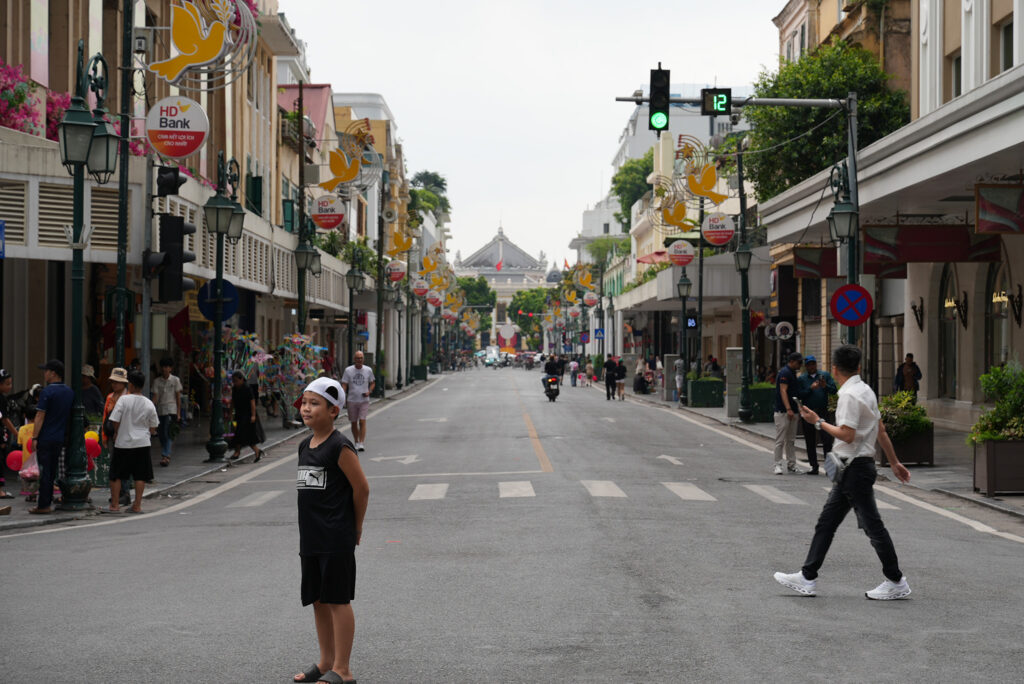
Pros
- Peaceful and harmonious country
- A health-conscious culture, from food to overall well-being (holistic and balanced)
- True sense of community and care (everyone is treated with dignity)
- Very affordable lifestyle for expats and digital nomads
- Strong acceptance of errors and personal quirks (face)
- Economically booming deeply optimistic at the moment
- A culture of self-reliance and entrepreneurship, where business ownership is widespread
- Thriving in agility and informal networks
- Deeply hospitable culture
- Down to hearth culture (Prioritizes the essentials of life : social bonds over material accumulation)
- Very safe country (more than western countries)
- Predefined hierarchy structures that minimize conflicts (elders on top)
- Extremely relient culture
- Administratively more efficient
- Lively and vibrant country
- Breathtaking and raw natural scenery
- Real sense of freedom
- Primed for cultural continuity
- An real opportunity to excel culturally and financially
Cons
- Excessive focus on education (evenings and Saturdays)
- Harmony over truth to solve issues (face)
- Strong group-oriented social norms (peer conformity)
- Limited room for personal expression and individuality
- Low-income individuals can experience extreme hardship
- Noise pollution is high (bikes)
- Some people often discard waste in the streets
- Symbolic domination within hierarchies, disguised as concern
- Outside Hanoi and HCMC, the majority of cities remain under development
- Moral ambiguity is largely limited to HCMC
- Frequent negotiation with measures to prevent excessive prices in some areas
- Low-lying land prone to flooding and typhoons
- Intense heat and torrential rains
- Land cannot be technically owned, though this is the case in practice in many other countries as well in practice (but advantageous fiscally)
- Less developed infrastructures
- Less cosmopolite cities
Among the countries discussed, Vietnam is by far the most holistic and resilient. Although poverty remains an issue, its growth is accelerating quickly, and it provides the strongest opportunities for middle-class advancement in Asia.
Vietnam is the most harmonious country on this list, with minimal internal conflict among its population, making life quite predictable. As the economy grows rapidly, it creates numerous opportunities that can transform lives (generational wealth).
Socially, Vietnam can offer one of the most fulfilling experiences, with active streets and strong community bonds and genuine human connections. However, this cohesion comes at the cost of conformity, as social harmony often requires individuals to align with group norms and expectations. This can be challenging for those whose income depends on individuality and personal initiative.
Overall, I’d say there are really only two lifestyles available for a Vietkieu: living peacefully in small or big cities or competing in the hustle only in larger ones. Vietnam is an excellent destination for the second phase of life, where you can apply and further develop the skills you’ve gained abroad.
For a Vietkieu, perhaps outside USA, it’s also the only place where your children can truly become legitimate citizens, rather than perpetual outsiders relegated to subordinate positions
(workers, technicians, engineers, or bureaucrats).
General impression : Inner peace and harmony in life
Family

Living near friends and family contributes more to long-term happiness than many people realize. While making new friends is possible and enjoyable, the relationships we form with our family — those bound by blood or lifelong shared history — are far harder to replace. Family provides a sense of continuity, belonging, and unconditional support that new friendships rarely match, especially over decades.
Proximity matters because it allows for everyday interactions: shared meals, small favors, spontaneous conversations — the little moments that accumulate into a deep sense of connection. Friendships can be built and nurtured at any stage in life, but the bonds with family often form the core of our social and emotional stability.
In the long run, being close to family can buffer stress, enhance resilience, and provide a grounding sense of identity. It’s not to say friendships aren’t important — they are vital for enrichment and choice in our social lives — but if you’re weighing life decisions, the opportunity to remain near family is a rare and enduring source of happiness that is difficult to replicate elsewhere.
Conclusion
As I mentioned earlier, no country or lifestyle is inherently superior. Life is a constant balance of pros and cons — every advantage comes with a drawback, and each gain is tempered by a loss. This principle applies equally to the way we live.
What matters most is which country offers the experiences and opportunities that resonate with you at a particular stage of life. Ultimately, it’s about what aligns with your values: are you seeking freedom and personal fulfillment, learning about culture and refinement, inner peace and harmony in life, or stability and closeness to family at this specific moment?
I also believe there is great value in moving between countries from time to time. Experiencing different cultures, gaining new perspectives, and stepping outside your comfort zone can teach profound lessons about life and what it truly means to live fully as a human being. The key is to remain open-minded, learning from the advantages each country offers without being weighed down by the disadvantages.
Finally, staying close to family and childhood friends is a decision rooted in wisdom, and it’s absolutely respectable as well.


GIPHY App Key not set. Please check settings