
 dudeoi
Only God Forgives, directed by Nicolas Winding Refn, was released after the iconic Drive and stars Ryan Gosling, Kristin Scott Thomas, and the deeply unsettling Vithaya Pansringarm.
Refn’s films are rarely straightforward narratives; they are explorations. In this case, Only God Forgives delves into the inescapable nature of divine justice—karma as an absolute force that no one can ultimately evade.

OUR SPONSOR OF THE DAY : NEONNIGHT.FR

The plot

Only God Forgives follows Julian, an American expatriate in Bangkok who runs a boxing club as a front for his family’s criminal business. After his brother murders a young woman and is executed indirectly by Chang—a figure embodying ruthless justice—Julian is pulled into a cycle of guilt, paralysis, and moral reckoning.
Pressed by his manipulative mother to seek revenge, Julian proves incapable of violence or authority. The film unfolds as a symbolic confrontation with inescapable justice, where Julian ultimately submits to punishment, suggesting that redemption can only come through accepting guilt and moral consequence.
The themes
The inevitability of Divine Justice

In Only God Forgives, every immoral act ultimately demands a price, enforced through the uncompromising figure of Chang. Whether it is drug trafficking, murder, or prostitution, no transgression escapes judgment.
Chang represents in the movie Moral Justice not Moral Compassion. Chang embodies transcendent justice, not ethical debate.
He does not:
- Argue
- Justify
- Explain
- Empathize
- He simply acts.
- This places him closer to:
- Old Testament justice
- Karmic law
- Mythological gods (Nemesis, Anubis, Yama)
- Or even natural law (gravity, entropy)
Once a line is crossed, consequence follows — impersonally.
What is Divine Justice?

Divine Justice refers to an objective principle of balance governing actions and consequences, independent of human laws, opinions, or rationalizations. It is not administered by institutions or individuals, but operates as a fundamental order of reality—often described as karma, moral law, or cause and effect applied to ethical life.
Unlike human justice, Divine Justice does not argue, forgive out of convenience, or negotiate. It does not reward intention alone nor punish selectively; it responds to what is done and what those actions generate in the world and within the individual. Its timing is unpredictable, but its logic is consistent: actions shape outcomes, internally and externally.
What makes Divine Justice unsettling is that it cannot be escaped through intelligence, power, or denial. One may delay consequences or mask them socially, but imbalance accumulates until it demands resolution. In this sense, Divine Justice is not cruel or vengeful—it is corrective, restoring equilibrium when moral order has been violated.
The repercussions of Moral Corruption

As Crystal, the mother of Julian and Billy, illustrates, moral decay in a parent is ultimately transmitted to their children, shaping their identity and behavior in adulthood.
Both Julian and Billy are, in a way, prisoners to their mother’s moral corruption and emotional manipulation, which is clearly demonstrated through Julian total submission and the tragic ending of Billy.
Violence and Masculinity

In Only God Forgives, violence and masculinity are deeply intertwined with the characters’ moral and psychological states. Characters like Julian, Billy or their associates project toughness, dominance, and control, yet these traits often mask insecurity, guilt, or moral confusion. Their hyper-masculinity is performative, tied to reputation, power, and fear of weakness. Within this world, aggression is both a social currency and a moral measure: fighting, killing, or threatening asserts dominance, enforces codes of honor, or punishes perceived transgressions.

Chang’s violence, by contrast, is symbolic and deliberate, representing divine judgment rather than personal pride.
The film’s stylized, ritualistic depiction of violence transforms each act into a visual metaphor, emphasizing moral stakes and psychological consequences. Blood, stabbings, and fights signal the cost of moral failings, dishonesty, and unchecked aggression. When masculinity is reduced to dominance without moral grounding, it becomes self-destructive.
Guilt, violence, and self-destruction as manifestations of moral decay

Billy isn’t confused about right and wrong. He knows he’s crossed every line without remorse. Unlike Julian, who still hesitates, Billy has fully identified with his own corruption. Saying “Time to meet the devil” is an admission: he knows exactly where he stands. There is no denial left in him.
Billy doesn’t believe he can change, escape, or be redeemed. His violence has become compulsive. So the line carries a kind of nihilistic acceptance: If this is what I am, then let it end. That’s why the act that follows feels reckless and suicidal—he is no longer protecting himself, just wants to end it.
Passivity as Powerless Immorality

In Only God Forgives, Julian’s sexual impotence represents his failure to confront his mother’s manipulations or his brother’s violence—demonstrates how passivity can be a form of moral failure.
By not acting, he tacitly allows wrongdoing to continue, deepening both his helplessness and ethical compromise.
The film shows that immorality is not only in harmful acts but also in the refusal to uphold responsibility: inaction itself becomes a destructive force.
Divine Justice can’t be defeated it has to be embodied
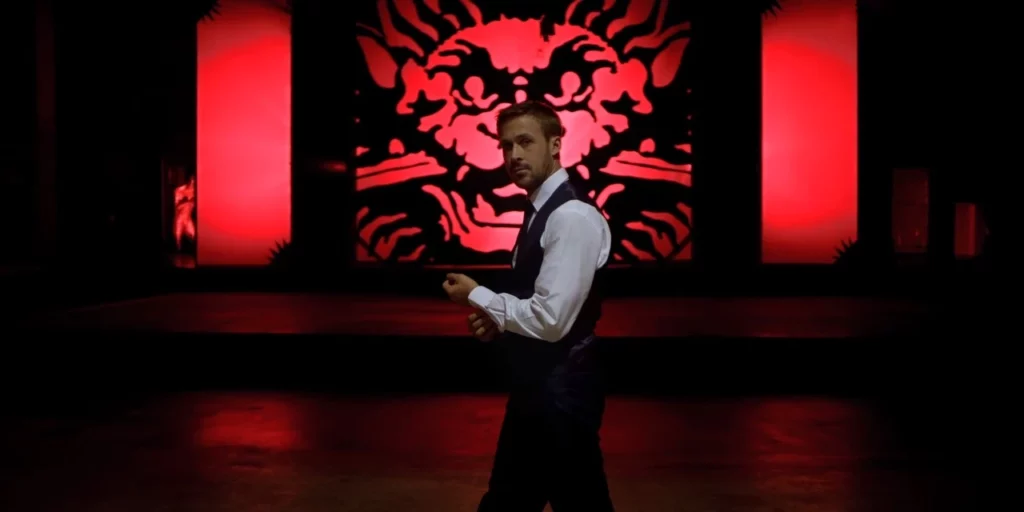
One of the most striking demonstrations of Divine Justice in Only God Forgives comes not in dialogue, but in the physical confrontation between Julian and Chang. Julian attempts to fight — not just symbolically, but literally. Yet in the moment of truth, he cannot land a single meaningful blow against Chang.
This failure is not a matter of aura, technique or strength alone; it reveals something deeper: Divine Justice cannot be defeated through force, willpower, or aggression. Chang’s presence is not about dominating through hostility but representing an unarguable moral order — one that Julian cannot evade, outrun, or overpower.

Just as Julian’s internal moral ambiguity has shaped his destiny, so too does his physical impotence against Chang signal that moral consequences are not subject to negotiation or resistance. In Only God Forgives, trying to fight back Divine Justice is as futile as trying to punch one’s own shadow — visible, yet untouchable.
Embodying the real Masculine Authority

Julian tries to emulate the statue of the Muay Thai fighter stance, a position associated with discipline, power, and ritualized combat. Yet he fails—he cannot hold the form or channel its intent. This reflects his internal state: he lacks moral and psychological grounding. Physically, mentally, and ethically, he is unaligned; his passivity and moral compromise make him incapable of embodying true strength or justice. The stance is more than a fighting technique—it symbolizes the integration of discipline, courage, and ethical alignment, which Julian has yet to achieve.

Chang, in contrast, assumes the stance effortlessly. He is the embodiment of Divine Justice—fully aligned with moral law, decisive, and unflinching. His ability to execute the position perfectly signifies that he has internalized the ethical, psychological, and symbolic power that Julian is still struggling with. In the fight, this translates directly into physical superiority: Julian cannot land a single meaningful blow because true power, in this moral universe, comes from integrity and alignment with justice, not from technique or willpower alone.
Moral Alignment Across Cultures

Although immorality is present everywhere, Julian, the American expatriate and his family, embodies traits often associated with Western modernity: individualism, moral ambiguity, and reliance on self-interest or negotiation rather than adherence to traditional codes. He operates in a world shaped by crime and personal desire, often attempting to navigate situations through his own rules, hesitation, or rationalization.

Chang, on the other hand, represents a form of moral absolutism and discipline that resonates with traditional Eastern conceptions of justice, honor, and karma. His authority is unquestionable, rooted in ethical alignment rather than negotiation or social convention. In this sense, the film contrasts the West’s moral flexibility—or moral evasion—with the East’s perception of inescapable moral order, suggesting that failing to internalize universal principles of justice leads to impotence, chaos, and inevitable consequence.
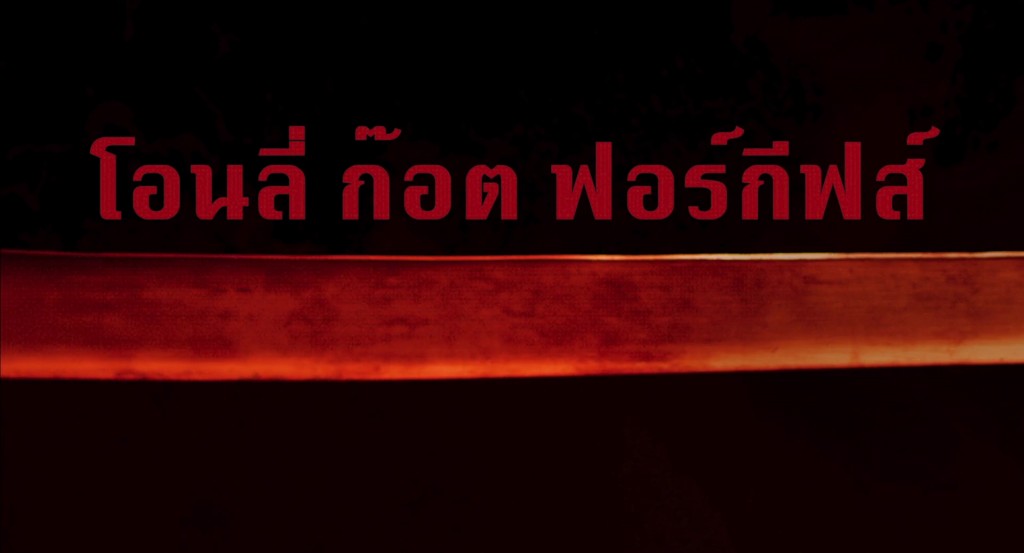
Observe that the film opens with its title in Thai, accompanied by English subtitles, immediately signaling that the world you are entering operates under foreign rules and territory.
Moral awakening as redemption

In Only God Forgives, morality functions as a form of redemption for Julian. Throughout the film, he is entangled in a world of crime, violence, and the corrupt influence of his mother, which leaves him morally compromised and emotionally paralyzed. His powerlessness is not just physical—it is ethical, a reflection of the chaos he has inherited and participated in.
By the end, Julian’s tentative actions to spare his brother’s killer or to protect Chang’s daughter signify a reassertion of moral agency. For the first time, he chooses justice over self-interest or brutality. This moment suggests that even in a world dominated by inescapable violence and karmic retribution, embracing moral responsibility offers a path toward redemption, allowing Julian to reclaim a fragment of his humanity and break, however slightly, the cycle of decay that defined his family.
Day of Reckoning

In Only God Forgives, Julian voluntarily chooses to confront the moral consequences of his life, acknowledging that every immoral act—whether inherited, witnessed, or committed—inevitably demands a price.
The film’s moral universe, personified by Chang, enforces this cosmic justice with unflinching rigor. Julian’s complicity in crime and passive acceptance of his mother’s corruption leave him fully exposed, unable to evade the repercussions of his environment.
This means that Julian finally came to peace and have integrated the inescapable rules of morality and is willing to finally pay the price for it.
Why this Only God Forgives should terrify you?

Only God Forgives is a mythically stylized story that seeks to illustrate the true workings of Karma, Divine Justice, or, more broadly, the law of cause and effect.
What should unsettle you is that these forces operate in the real world as well. Every action you take, whether intentional or not, carries an inevitable cost that must eventually be paid.
You might believe you can slip through the net or evade it, but that is only temporary—sooner or later, every immoral act will demand its full reckoning.
The concept of Divine Justice is unsettling because it implies that, despite our free will, an objective ideal exists—and we may be far from meeting it.
That at least some of our misfortunes are the result of our own choices and actions.
That all deeds are recorded and preserved, awaiting their due consequences.
Examples : the Devil is in the details

You might be tempted to think of immoral actions purely in terms of crimes or legal violations, but the concept is far broader.
Any action that causes harm or generates negative consequences for others—whether overt or subtle—sets in motion a chain of effects not just externally, but internally.
Such actions tend to corrode the soul, fostering guilt, inner decay, and a creeping sense of nihilism. In other words, immorality is as much a spiritual or psychological erosion as it is a social or legal transgression.
Pop Idols vs. Actors: Aspiration vs. Truth

Pop idols / influencers often sell aspiration: they offer fans a glimpse into a life that seems enviable, glamorous, or powerful. Their appeal is rooted in projection—they cultivate a persona that people want to emulate or feel connected to. Aspiration can inspire, but it can also be illusory. Fans are drawn to a curated image rather than reality, and the idol’s success depends on maintaining that carefully constructed persona. Yet not all idols are manipulative or shallow: some use their platform responsibly, offering art, encouragement, or genuine creativity. Similarly, even when idols sell fantasy, they can spark hope or motivation, provided the audience maintains awareness of the boundary between image and reality.
Actors, in contrast, aim to represent truth—even if through fiction. Their work seeks to illuminate human behavior, moral complexity, or emotional reality. By embodying characters authentically, they provide a mirror for the audience, offering insight, growth, or reflection. Yet not every actor reaches this ideal: some perform mechanically, prioritize spectacle over depth, or compromise authenticity for commercial gain. The admiration an actor earns is meaningful when it stems from honesty and skill, but superficial acclaim can exist here too.
In short: idols often sell what people want to see; actors convey what people need to understand. One offers fantasy and validation, the other offers reflection and potential transformation—but both exist along a spectrum of quality, impact, and ethical responsibility.
Divine Justice: Aspiration vs. Truth
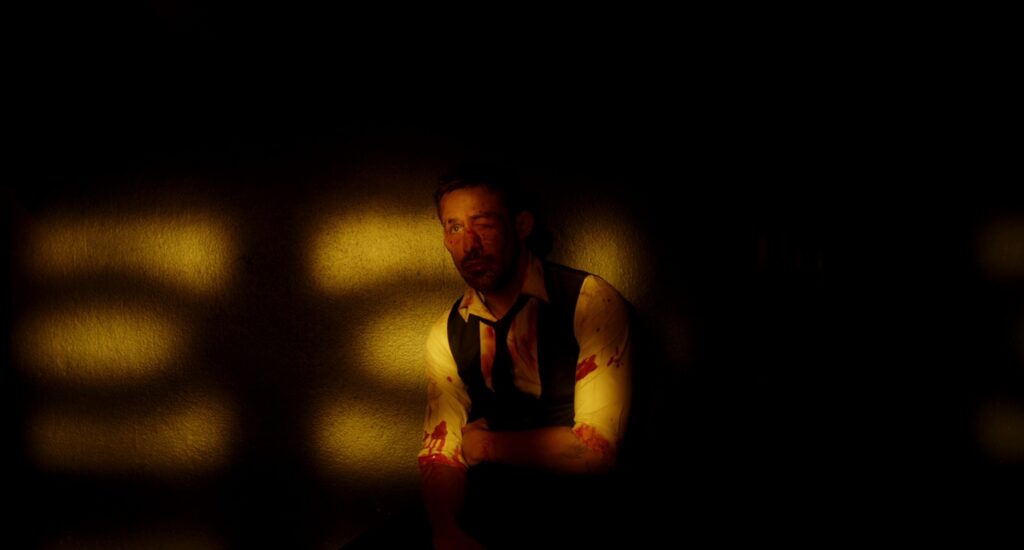
From a karmic or Divine Justice perspective, the consequences of one’s choices are subtle but inevitable. Pop idols who trade in illusions may gain fame, wealth, or influence—but sustaining a false image risks internal decay: emptiness, guilt, or dissonance between public persona and inner self. Even when their impact inspires, the moral cost lies in complicity with deception, conscious or not.
Actors pursuing truth align with moral and natural laws. Their work produces genuine value for themselves and others. Recognition and success are reflections of integrity rather than pretense. Even if material rewards are limited or criticism is harsh, alignment between action and principle safeguards the inner life, ensuring admiration is meaningful and durable.
In essence: those who build influence on illusions risk karmic erosion—internal decay, emptiness, and disconnection from authentic self—while those who serve truth cultivate a life where recognition and satisfaction genuinely reflect virtue, skill, and integrity. But both paths exist on a continuum: ethical and impactful expression is never guaranteed, regardless of profession.
Example of truth as a general principle

In any interaction, one should avoid using lies to manipulate others for personal gain. Instead, the rule is to speak the truth while respecting the other person’s dignity and autonomy.
For instance, if giving feedback, one should be honest about mistakes or concerns but do so with kindness and consideration, ensuring the person is informed without being humiliated.
This approach balances moral integrity with respect, showing that truthfulness does not require cruelty.
How to Know Whether We Are Acting Morally or Immorally

Determining the morality of our actions requires honest reflection on both intention and consequence. An action leans toward the moral when it respects the dignity of others, fosters genuine growth, and aligns with principles of honesty, fairness, and integrity.
Conversely, actions that exploit vulnerabilities, deceive, or generate harm—even if superficially rewarding—tend toward immorality. Morality also involves awareness: a behavior that feels instinctively manipulative, hollow, or disconnected from one’s authentic values is a signal that we may be straying from ethical alignment.
Observing long-term effects is crucial; actions that bring temporary gain at the cost of inner dissonance, guilt, or harm to others reveal their true moral weight. Ultimately, moral discernment combines empathy, self-honesty, and a recognition of the broader consequences our choices have on ourselves and those around us.
What Separates Humans from Animals

Several elements are often cited to distinguish humans from animals, even though some animals display traits surprisingly close to ours:
- Self-awareness and reflexivity: Humans can reflect on their own thoughts, emotions, and place in the world, something very few animals can do at a comparable level.
- Morality and ethical judgment: Humans possess complex value systems and can evaluate right and wrong, choosing to act according to principles even at the expense of immediate self-interest.
- Abstract and symbolic language: While some animals communicate, human language allows the transmission of complex ideas, the creation of abstract concepts, and long-term planning.
- Culture and knowledge transmission: Humans accumulate and pass down complex knowledge across generations, developing technologies, arts, and sciences.
- The capacity to create meaning and art: Humans do not merely survive—they seek to express, invent, and give meaning to their existence through cultural, artistic, and philosophical works.
In summary, what distinguishes humans from animals is not only biological but also psychological, ethical, and symbolic.
Because humans possess self-awareness, moral judgment, and the ability to reflect on their actions, they bear responsibility for their choices in a way that animals—guided primarily by instinct—cannot.
Conclusion

By definition, immorality encompasses all actions that generate negative consequences in one’s life—outcomes that have been observed and verified across time. These consequences are the natural result of the law of cause and effect: actions set into motion forces that inevitably return to their source.
In this sense, immorality is inescapable; retribution is not a question of if, but when. This is why a film like Only God Forgives, which depicts this mechanism with both precision and symbolism, is profoundly unsettling. It captures the terrifying reality that moral imbalance cannot be avoided.
The fear it evokes resonates because this law is real: metaphorically, there exists a ledger of deeds, recording every action, and when immorality is committed, its reckoning is certain. In other words, no act of harm or deceit escapes the inevitable consequences that follow.
Ultimately, Divine Justice does not judge or punish—it simply restores balance and this is inevitable.


GIPHY App Key not set. Please check settings